
Last updated: July 3, 2026
Choosing a cannabis packaging supplier is not simply a matter of comparing box prices. Your supplier affects product safety, regulatory readiness, print consistency, production schedules, freight costs, customer experience, and your ability to restock without interrupting sales.
Direct answer: Choose a cannabis packaging supplier that can prove five things before you place a production order: the packaging fits your product and target market, compliance claims are supported by relevant documents, samples pass real-use testing, production and quality-control processes are repeatable, and the total landed cost and delivery schedule are clear in writing.
Do not choose on unit price alone. A cheaper package becomes expensive when it arrives late, fails to fit the product, produces inconsistent colors, lacks usable compliance documentation, or creates excessive damaged inventory.
Table of Contents
What a Cannabis Packaging Supplier Must Prove
A strong supplier does more than show attractive product photos. It should be able to connect each sales claim to a specification, sample, document, inspection process, or written commitment.
| Supplier claim | Evidence to request | What you should verify | Why it matters |
|---|---|---|---|
| “This package is child-resistant.” | Complete test report, tested configuration, laboratory identity, report date, closure instructions, and limitations | The tested package is the same size, material, closure, insert, and configuration you plan to buy | A similar-looking closure or an untested size variation may not be covered by the original report. |
| “We can match your brand color.” | Pantone reference, signed proof, printed sample, color tolerance, and approved substrate | Color under normal retail lighting and on the actual production material | Ink appears differently on kraft paper, coated paper, soft-touch film, foil, and uncoated board. |
| “The package fits your product.” | Dimensioned dieline, insert drawing, physical prototype, and dimensional tolerance | Fit using real production units rather than approximate measurements | A small dimensional error can cause loose cartridges, crushed pre-rolls, leaking jars, or difficult assembly. |
| “Lead time is 15 days.” | Written definition of when the lead time starts and what it includes | Whether the estimate begins after payment, artwork approval, sample approval, or material arrival | Production time and delivery time are separate. Customs and domestic delivery may add further delays. |
| “The material is sustainable.” | Material composition, recycled-content statement, FSC documentation where applicable, and disposal guidance | Whether coatings, magnets, foam, windows, and adhesives affect recyclability | A paper exterior does not automatically make the complete package recyclable. |
| “Quality is guaranteed.” | Approved defect standards, inspection plan, shortage tolerance, remake policy, and complaint process | Who pays for inspection, replacements, freight, and unusable inventory | General promises are difficult to enforce after a problem occurs. |
Important: Cannabis packaging regulations vary by state, province, product type, serving format, and sales channel. A packaging supplier can provide design support and test documents, but the licensed business placing the product on the market remains responsible for confirming that the final packaging and labeling meet the rules that apply to that product.
Create Your Packaging Brief Before Comparing Suppliers
Suppliers cannot quote the same project accurately when each one receives different information. Prepare a short packaging brief before requesting prices. This makes quotes easier to compare and exposes suppliers that are making assumptions instead of reviewing your requirements.
Define the product and sales market
Product format: flower, pre-roll, edible, concentrate, tincture, cartridge, disposable device, topical, or accessory.
Primary package: the layer that directly contains the product.
Secondary package: an outer carton, sleeve, display box, or branded paper box.
Product dimensions and weight, including realistic manufacturing tolerances.
Whether the package will be single-use or multiple-use.
States, provinces, or countries where the product will be sold.
Required child-resistant, tamper-evident, resealable, opaque, barrier, warning, and labeling features.
Expected launch quantity, monthly usage, and 12-month volume.
Match packaging priorities to the product format
| Product format | Packaging priorities | Sample checks | Relevant 420 Packaging category |
|---|---|---|---|
| Pre-rolls | Crush protection, cone fit, odor and moisture strategy, child resistance where required, tamper evidence, and easy loading | Shake test, drop test, cone-tip clearance, closure cycling, and insert retention | Pre-Roll Packaging |
| Concentrates | Jar fit, leak control at the primary container, upright presentation, insert strength, and temperature exposure | Jar pull test, insert compression, inverted transport test, and label-space review | Concentrate Packaging |
| Vape cartridges | Device fit, tip and thread protection, insert tolerance, tamper evidence, child-resistant option, and batch-label space | Movement test, repeated insertion, corner-drop test, scuff test, and barcode scan test | Vape Cartridge Packaging |
| Edibles | Food-contact suitability of the primary layer, serving separation, resealability, barrier performance, and child resistance | Seal test, odor transfer check, repeated opening, storage test, and grease or moisture resistance | Edible Packaging |
| Tinctures | Bottle protection, dropper clearance, leak containment, insert fit, upright shipping, and label visibility | Drop test with filled bottles, cap-clearance test, insert recovery test, and vibration test | Tincture Packaging |
| Multi-SKU programs | Shared structure, fast artwork changes, variable labels, repeatable colors, inventory control, and retail display | SKU identification, barcode scanning, shelf test, and case-pack verification | Dispensary Packaging |
The 10-Step Cannabis Packaging Supplier Selection Process
1. Confirm the supplier understands your target market
Ask which jurisdictions the supplier regularly serves and what information it needs before recommending a structure. A responsible supplier should not promise that one package is automatically compliant everywhere.
For example, California requires cannabis goods to be sold in child-resistant packaging and places responsibility on the licensee that packaged the goods. Oregon explains that packaging represented as child-resistant must have supporting third-party certification documentation.
| Official source | What it demonstrates | Buyer takeaway |
|---|---|---|
| California Department of Cannabis Control packaging guidance | California requires child-resistant packaging and identifies the packaging licensee as responsible for meeting the requirement. | Review the finished package against the current California rules instead of relying only on a supplier description. |
| Oregon Liquor and Cannabis Commission packaging FAQ | Oregon explains that child-resistant packaging must be tested and certified by a qualified third party. | Request the test documentation and verify that it covers the exact package being purchased. |
| U.S. Consumer Product Safety Commission special-packaging FAQ | Explains child-resistant and adult-use performance concepts associated with special packaging. | A package that is merely difficult to open is not automatically a properly tested child-resistant package. |
2. Ask for documents before discussing decoration
Foil colors and soft-touch finishes matter, but they should come after the basic evidence review. Request the documents that apply to your project before paying for a production mold, printing plate, or large order.
Child-resistant test report for the exact structure, when applicable.
Instructions showing how the tested closure must be operated and resecured.
Material specification and paperboard thickness.
Food-contact documentation for any component that directly touches edible products.
Material information for inks, coatings, adhesives, inserts, and plastics where relevant.
Current quality-management certificates claimed by the supplier.
FSC or recycled-content documentation when those claims will appear in marketing.
Product drawings, dimensions, tolerances, and approved dielines.
Check the company name, factory address, report number, tested size, closure, material, and date. A report for another company, another closure, or an older design may not support your finished package.
3. Request samples in three stages
Stock sample: Review the supplier’s general construction and printing quality.
White structural sample: Test your dimensions without final printed artwork.
Printed pre-production sample: Approve color, finish, insert, warnings, opening experience, and final construction.
Do not treat a digital rendering as a replacement for a physical sample. A rendering cannot show board stiffness, magnetic strength, surface scuffing, glue quality, opening force, insert compression, or shipping performance.
4. Freeze the specification with a signed approval sample
The approved sample should become the production reference, often called a control sample or golden sample. Photograph it, label it with the project number and approval date, and retain one copy while the supplier keeps another.
The final specification should record:
Finished dimensions and accepted tolerance.
Board grade, thickness, paper type, and paper direction where relevant.
Insert material, density, cavity dimensions, and placement.
Print method, Pantone or CMYK references, and approved color tolerance.
Lamination, varnish, foil, embossing, debossing, spot UV, window, and adhesive requirements.
Closure type, magnet position, locking tab, tamper seal, or child-resistant mechanism.
Pack-out method, units per carton, carton strength, moisture protection, and pallet requirements.
Include a written change-control rule stating that materials, dimensions, closures, inserts, inks, factories, and production methods cannot be changed without approval.
5. Review manufacturing and quality-control capacity
Ask whether the company is the manufacturer, a trading company, or a distributor. Any of these models can work, but you should know who controls production and who is responsible when a defect occurs.
Incoming materials: Paper, board, film, magnets, foam, adhesives, ink, and other components.
During production: Printing, lamination, die cutting, gluing, forming, and insert placement.
Finished packaging: Dimensions, appearance, function, closure, print, count, and carton packing.
Before shipment: Final inspection, carton condition, quantity, shipping marks, and loading photos.
For a large or high-risk order, arrange a pre-shipment inspection before paying the final balance. Agree on the inspection standard and acceptable defect limits before production starts.
6. Test print consistency, not just the first sample
A perfect sample does not guarantee that the full production run will look identical. Ask how the supplier controls colors and finishes across the production run and future reorders.
Use Pantone references when a critical brand color must be repeated.
Approve color on the actual paper and coating, not only on a screen or office printer.
Define acceptable variation for kraft paper and other naturally variable substrates.
Check foil registration, embossing alignment, spot UV placement, and edge wrapping.
Ask the supplier to retain production samples from each lot.
Keep artwork version numbers and approval dates on every proof.
7. Compare MOQ with inventory risk
A low unit price at a high minimum order quantity is not automatically a good deal. Cannabis labels, warning language, SKU information, device dimensions, and market requirements may change before all packaging is used.
Months of packaging inventory = Order quantity ÷ Average monthly packaging usage
If you use 2,000 boxes per month, an order of 20,000 boxes represents approximately 10 months of inventory before allowing for growth, defects, promotions, or artwork changes.
8. Calculate the true reorder point
Your replenishment timeline may include artwork confirmation, material purchasing, sampling, production, inspection, international transit, customs clearance, and domestic delivery.
Reorder point = Average daily use × Total replenishment days + Safety stock
If you use 100 boxes per day, the full replenishment cycle is 55 days, and you want 15 days of safety stock, your reorder point is 7,000 boxes.
9. Calculate landed cost per usable package
The quoted box price is only one part of the cost. Compare suppliers using identical dimensions, materials, print coverage, finishes, inserts, quantities, freight terms, and delivery destinations.
Landed cost per usable unit = Total packaging, tooling, sample, freight, duty, inspection, assembly, and expected waste costs ÷ Number of usable packages received
| Cost component | Questions to ask | Common hidden cost |
|---|---|---|
| Base packaging | What exact board, thickness, size, structure, and quantity are included? | A lower quote may use thinner board or a simpler structure. |
| Printing | Does the quote include inside and outside printing, Pantone colors, and full coverage? | Interior printing and spot-color matching may be charged separately. |
| Finishing | Are lamination, foil, embossing, debossing, spot UV, and varnish included? | The advertised unit price may represent an undecorated package. |
| Insert | What material is used, and is the insert installed? | EVA foam, molded pulp, and manual assembly can materially change the cost. |
| Tooling and samples | Are dies, molds, plates, prototypes, and revisions included or credited? | One-time costs can make a small first order much more expensive. |
| Freight | Is the quote EXW, FOB, CIF, DDP, or delivered to your door? | Quotes using different shipping terms cannot be compared directly. |
| Damage and defects | What shortage and defect allowance applies? | You may pay for packaging that cannot be filled or sold. |
| Assembly labor | Does the packaging arrive flat, partly assembled, or ready to fill? | Freight savings can be offset by local assembly labor. |
For a more detailed breakdown, read How Much Does Custom Cannabis Packaging Cost in 2026?
10. Put problem resolution in writing
Your purchase order or quality agreement should address:
The approved specification and signed sample.
Quantity tolerance and overrun or underrun policy.
Minor, major, and critical defect definitions.
Inspection method and acceptance criteria.
Required evidence when a claim is submitted.
Time allowed to report concealed damage or functional defects.
Remake, replacement, refund, credit, and freight responsibilities.
Ownership of artwork, dielines, printing plates, molds, and tooling.
Confidentiality and restrictions on displaying branded packaging.
Approval required before subcontracting or changing the production location.
How to Test Cannabis Packaging Samples
Test samples with the actual product, primary container, labels, humidity pack, insert, seal, and filling process whenever possible. A packaging sample should be evaluated as part of a complete system rather than as an empty box.
| Test | Simple method | What to record | Possible failure |
|---|---|---|---|
| Product fit | Load several real production units into the sample. | Clearance, movement, pressure points, and loading time | Loose product, damaged tip, crushed label, or difficult loading |
| Closure cycling | Open, close, and resecure the package repeatedly. | Number of cycles, opening effort, damage, and closure reliability | Torn tabs, weak magnets, broken hinges, or loss of resealability |
| Drop test | Drop the filled package on faces, edges, and corners from a realistic handling height. | Package damage, product movement, and insert failure | Cracked jars, dislodged cartridges, or crushed corners |
| Transport simulation | Pack samples in the intended shipping carton and simulate repeated movement. | Scuffing, shifting, opening, abrasion, and divider movement | Rub marks, loosened products, opened drawers, or damaged print |
| Temperature and humidity | Store samples under expected warehouse and transport conditions. | Warping, adhesive performance, odor, and coating changes | Delamination, curled board, glue failure, or surface blocking |
| Print durability | Rub finished surfaces against adjacent packages and shipping materials. | Ink transfer, scratches, foil loss, and fingerprint visibility | Damaged retail appearance before the product reaches the shelf |
| Barcode and QR test | Scan codes after printing, lamination, varnish, and label application. | Scan rate under normal lighting and viewing angles | Codes fail because of glare, curvature, low contrast, or poor resolution |
| Packing-line trial | Run a small quantity through the actual filling and labeling process. | Assembly time, worker errors, and equipment compatibility | A package looks good but slows production or cannot be labeled consistently |
| Adult usability | Ask intended adult users to follow the opening and resecuring instructions. | Confusion, excessive force, and closure errors | Returns, damaged products, or packaging left unsecured after opening |
Informal in-house checks do not replace formal child-resistant testing when certification is required. They help evaluate product fit, durability, packing efficiency, and user experience.
Cannabis Packaging Supplier Scorecard
Use the same scoring system for every shortlisted supplier. This prevents an attractive sample or unusually low quote from outweighing more important risks.
| Evaluation area | Weight | Full-score standard | Supplier score |
|---|---|---|---|
| Compliance documentation | 20 points | Relevant, current, traceable documents match the proposed package configuration. | ___ / 20 |
| Sample performance and product fit | 15 points | Samples pass fit, transport, closure, usability, and packing-line checks. | ___ / 15 |
| Manufacturing and quality control | 15 points | Clear in-process and final inspection controls with documented defect standards. | ___ / 15 |
| Printing and customization | 10 points | Accurate dielines, color control, finish quality, variable artwork, and repeatability. | ___ / 10 |
| Lead time and capacity | 10 points | Realistic written timeline, adequate capacity, rush options, and backup planning. | ___ / 10 |
| MOQ and scalability | 10 points | MOQ fits the launch while future pricing and capacity support growth. | ___ / 10 |
| Landed-cost transparency | 10 points | The quote separates packaging, tooling, samples, freight, assembly, and other charges. | ___ / 10 |
| Communication and project management | 5 points | Questions are answered specifically, revisions are tracked, and responsibilities are clear. | ___ / 5 |
| Corrective-action terms | 5 points | The written process covers defects, shortages, replacements, credits, and response deadlines. | ___ / 5 |
| Total | 100 points | A supplier that scores well across high-risk categories is generally safer than one that wins only on price. | ___ / 100 |
Cannabis Packaging Supplier Red Flags
The supplier says a package is “FDA approved.” The FDA does not provide a general approval badge for every cannabis package.
The supplier promises universal compliance without asking where or how the product will be sold.
A child-resistant certificate is shown, but the supplier will not provide the full report or tested configuration.
The company refuses to make a structural sample before mass production.
The quotation does not identify material thickness, dimensions, printing, insert, finish, quantity, and shipping terms.
The sample differs from the specification shown in the quote.
Lead time is described only as “fast” without a starting point or production schedule.
The supplier pressures you to approve artwork without checking warning areas, barcode quiet zones, folds, glue areas, and dieline orientation.
Payment is requested through an unrelated personal account or a company name that does not match the quotation.
The supplier will not define what happens if the shipment is short, damaged, late, or functionally defective.
Branded customer packaging is displayed publicly without permission.
The supplier changes materials, inserts, or production locations without approval.
What to Include in a Cannabis Packaging RFQ
Product type and intended use.
Target sales markets.
Primary and secondary packaging layers.
Product or container dimensions with tolerances.
Required internal dimensions and product orientation.
Packaging structure or reference photo.
Required child-resistant, tamper-evident, resealable, opaque, or barrier functions.
Preferred paper, rigid board, kraft, corrugated, molded pulp, foam, or insert material.
Printing coverage, Pantone colors, and interior printing.
Finish requirements such as matte, gloss, soft-touch, foil, UV, embossing, or debossing.
Quantity for prototype, first order, and annual forecast.
Flat-packed or fully assembled delivery.
Shipping destination and required delivery date.
Preferred freight term, if known.
Documents, test reports, inspections, and samples required before production.
Artwork file format and version number.
Recommended 420 Packaging Products by Use Case
The following products are useful starting points for custom paper packaging projects. Public product-page prices are broad request-a-quote ranges rather than guaranteed final prices. Exact cost depends on dimensions, quantity, board, insert, print coverage, finish, child-resistant requirements, assembly, freight, and delivery schedule.
All products shown are empty packaging products. Cannabis, cartridges, jars, pre-rolls, and accessories displayed in product imagery are not included.
Best for natural-looking pre-roll packaging
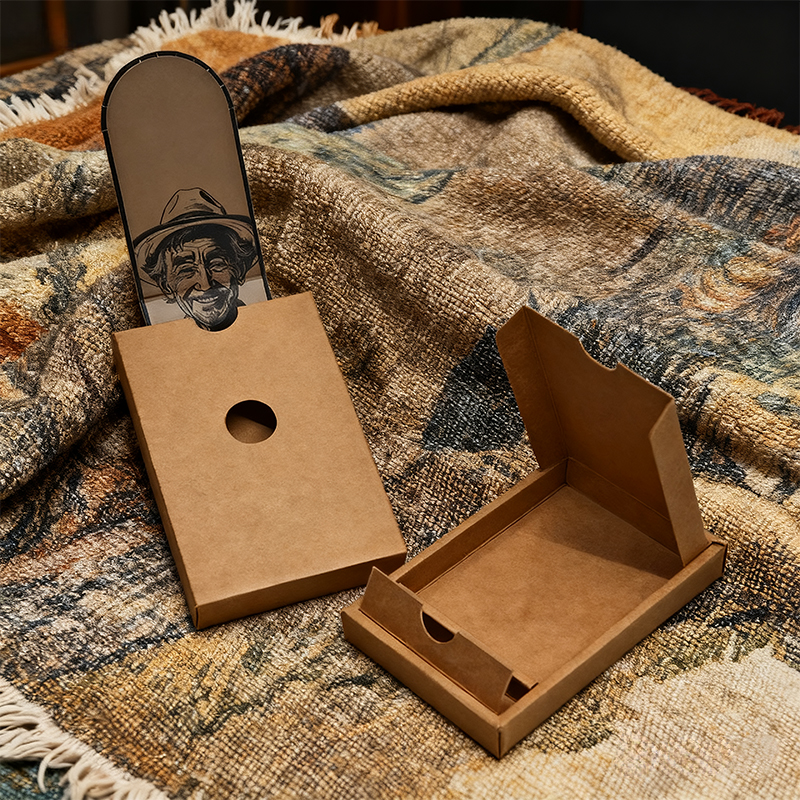
Child-Resistant Kraft Paper Pre-Roll Packaging Box
This paperboard package combines a kraft appearance with an outer sleeve, sliding inner tray, and locking tab. It is suitable for brands that want a natural presentation and customizable pre-roll capacity without moving immediately to a heavy rigid-box format.
| Public quote range | $0.01–$1.20 per piece |
|---|---|
| Material | Kraft paperboard described as recyclable and eco-conscious |
| Structure | Outer sleeve, inner sliding tray, and locking tab |
| Capacity | Customizable according to pre-roll size and count |
| Printing | CMYK or Pantone colors, logos, graphics, warning icons, and compliance text |
| Finish options | Matte or gloss varnish, soft-touch, and selected spot finishes on request |
| Official product page | View product details and request a quote |
What to verify: Ask whether the exact dimensions and closure configuration are covered by applicable child-resistant testing. Also confirm how coatings, adhesives, and other components affect recyclability.
Best for premium pre-roll multipacks
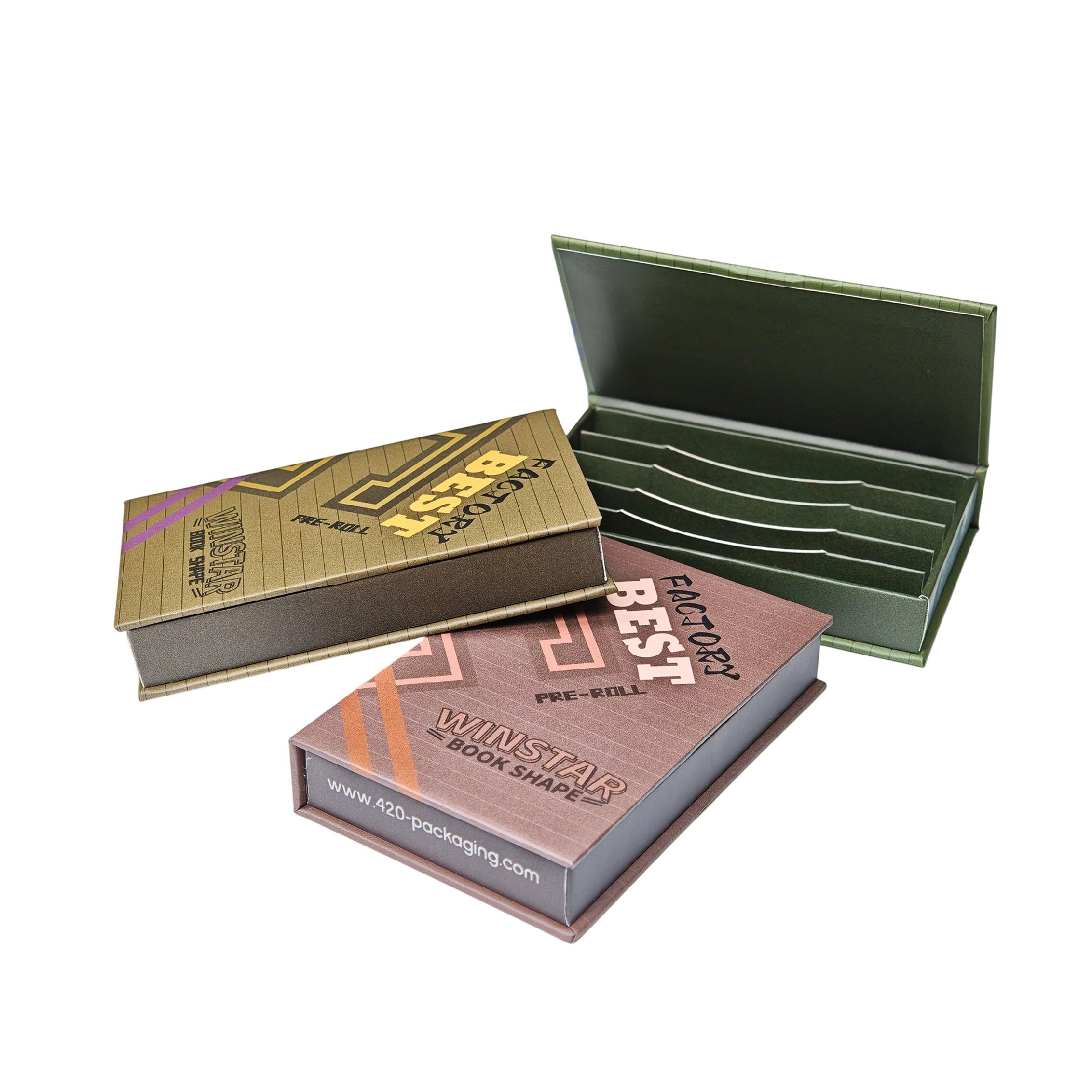
Flip-Top Book-Shape Pre-Roll Packaging Box with Custom Dividers
This rigid book-style box is designed for premium multipacks, limited releases, collaborations, subscription kits, and gift presentations. It supports hidden magnets, custom inserts, multiple cone lengths, interior printing, and decorative finishes.
| Public quote range | $0.01–$2.10 per piece |
|---|---|
| Outer construction | 900–1400 gsm greyboard wrapped with 157–200 gsm coated art paper or specialty paper |
| Insert options | EVA foam, paperboard cradle, or velvet-wrapped foam |
| Capacity | Custom configurations for 2, 3, 4, 5, 6, 7, 10, or more pre-rolls |
| Common cone lengths | 84 mm, 98 mm, and 109 mm, with other lengths available by request |
| Finishing options | Matte, gloss, soft-touch, spot UV, foil stamping, embossing, debossing, and textured wraps |
| MOQ | Typically 500–1,000 pieces depending on the specification |
| Official product page | View product details and request a quote |
What to verify: Magnetic book boxes are not automatically child-resistant. Confirm whether the quoted structure includes a separate tested locking mechanism.
Best for concentrate jars and premium sets
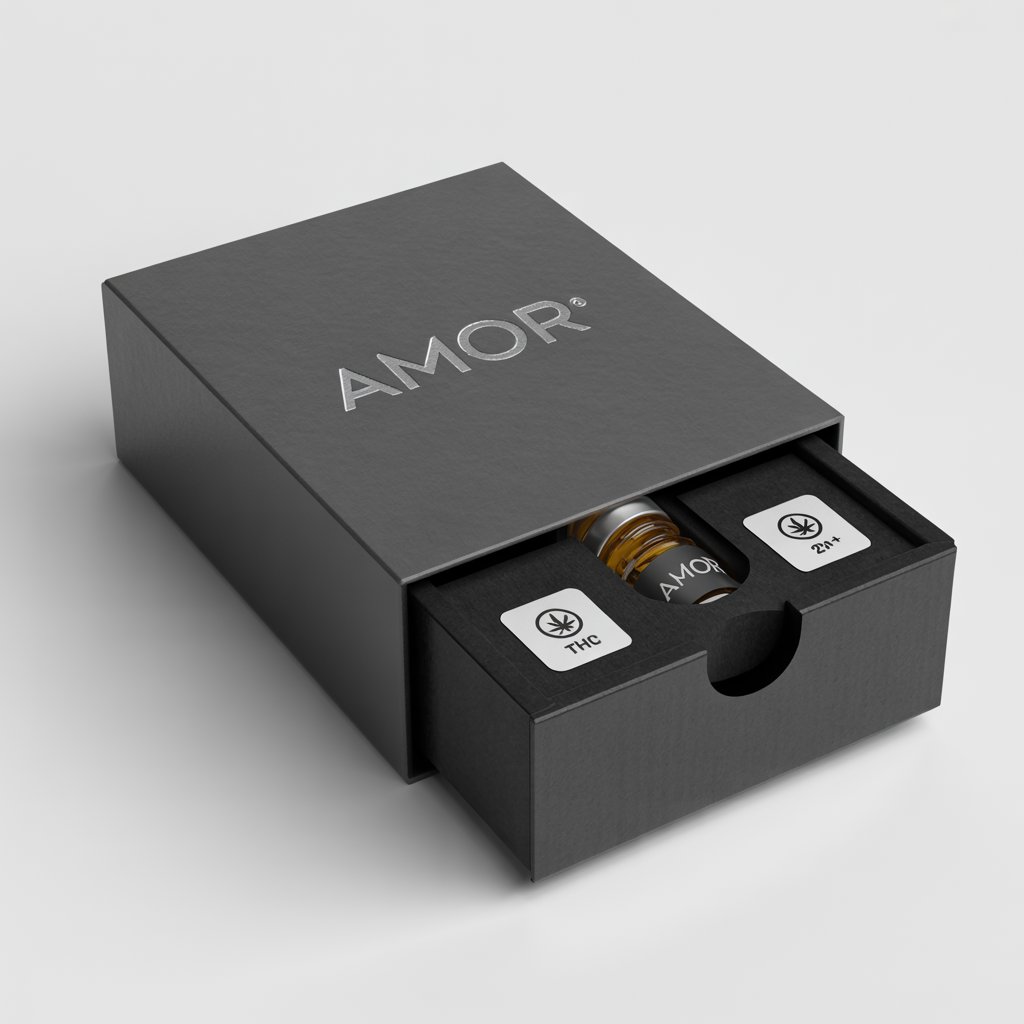
Custom Dab Containers Box for Concentrates
This rigid paperboard package is designed around glass or silicone concentrate jars. It can be produced as a drawer-style or flip-top structure and customized with an insert that holds one to three jars.
| Public quote range | $0.01–$5.00 per piece |
|---|---|
| Material | Rigid paperboard |
| Common container fit | One to three jars, commonly 5 ml or 7 ml |
| Structure options | Drawer-style slide box or flip-top box |
| Insert options | Custom foam or paperboard insert |
| Printing and finish | CMYK or Pantone printing, matte or gloss lamination, foil, embossing, or UV printing |
| MOQ | 1,000 units |
| Listed production time | 10–15 business days after design approval |
| Official product page | View product details and request a quote |
What to verify: The paper box is normally a secondary package. Confirm the primary jar’s seal, liner, material compatibility, leak performance, and child-resistant requirements separately.
Best for premium 510 cartridges and slim devices
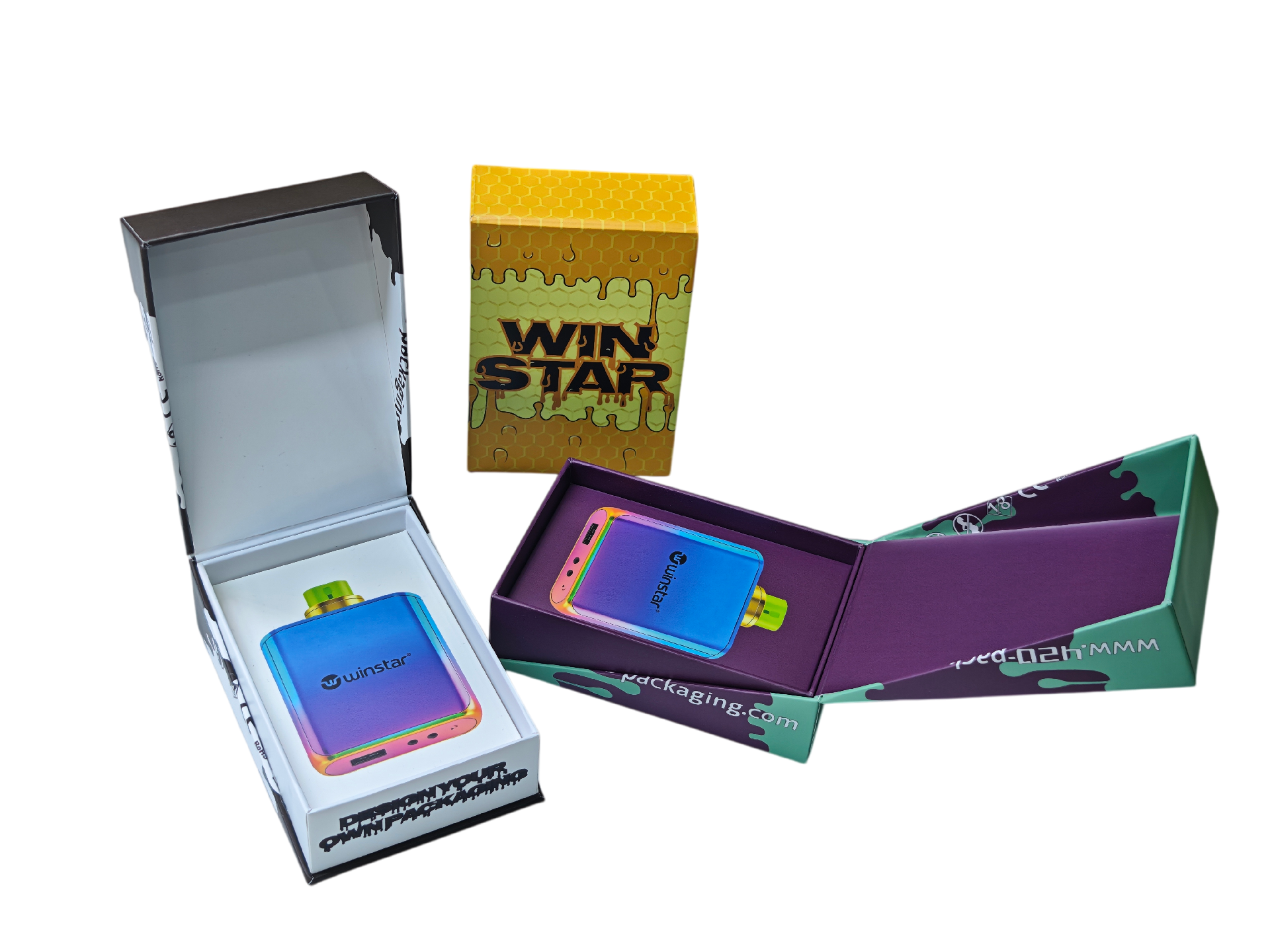
Custom 510 Cartridge Boxes with Magnetic Rigid Construction
This book-style rigid box is intended for 0.5 ml and 1 ml 510 cartridges, mini disposables, sample kits, and premium retail presentations. It supports custom die-cut inserts, interior and exterior printing, variable labels, and decorative finishes.
| Public quote range | $0.01–$2.10 per piece |
|---|---|
| Board construction | 1000–1400 gsm greyboard wrapped with 157–200 gsm coated art paper |
| Standard fit | 0.5 ml and 1 ml 510 cartridges, with custom sizes for slim disposables |
| Insert options | EVA foam, paperboard, or molded pulp |
| Printing and finish | CMYK, Pantone, matte, gloss, soft-touch, foil, spot UV, embossing, debossing, or holographic film |
| MOQ | Typically 500–1,000 units |
| Sampling | Digital proof or charged pre-production sample, with the sample fee described as deductible from a mass order |
| Listed production time | 10–15 business days after artwork approval; rush service may be available |
| Official product page | View product details and request a quote |
What to verify: Send actual cartridge or device samples instead of relying only on “0.5 ml” or “1 ml” descriptions. Mouthpiece width, tank diameter, total length, thread protection, and device shape vary between manufacturers.
Why consider 420 Packaging?
According to the 420 Packaging About Us page, the company was established in 2006 and expanded its facility in 2016 to approximately 5,000 square meters, with nine production lines and more than 100 staff. The company describes Heidelberg printing equipment, die-cutting and finishing capabilities, ISO 9001 certification, and experience supplying paper packaging to the United States and Canada.
These details make the company worth including in a shortlist for custom pre-roll, concentrate, cartridge, and child-resistant paper packaging. As with any supplier, request current certificates, project-specific samples, test documentation, written specifications, and final commercial terms before placing a production order.
A Safer Buying Workflow
Prepare the brief: Define the product, market, dimensions, required functions, quantity, and launch date.
Shortlist suppliers: Compare relevant experience, manufacturing model, documents, samples, and communication quality.
Request matching quotes: Give each supplier identical dimensions, materials, finishes, quantities, delivery terms, and destinations.
Review documents: Check compliance reports, material information, certificates, and company identity.
Approve the structure: Test a white sample with real products before final artwork.
Approve the printed sample: Confirm colors, finishes, warnings, barcode performance, closure, and insert fit.
Run a pilot order: Use a manageable first quantity when the structure, supplier, or product is new.
Inspect before shipment: Compare production units with the signed sample and written specification.
Evaluate the delivery: Record defects, assembly time, customer feedback, transit damage, and actual usable quantity.
Reorder using real data: Update safety stock, lead time, inspection requirements, and the approved specification.
Approve three items before mass production: a final written specification, a signed physical sample, and written quality and remedy terms. Together, these provide a clearer production reference than email descriptions or digital renderings alone.
Related Cannabis Packaging Guides and Categories
Frequently Asked Questions
What is the most important factor when choosing a cannabis packaging supplier?
The most important factor is whether the supplier can consistently produce the exact packaging system your product and sales market require. That includes verified dimensions, materials, functionality, documentation, printing, quality controls, lead time, and problem-resolution terms.
How do I know whether cannabis packaging is really child-resistant?
Request the complete third-party test report and verify that the tested package matches the size, material, closure, opening instructions, and configuration you plan to purchase. A difficult closure or child-resistant label is not enough by itself.
Can a supplier guarantee that packaging is compliant in every state?
No. Cannabis packaging rules vary by location, product, serving format, and sales channel. The supplier can provide suitable structures and supporting documents, but your licensed business should verify the final packaging and label against current local requirements.
Should I choose a domestic or overseas cannabis packaging supplier?
A domestic supplier may offer faster delivery, local inventory, and simpler returns. An overseas manufacturer may offer broader customization or lower factory pricing at larger quantities. Compare total landed cost, replenishment time, documentation, quality control, and inventory risk rather than country of origin alone.
What is a reasonable MOQ for custom cannabis packaging?
MOQ depends on the structure, material, print process, tooling, and supplier. The right MOQ is one your business can use before artwork, regulations, product dimensions, or demand changes.
Do I need a physical sample before ordering?
Yes. Use a white structural sample to check dimensions and product fit, then approve a printed pre-production sample for color, finish, insert, closure, and artwork.
What should be included in a cannabis packaging quote?
The quote should identify dimensions, material, thickness, structure, insert, printing, finish, quantity, tooling, sampling, assembly, unit price, production time, shipping term, destination, freight cost, payment terms, quantity tolerance, and validity period.
How can I reduce custom cannabis packaging costs?
Standardize structures across SKUs, limit unnecessary finishes, use variable labels for frequently changing information, choose practical paperboard inserts, and order quantities based on actual usage rather than only the lowest advertised unit price.
Who owns the dieline and packaging design?
Ownership depends on your agreement. State in writing who owns artwork, structural drawings, dies, plates, molds, and paid tooling. Also specify whether the supplier may display your packaging publicly.
How should I compare supplier lead times?
Ask each supplier to separate artwork review, sampling, material preparation, production, inspection, freight booking, international transit, customs clearance, and final delivery. Production time is not the same as total delivery time.
What happens if production packaging does not match the approved sample?
Your quality agreement should define acceptable tolerances, inspection results, evidence requirements, response deadlines, and whether the remedy will be a remake, replacement, refund, credit, or sorting service.
Can paper cannabis packaging be considered sustainable?
Paperboard can reduce dependence on some plastic structures, but sustainability should be evaluated across the complete package. Magnets, foam, windows, metallic films, heavy lamination, adhesives, and mixed materials may make recycling more difficult.
How many suppliers should I evaluate?
For an important custom project, evaluating three to five qualified suppliers is usually enough to compare capabilities without making the process unmanageable.
Start Your Custom Cannabis Packaging Project
Share your product dimensions, target market, packaging style, required functions, order quantity, artwork needs, and delivery destination to receive a project-specific recommendation and quotation.
View Child-Resistant Packaging View Pre-Roll Packaging Request a Custom Packaging Quote