
Last updated: August 5, 2026
Quick Answer
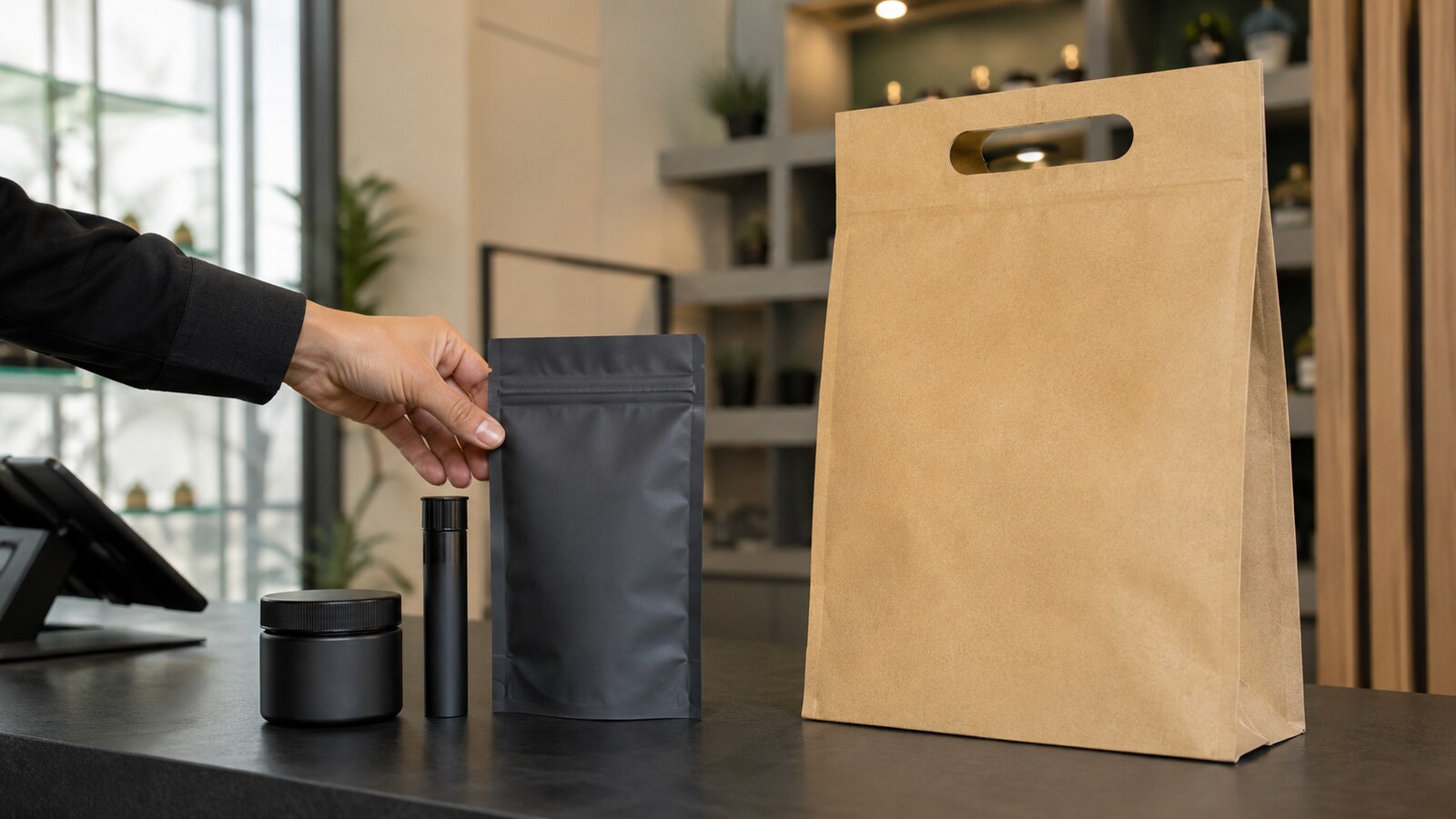
Cannabis exit bags are outer packages used when a customer’s order leaves a dispensary; primary packaging is the jar, tube, pouch, or box that directly contains or encloses one product. The two layers do not automatically substitute for each other. California’s current rules require cannabis goods to be in child-resistant, tamper-evident primary packages and also require an opaque exit package. Oregon allows a certified child-resistant exit package at the point of sale when the immediate container is not child-resistant, subject to product-specific rules. Before ordering either layer, map each SKU to the destination state, product type, serving format, reuse pattern, and documentation required by that regulator.
Cannabis packaging buyers often ask a deceptively simple question: “If we use a child-resistant exit bag, can the package inside be ordinary?” There is no single U.S. answer. The correct layer depends on the state, the product, whether it has multiple servings, and whether the package must remain child-resistant after opening.
This guide separates the jobs of the two layers, shows how California and Oregon handle them differently, and gives dispensary teams a repeatable way to prevent a packaging assumption from becoming an expensive rework.
What Cannabis Exit Bags Do—and Do Not Do
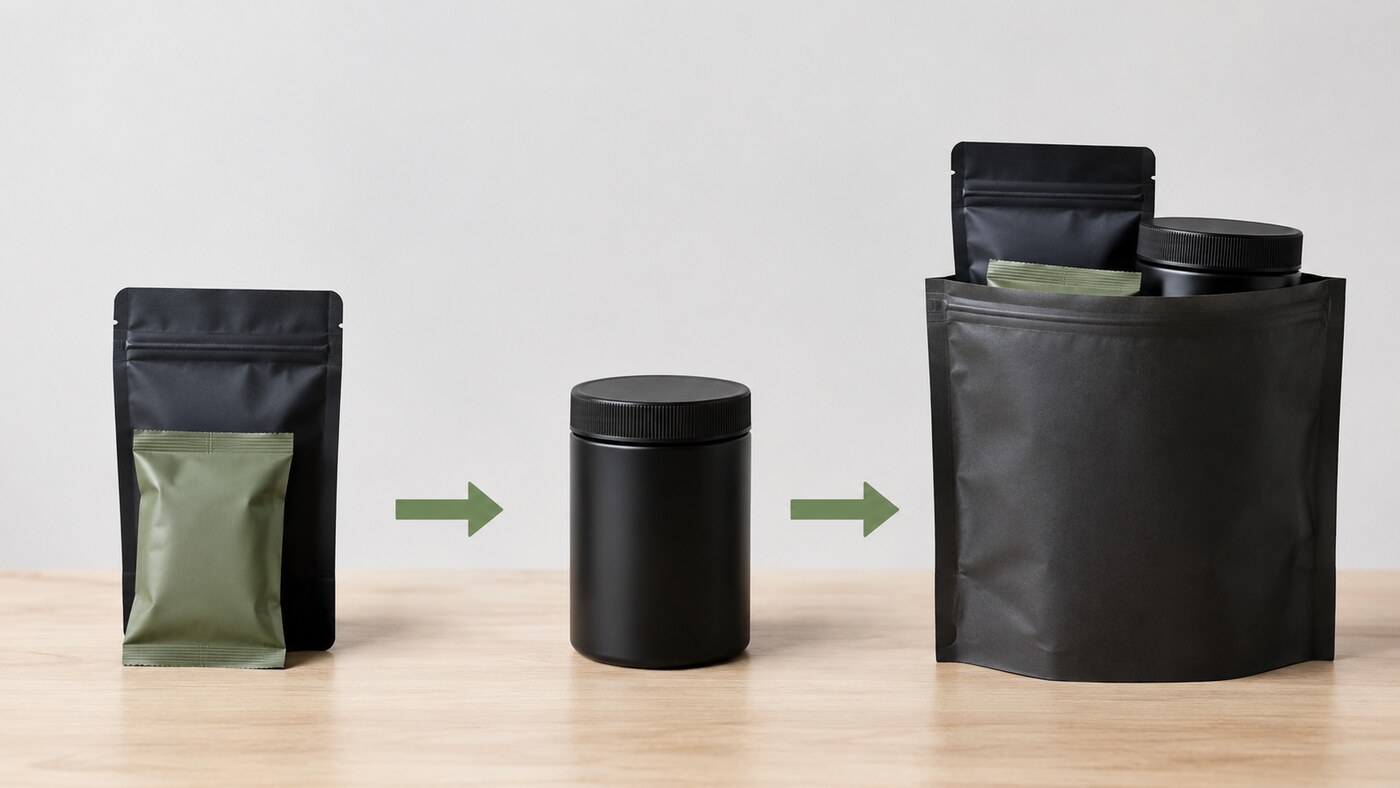
An exit package is the outer layer in which a retailer hands an order to the customer. Depending on the jurisdiction, it may need to be opaque, child-resistant, resealable, tamper-evident, or simply suitable for discreet transport. The immediate or primary package is the layer associated with one SKU: for example, a jar holding flower, a tube holding a pre-roll, or a pouch holding edibles.
An exit bag can group several purchases, reduce visibility during transport, and add a retail handoff control. It does not automatically correct a missing label, an unsealed primary package, the wrong type of child resistance, or a primary package that was required to be compliant before it reached the retailer.
Practical rule: describe every requirement as a job assigned to a layer. “The order must be opaque when it leaves” is an exit-layer job. “This multi-serving edible must remain child-resistant after repeated openings” is a primary-package job unless the applicable rule explicitly allows another tested configuration.
Which Packaging Layer Must Be Child-Resistant?
Start with the current rule for the state where the product will be sold. Then identify whether it regulates the package before retail, the order at retail handoff, or both. Do not use the phrase “child-resistant bag” as proof by itself. The U.S. Consumer Product Safety Commission explains that special packaging is performance-tested under 16 CFR 1700 protocols; the exact package and closure configuration matter.
| Question | Primary package | Exit package | Buyer action |
|---|---|---|---|
| Touches or directly encloses one SKU? | Usually yes | Usually no | Confirm food-contact suitability or an appropriate inner liner where relevant. |
| Carries the required product label? | Commonly | Not a substitute for the product label | Check that the outer bag does not hide information the customer must retain. |
| Must show first opening? | Often where tamper evidence is required | Only if the state assigns that job here | Document the seal, tear strip, film, or other evidence used. |
| Must stay child-resistant after reopening? | Product- and state-dependent | State-dependent | Match the certificate to the repeated-use closure, not only the material. |
| Must hide the order during departure? | May be opaque, but may not cover the whole order | Frequently the assigned layer | Test opacity with the actual mixed order and under strong retail lighting. |
Two State Rule Examples That Expose the Difference
California: compliant primary package plus an opaque exit package
California’s Department of Cannabis Control regulations revised January 1, 2026 state that a package containing cannabis goods must be tamper-evident and child-resistant, and multi-serving packages must be resealable. The same retail rule also says purchased cannabis goods may not leave the premises unless placed in an opaque exit package. In other words, the outer bag’s opacity is an additional handoff control; it does not replace the required primary-package functions. See DCC §§15413, 17411, and 17412.
Oregon: a certified exit package can cover some non-CR immediate containers
Oregon’s current OLCC guidance says marijuana and hemp items generally must leave the retailer in child-resistant packaging. The immediate container can perform that job; if it is not child-resistant, the retailer can place it inside a child-resistant exit package at the point of sale. Oregon also distinguishes single-use child-resistant packages from resealable, continually child-resistant packages for extracts, concentrates, and cannabinoid products. Review the OLCC Packaging and Labeling FAQ before specifying the layer.
Do not generalize these examples nationwide. They show why a state-by-state layer map is necessary. Local rules, regulator interpretations, product approvals, and municipal requirements may add controls.
A Five-Minute Packaging-Layer Decision
- Name the selling jurisdiction. Record the state and any local jurisdiction that regulates the retail location.
- Classify the product. Flower, pre-roll, inhaled concentrate, edible, topical, tincture, and seed products may follow different rules.
- Record the serving pattern. Mark single-serving, multi-serving, or individually wrapped servings inside an outer package.
- Assign five jobs. For child resistance, tamper evidence, resealability, opacity, and labeling, write “primary,” “exit,” “both,” or “not required” with a rule citation.
- Match evidence to the SKU. Verify that drawings, materials, dimensions, film gauge, closure, and instructions match the tested or approved package.
Stop condition: If the team cannot cite the rule or cannot match the certificate to the exact configuration, do not treat the package as cleared. Ask the regulator or qualified counsel and request missing documentation from the supplier.
Recommended Packaging Options to Evaluate
The following are real options currently shown on 420-Packaging.com. They illustrate different packaging jobs; they are not interchangeable compliance shortcuts. Confirm the destination rule and request documentation for the exact ordered construction.
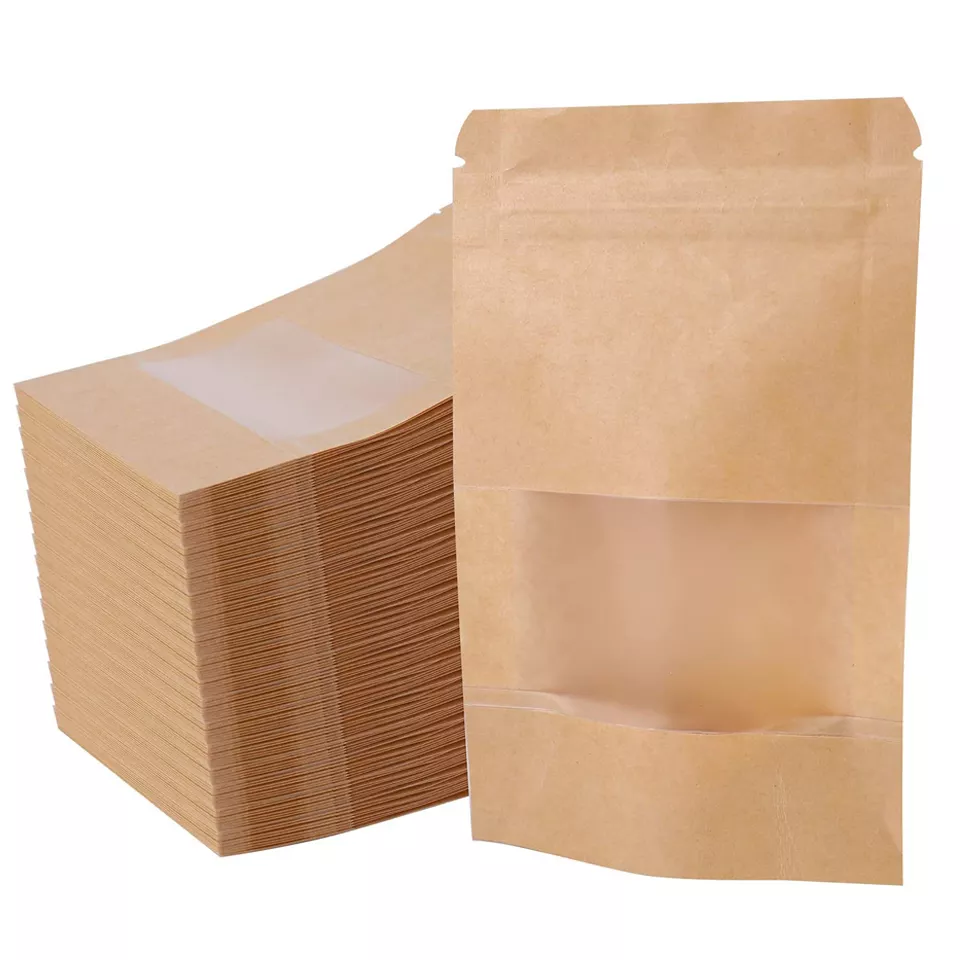
Weed Zipper Pouch
This low-profile pouch page lists a zipper closure with a locking loop, heat sealing, custom sizing, and kraft paper/PE/CPP material options. It can be evaluated for discreet outer organization or a customized bag program. The page lists a normal MOQ of 10,000 pieces, depending on bag size.
Verify before use: opacity with a real order, closure instructions, and whether the exact ordered configuration has any child-resistance evidence required in your state. The product page does not make a blanket substitute for primary packaging.

420 Smell Proof Bags with Zipper
The current page describes a black, resealable polyethylene zipper bag in a 3 × 4.7-inch format, with custom logo and size options. It lists a 1,000-piece minimum and a 15–18 day lead time.
Verify before use: the stated dimensions fit the intended primary package, the finished bag is truly opaque under store lighting, and any child-resistant requirement is supported separately. Odor control and a zipper do not, by themselves, establish child resistance.
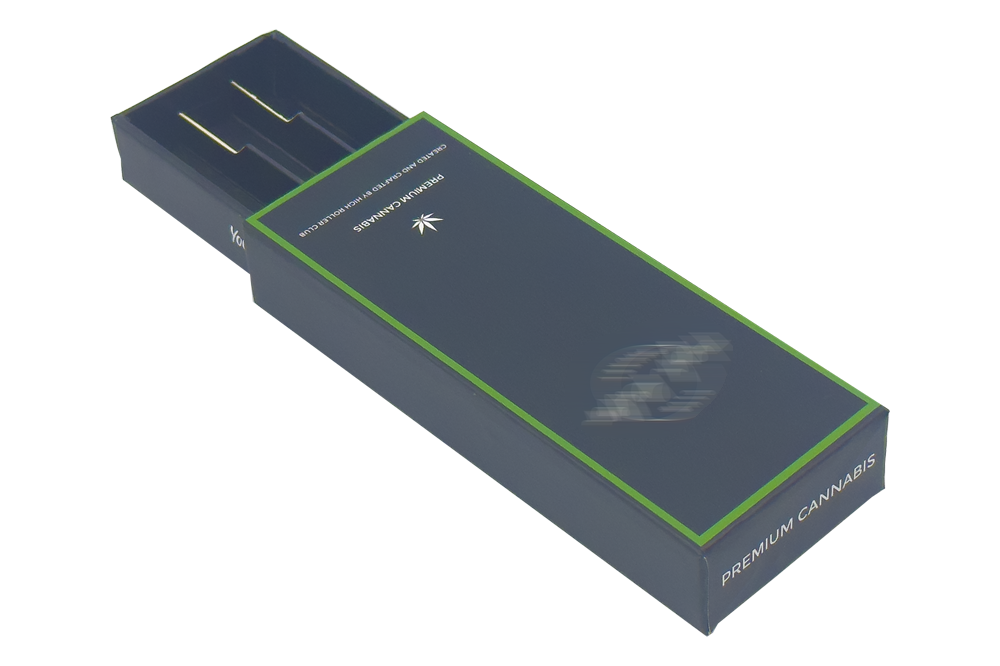
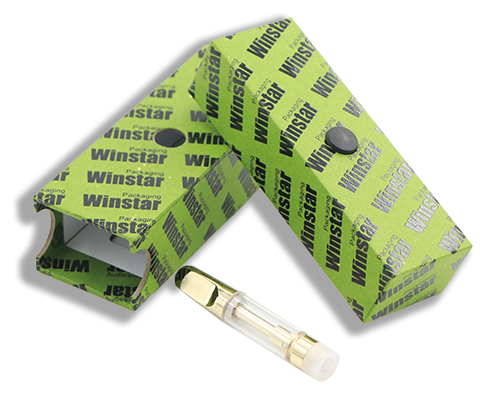
Child-Resistant Slide-Out Drawer 3-Pack Pre-Roll Box
This primary-package option uses a slide-out drawer and is designed for three pre-rolls. The page identifies 16 CFR §1700.20 certification, custom sizes and shapes, quantities from 1,000 to 500,000, and a 7–14 business-day turnaround.
Verify before use: request the certificate and test report for the exact dimensions, locking geometry, materials, and instructions you plan to order. A structural, size, or material change may require a new assessment.
For broader sourcing, compare the site’s Weed Bags and Child-Resistant Packaging categories, then ask for samples and documentation tied to your final specification.
A Point-of-Sale Exit-Bag Workflow
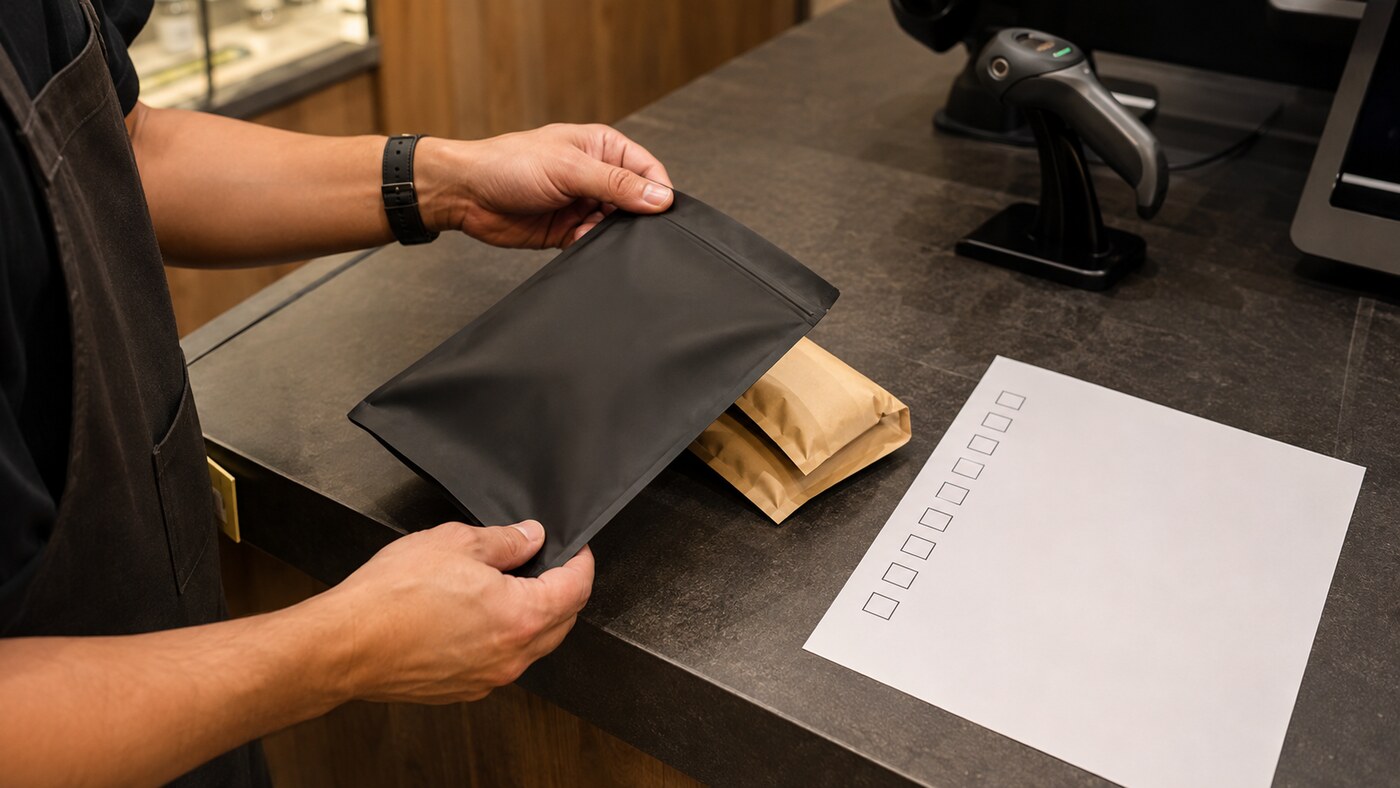
- Scan and inspect every SKU. Confirm the primary package is sealed, undamaged, correctly labeled, and approved for sale.
- Select the mapped exit package. Use the size and closure listed in the SKU or order-type matrix rather than whichever bag is closest.
- Run an opacity check. Under the brightest checkout lighting, rotate the filled bag and verify that product shapes, colors, and labels are not visible when opacity is required.
- Protect closures. Do not overfill, fold across a zipper, or let rigid corners puncture the outer bag.
- Close as instructed. Staff should use the tested or specified closure sequence, not an improvised staple or knot.
- Give neutral opening guidance. If allowed, show the adult customer how to operate and resecure a reusable closure without making an unsupported safety claim.
- Record exceptions. Quarantine damaged bags and note repeated fit, seal, or usability failures for purchasing review.
Documents to Request Before You Buy
- The child-resistance test report or certificate for the exact package configuration, when applicable
- A drawing that identifies dimensions, closure geometry, film gauge, material layers, and tolerances
- Opening and reclosing instructions used during testing
- Change-control terms explaining when substitutions or tooling revisions trigger review
- Material declarations and food-contact information appropriate to the contents
- Production samples from the proposed material, print, closure, and sealing process
- An opacity sample evaluated with the largest and lightest-colored order expected
- Lot identification and traceability information for receiving inspection
A supplier’s general statement that a family of packages is “compliant” is not enough. The buyer should be able to connect the evidence to the physical item in receiving, including revisions that occurred after the original test.
Common Exit-Bag Mistakes
- Buying by name alone: “exit bag,” “smell-proof,” and “resealable” describe functions or marketing, not proof of a specific child-resistant standard.
- Assuming one rule covers all states: California and Oregon already demonstrate why that shortcut fails.
- Testing opacity while empty: seams and stretched panels may reveal a light-colored package only after filling.
- Ignoring the largest mixed order: a bag that fits one jar may fail when rigid boxes and tubes stress the zipper.
- Changing materials after approval: a thinner film, new zipper, or different adhesive can alter the tested package.
- Using the outer bag to hide primary defects: the retail handoff layer does not repair an unreadable label or broken tamper-evident seal.
Frequently Asked Questions
What is a cannabis exit bag?
It is an outer package used to carry a customer’s cannabis order away from a licensed retailer. Its required functions vary by jurisdiction.
Is an exit bag the same as primary packaging?
No. Primary packaging contains or directly encloses one product; an exit bag usually groups one or more already packaged products at retail handoff.
Does every cannabis exit bag need to be child-resistant?
No universal U.S. rule answers that question. Some states assign child resistance to the primary package, some allow or require a child-resistant exit layer in defined situations, and some require controls at both layers.
Can a child-resistant exit bag replace a non-CR jar?
Only where the applicable rule expressly permits that arrangement and the exit package meets the required standard for that product. Oregon provides such a pathway in some situations; California’s current rules require child resistance on the cannabis-goods package itself.
Does an opaque bag count as child-resistant?
No. Opacity prevents viewing through the package. Child resistance is a separate performance characteristic supported by testing of the package and closure configuration.
Is a zipper automatically child-resistant?
No. Ordinary zippers are resealable but not necessarily child-resistant. Ask for evidence tied to the exact zipper, film, dimensions, and operating instructions.
Do exit bags need tamper-evident features?
That depends on the jurisdiction and how it assigns tamper evidence. Do not assume an outer seal replaces tamper evidence required on the product package.
How should a dispensary choose exit-bag size?
Test the largest expected mixed order, allow room for proper closure, and check that rigid corners do not puncture the bag or distort the zipper.
What should buyers request from an exit-bag supplier?
Request drawings, material and closure specifications, production samples, instructions, change-control terms, and any required test report or certificate for the exact configuration.
Does cannabis packaging itself guarantee compliance?
No. Compliance depends on the product, label, package configuration, testing or approval evidence, manufacturing controls, retail procedures, and current rules in the selling jurisdiction.
Compare the Right Layer for Your Product
Review child-resistant primary structures and bag formats, then request documentation and samples for your exact state, SKU, and closure.