
Last updated: August 14, 2026
Quick Answer
A cannabis flower pouch seal test should challenge the finished package—not just an empty sample. Fill pouches at the intended weight and bulk density, keep the zipper and heat-seal land clean, seal across a documented time-temperature-pressure window, then inspect wrinkles, channels, edge damage, and closure alignment. Add gentle squeeze checks, controlled peel comparisons, repeated zipper cycles, and aged samples from normal storage. Record the pouch lot, product lot, machine settings, operator, failures, and disposition. A pouch marketed as odor-resistant, moisture-resistant, or child-resistant still needs SKU-specific documentation and a pack-out test; packaging alone does not establish regulatory compliance or shelf life.
Flexible pouches look simple, but their performance depends on the interaction among film, zipper, sealant layer, fill level, product debris, equipment settings, and handling. A clean-looking top seal can still contain a narrow channel. An overfilled pouch can push flower into the sealing area. A zipper that closes once may lose alignment after repeated opening.
Contents
- Why Test Filled Cannabis Flower Pouches?
- Common Pouch Seal Failure Modes
- A Practical Cannabis Flower Pouch Seal Test
- Seal-Test Decision Table
- Packaging Options to Sample
- Production Sampling and Records
- Questions to Ask a Pouch Supplier
- Mistakes That Make Testing Misleading
- Frequently Asked Questions
- Get Packaging Guidance
Why Test Filled Cannabis Flower Pouches?
Search results often reduce pouch selection to “airtight,” “smell-proof,” or “high barrier.” Those descriptions do not show whether a specific pouch, fill weight, product texture, and sealing process work together. Finished-package testing closes that gap.
Recent research also shows why brands should validate rather than repeat broad preservation claims. A 2024 open-access study in the Journal of Cannabis Research found no overall preservation advantage for nitrogen-modified atmosphere across total cannabinoids and aromatics in its tested conditions, although some individual compounds behaved differently. A separate 2026 study comparing different package systems reported better THC retention in nitrogen-flushed laminate bags than ambient-packed HDPE jars, while noting that future work should isolate atmosphere from package format. The practical lesson is to test the actual system and avoid treating one variable as a guarantee.
Regulatory needs also vary. California’s current final-form cannabis packaging guidance addresses tamper evidence, child resistance, and resealability, but a supplier feature claim does not replace a licensee’s responsibility to check the rules that apply to the product and market.
Common Pouch Seal Failure Modes
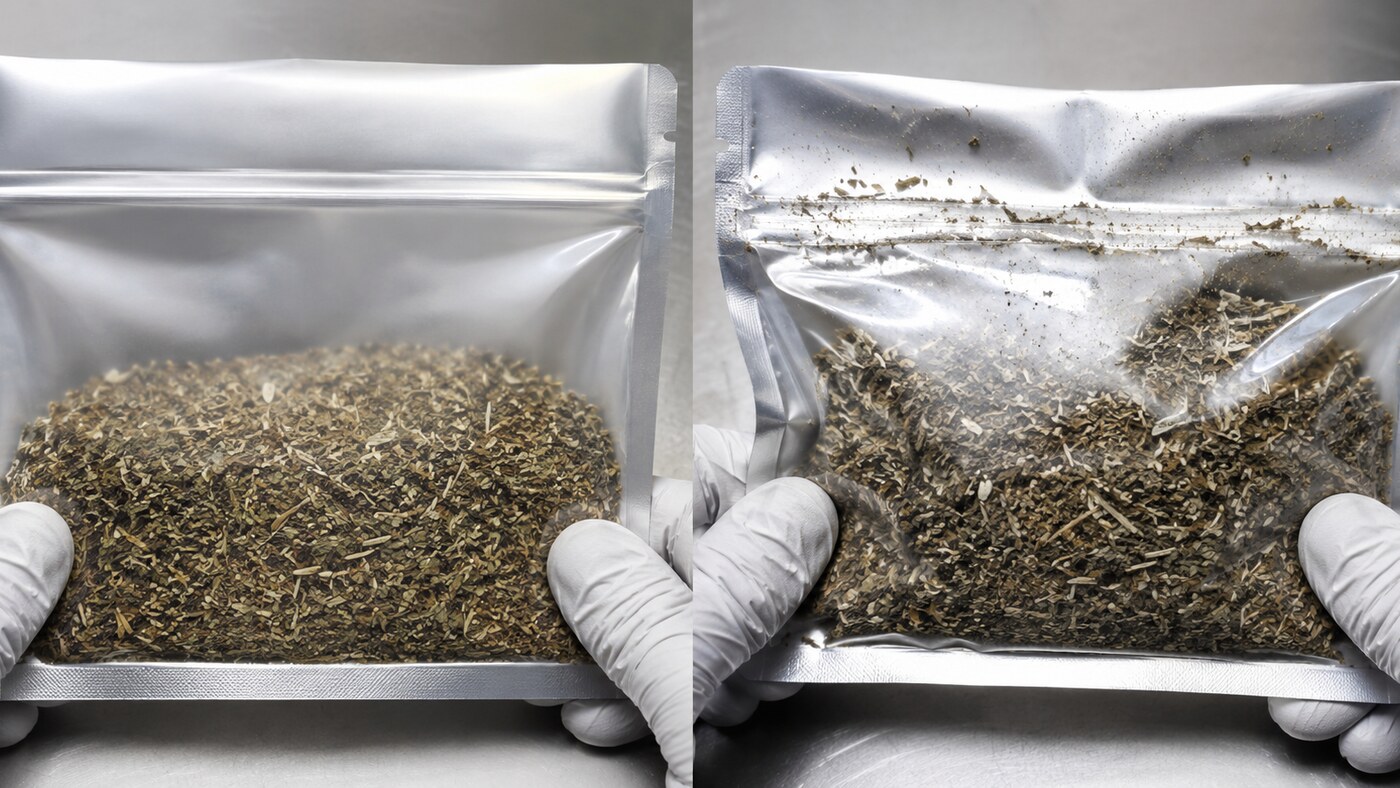
Product in the seal land
Loose particles, stems, and dust can interrupt the sealant-to-sealant contact needed for a continuous bond. This is especially likely when the fill funnel is too short, the pouch mouth is narrow, or the target fill leaves little headspace.
Wrinkles and channels
A fold crossing the top seal can form a leak path. Watch the corners and zipper transition, where material thickness changes. Do not accept a sample merely because the center of the seal looks flat.
Excess heat or dwell
More heat is not automatically safer. It can distort the zipper, thin the sealant, create brittle edges, or make the tear notch difficult to use. The goal is a stable operating window, not one aggressive setting.
Under-sealing
Low temperature, short dwell, uneven pressure, a cold start, or worn sealing bars can produce weak or incomplete bonds. Compare samples from startup, steady production, and after a pause.
Closure fatigue
A resealable zipper must be aligned and fully engaged. Test repeated consumer-like cycles, then inspect for separation from the pouch wall, distortion, debris buildup, and uneven closure.
A Practical Cannabis Flower Pouch Seal Test
- Define the pack-out. Record product type, target net weight, expected bulk density, pouch SKU, lot, and whether a humidity insert or secondary carton is used.
- Condition samples. Store pouches and product in the normal packing environment long enough to avoid testing unusually cold or warm materials.
- Challenge fill level. Run nominal fill plus reasonable high and low conditions. Do not improvise an extreme that would never be released.
- Protect the seal land. Use the intended funnel and work instruction. Deliberately retain several contaminated examples as known failures for training.
- Build a settings window. Run low, center, and high machine settings authorized by the film supplier and equipment process. Record actual values.
- Inspect immediately. Check width, alignment, wrinkles, channels, burn-through, zipper distortion, tear-notch damage, and sharp edges.
- Apply a gentle squeeze screen. Use consistent hand pressure or a defined fixture. This is a comparative screen, not proof of barrier performance.
- Compare seal opening. Pull cut strips or finished seals consistently and document whether failure occurs through the seal, film, or laminate. Use calibrated testing when quantitative acceptance criteria matter.
- Cycle the zipper. Open and reclose the package the planned number of times, checking alignment and closure after each interval.
- Age and retest. Retain samples under documented normal and justified challenge conditions. Recheck odor escape, seal appearance, zipper function, product condition, and package damage.
A production screen is not a laboratory barrier, migration, child-resistance, or shelf-life study. When those claims matter, obtain appropriate supplier documents and engage qualified testing resources.
Seal-Test Decision Table
| Observation | Likely contributor | Next check | Disposition |
|---|---|---|---|
| Particles cross the seal | Filling method or insufficient headspace | Funnel length, fill height, mouth cleaning | Hold affected units; correct pack-out |
| Seal peels easily at startup | Cold equipment or low dwell | Warm-up control and first-piece approval | Segregate startup quantity |
| Brittle or distorted edge | Excess heat, pressure, or dwell | High-setting sample and bar alignment | Reset within approved window |
| Leak only near zipper end | Thickness transition or wrinkle | Corner inspection and jaw parallelism | Escalate recurring pattern |
| Zipper opens after cycling | Misalignment, fatigue, or debris | Cycle test across lots and operators | Do not approve reseal claim yet |
Packaging Options to Sample
These live 420 Packaging products are useful starting points for sample comparisons. The website descriptions are not substitutes for test reports or state review; request current documents for the exact construction you intend to buy.
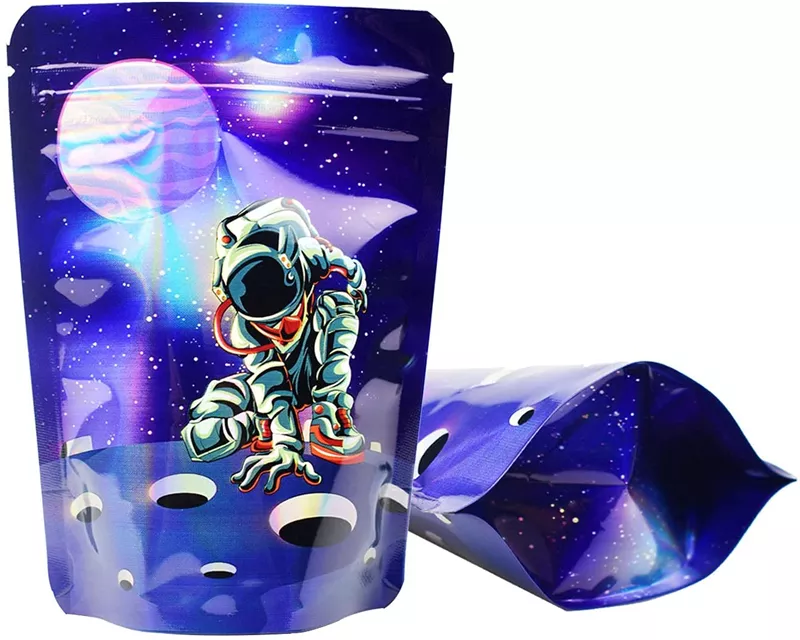
Double Printed & Holographic Mylar Pound Bags
The current product page lists a stand-up 3.5-gram format, resealable zipper, heat-sealable top, easy-tear feature, customizable sizes, and film thickness options. It is a useful candidate for comparing fill height and seal settings before custom printing.
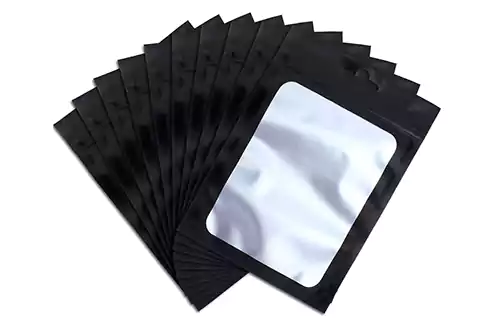
420 Smell Proof Bags with Zipper for Weed & Candy
The live page identifies a polyethylene construction, zipper closure, black color, 3 × 4.7-inch size, customization, MOQ of 1,000, and a listed 15–18 day lead time. Confirm the exact ordered specification and test both zipper and top seal.
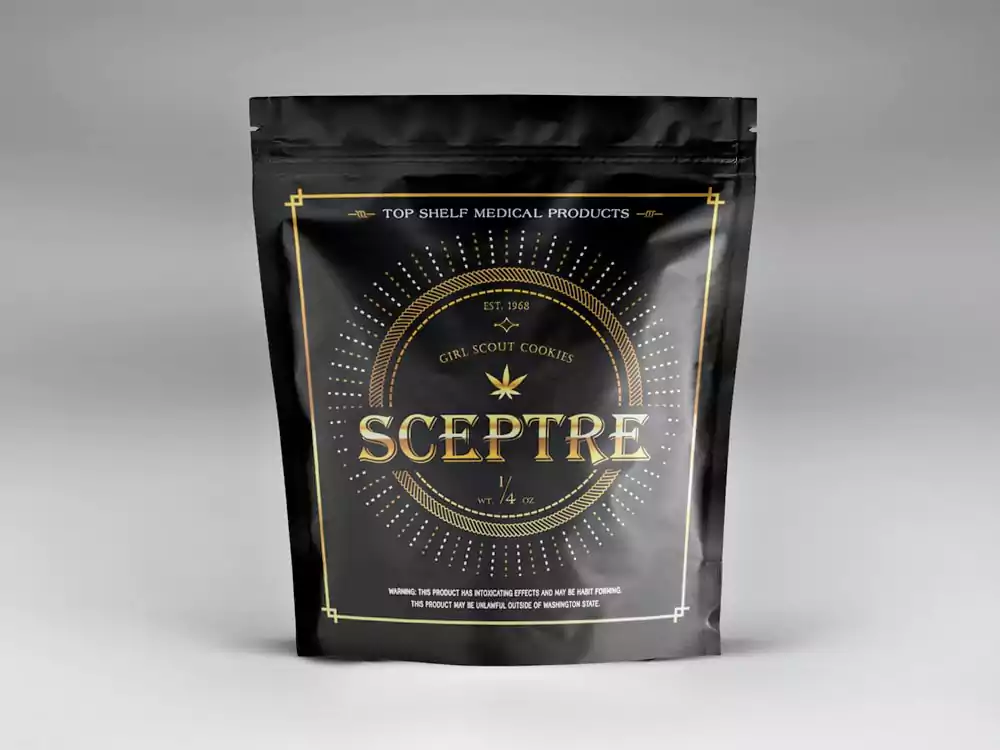
1lb Smell Proof + Moisture Proof Heavy Duty Weed Bags
The product page describes custom printing, a 1,000-unit MOQ, and availability with certified child-resistant zippers. Ask which certification covers the exact SKU and construction; then verify that production filling and sealing do not damage the closure.
See the broader Weed Bags collection to compare additional formats.
Production Sampling and Records
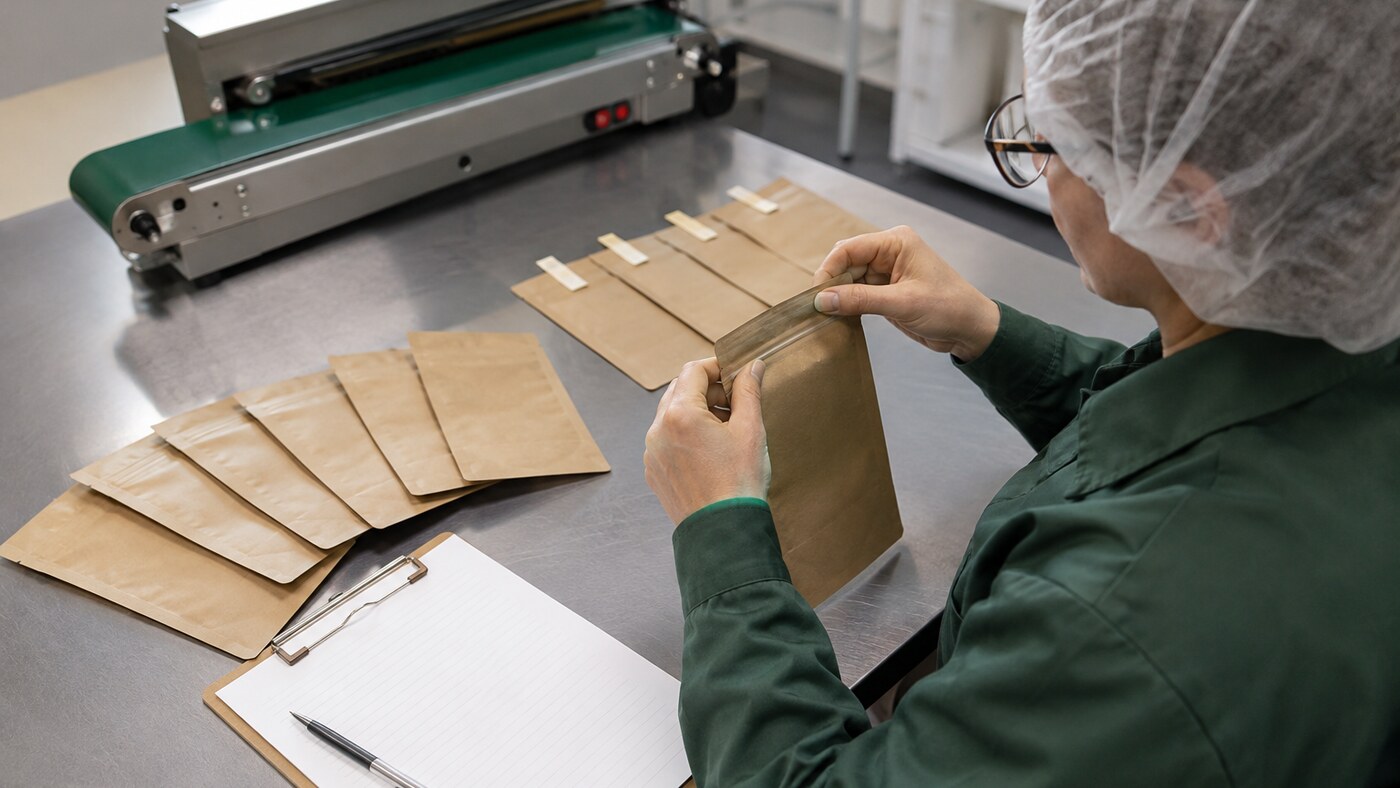
Create a sampling plan based on line risk, lot size, process stability, and applicable quality requirements. At minimum, include startup, after adjustment, regular intervals, after long stops, and the end of the lot. Do not hide failures by averaging them into a passing count.
| Record | Why it matters |
|---|---|
| Pouch supplier, SKU, and lot | Connects a defect pattern to incoming material |
| Product lot, fill weight, and bulk condition | Separates package issues from pack-out changes |
| Sealer ID and settings | Supports repeatability and troubleshooting |
| Time, operator, sample result | Shows when drift began |
| Failure photo and disposition | Prevents ambiguous release decisions |
Questions to Ask a Pouch Supplier
- What is the complete film structure and sealant layer for this SKU?
- What sealing temperature, dwell, and pressure range is recommended for the intended equipment?
- Are barrier values available for the exact construction, and under what test conditions?
- Does the zipper have child-resistant testing for this exact pouch size and material combination?
- Which dimensions and seal locations are treated as critical tolerances?
- Can the supplier provide production samples from the same construction as the order?
- How are film, zipper, adhesive, and printing changes communicated?
- What incoming and finished-goods inspections are performed by lot?
Mistakes That Make Testing Misleading
- Testing empty pouches while production pouches are packed close to the zipper.
- Using only the strongest sealer setting instead of defining an operating window.
- Calling a hand squeeze a formal leak or barrier test.
- Ignoring startup, restart, corner, and zipper-transition failures.
- Changing film, zipper, ink coverage, or pouch size without rechecking the pack-out.
- Assuming “smell-proof,” “moisture-proof,” or “child-resistant” applies to every custom variation.
- Approving appearance without retaining aged and distribution samples.
Frequently Asked Questions
What is a cannabis flower pouch seal test?
It is a documented evaluation of filled pouches, including the heat seal, zipper, fill level, contamination risk, repeated use, and performance after storage.
Should the pouch be tested empty or filled?
Both can be useful, but approval should include the intended filled configuration because product volume and debris can change sealing performance.
Does a zipper replace the top heat seal?
Not automatically. The required retail closure and tamper-evident configuration depend on the product and jurisdiction. Verify the intended package design and current rules.
How much headspace should a flower pouch have?
There is no universal percentage for every product and pouch. Use enough working room to fill cleanly and seal without compressing flower into the zipper or seal land, then validate the chosen fill.
Can a hand squeeze prove a pouch is airtight?
No. It can reveal obvious defects and compare samples, but it does not quantify oxygen or moisture transmission and does not replace a validated integrity method.
What causes channels in a pouch seal?
Common contributors include wrinkles, trapped product, misaligned jaws, uneven pressure, and thickness transitions near the zipper or gusset.
How often should production seals be checked?
Base frequency on risk and process capability, with checks at startup, after adjustment or stoppage, at defined intervals, and near the end of the lot.
Does nitrogen flushing guarantee terpene retention?
No. Published studies report condition-specific results, and package material, headspace, process control, product, storage, and test design all affect outcomes.
Does “child-resistant zipper” mean the finished pack is compliant?
Not by itself. Confirm documentation for the exact package configuration and evaluate applicable state rules, labeling, filling, and use conditions.
What should be retained after approval?
Keep specifications, supplier documents, approved settings, filled samples, test records, photos, deviations, and the final release decision under your quality system.
Get Packaging Guidance
Choose samples around your actual flower weight, filling method, sealer, labeling area, and market requirements. Get packaging guidance from 420 Packaging and request current specifications and documents for every shortlisted pouch.