
Last updated: August 3, 2026

Quick Answer
A cannabis packaging sample checklist should do more than confirm that the print looks attractive. Before authorizing mass production, use production-intent samples to verify internal fit, closure operation, tamper evidence, label space, code scanning, color and finish, assembly speed, shipping durability, and the documents tied to any child-resistant claim. Test the sample with the actual filled product or a dimensionally and physically representative substitute. Record each result, identify who approved it, and retain one signed “golden sample.” A sample can support your due diligence, but it does not by itself make a package compliant in every state; the licensee remains responsible for checking the current rules that apply to the product and market.
Buying custom cannabis packaging is one of the few procurement decisions where a small sample error can multiply across an entire production run. A box can match its PDF proof and still pinch a cartridge, let a jar rattle, hide required label information, scan poorly under store lighting, or open differently after repeated use.
This guide turns sample approval into a documented release decision. It is written for brand owners, processors, compliance teams, designers, and purchasing managers preparing to order printed pre-roll, vape, concentrate, edible, or other cannabis packaging in the United States.
What Cannabis Packaging Sample Approval Must Prove
A good approval process answers four separate questions. Combining them into one vague “looks good” decision is where expensive mistakes begin.
- Structure: Does the package fit, protect, close, reopen, and assemble as intended?
- Information: Are required symbols, warnings, batch fields, dates, weights, and product identity placed where the applicable state requires them?
- Production: Can the supplier reproduce the approved material, color, finish, insert, adhesive, and closure at scale?
- Operations: Can your staff fill, label, seal, case-pack, scan, store, and ship the format without creating new failure points?
State rules differ. For example, California explains that most required information must appear on the outer layer or remain easily visible and that small packages may use an affixed supplemental label; a separate QR code or website is not a substitute for required supplemental labeling. New York’s current guidance also emphasizes records supporting child-resistance and provides multiple packaging and labeling checklists. Review the rules for every destination market and have the responsible compliance professional approve the final configuration.
Useful official starting points include the California DCC manufactured-product labeling checklist, the New York OCM Part 128 guidance, and the federal Poison Prevention Packaging standards in 16 CFR Part 1700.
Build the Right Sample Set Before Testing
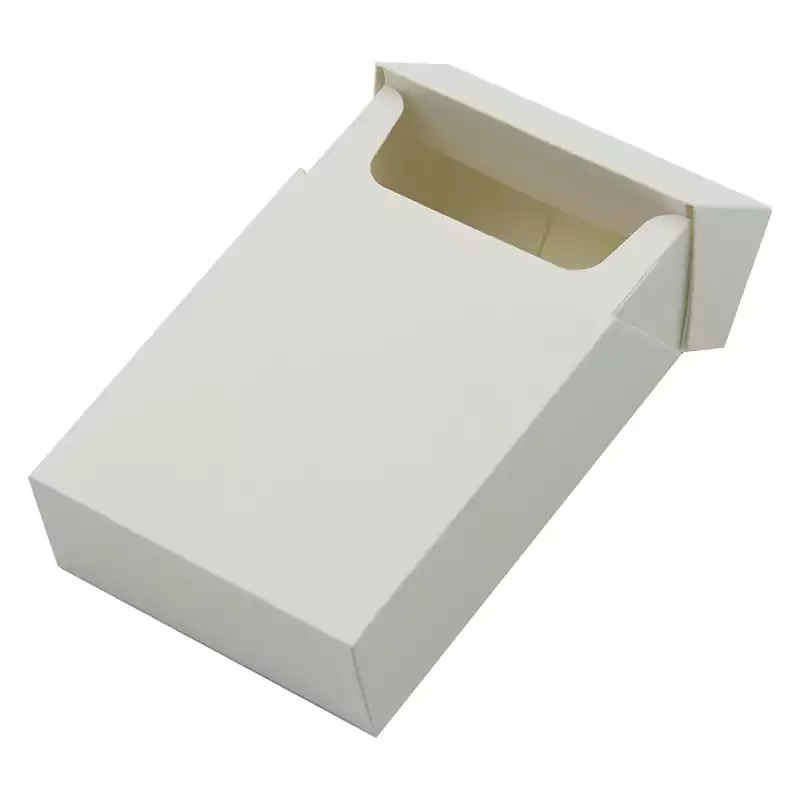
Ask the supplier what each sample actually represents. A white structural mockup can prove dimensions but not final color, coating, adhesive behavior, or tamper feature. A digitally printed mockup may approximate artwork but differ from offset production. A complete review normally needs three reference types:
- Structural sample: final or production-equivalent board, dimensions, insert, folds, lock, and closure.
- Printed proof or decorated sample: final artwork, color targets, finish zones, symbols, variable-data areas, and scannable codes.
- Filled pack-out sample: the actual sellable item, or a safe representative substitute, packed exactly as operations will pack it.
Request at least three identical physical samples when possible. One is used for destructive and transit checks, one for repeated-use and line trials, and one remains clean for approval. If a child-resistant certification is being relied upon, separately obtain the relevant report and confirm that its package specification matches the proposed structure, size range, material, and closure. Do not assume that a similar-looking box is covered.
Cannabis Packaging Sample Checklist: Nine Tests
1. Verify the product-to-package fit
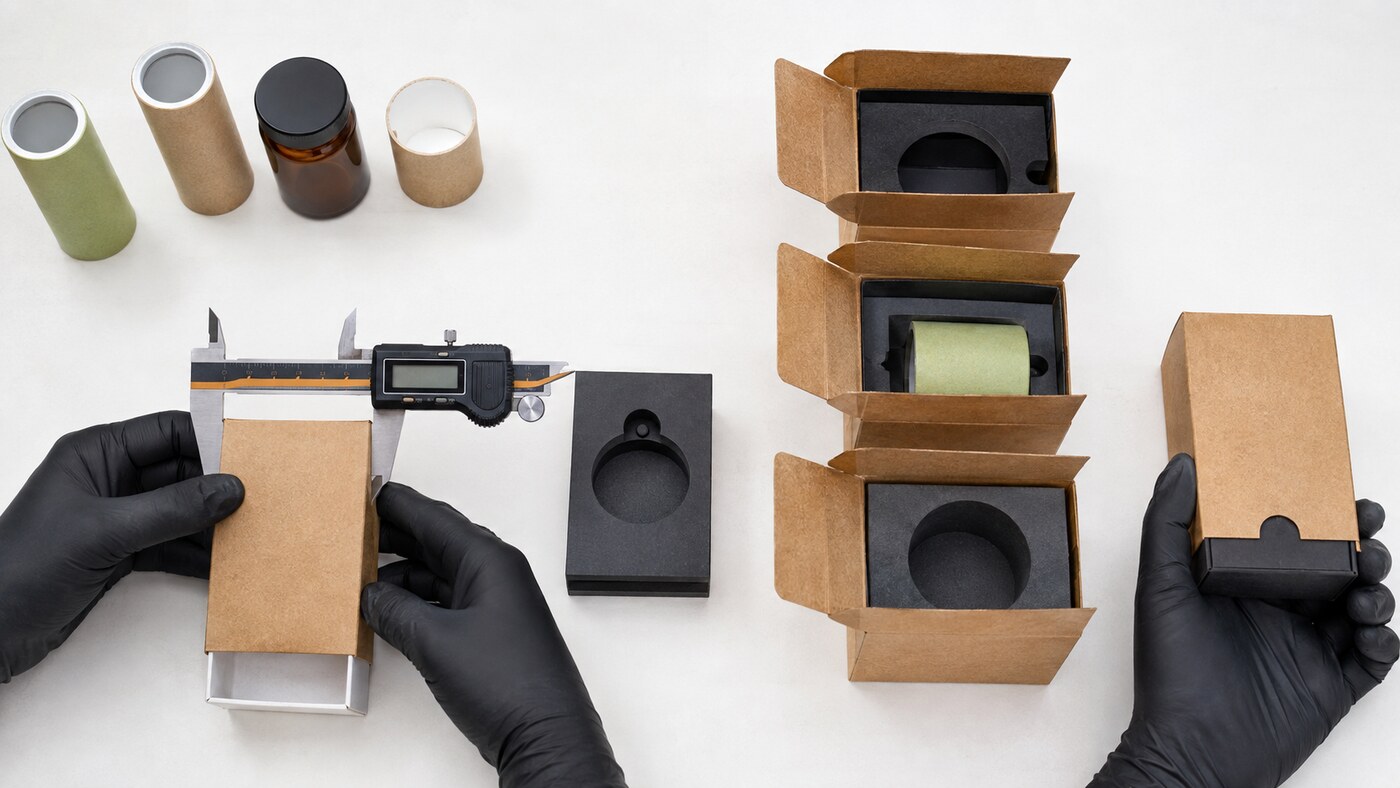
Measure the actual product at its widest, tallest, and most variable points. Check internal dimensions rather than relying on exterior dimensions. Include labels, caps, mouthpieces, seals, humidity packs, liners, inserts, and any tolerance created by filling. Then load the sample and hold it in the orientations it will experience in shipping and retail display.
- Reject if the item rattles, rotates into the wrong orientation, rubs printed surfaces, or requires force to remove.
- Reject if the insert bows, tears, releases dust, exposes sharp edges, or allows glass or hardware to contact the outer wall.
- Record the product lot or dimension set used for the test so a later hardware change triggers requalification.
2. Exercise every closure and opening step
Have several adults follow the intended opening instructions without coaching. Repeat the opening and closing cycle at least ten times for a usability screen, while recognizing that this informal check is not a substitute for standardized child-resistant testing. Watch for tabs that whiten or tear, magnets that misalign, sleeves that bind, adhesives that lift, and closures that appear shut but are not fully engaged.
3. Inspect tamper-evident evidence
Identify exactly what visible evidence should remain after first opening: a broken label, torn perforation, separated seal, missing film band, or another irreversible cue. Try to open the package from corners, seams, windows, and the bottom without disturbing that cue. If access is possible without leaving clear evidence, stop approval and redesign the tamper system.
4. Map the label panels at actual size
Print the final artwork at 100%, assemble it, and inspect every viewing angle. Measure the usable flat area after folds, windows, glue zones, seams, locks, tear strips, and retail stickers are accounted for. Confirm that variable fields such as batch, UID, potency, packaged-on date, expiration date, and barcode have enough space for the longest expected value—not just today’s shortest example.
5. Test every machine-readable code
Scan QR codes and barcodes on a curved or finished package, not only on a flat PDF. Use multiple current iOS and Android phones plus the scanner used by the intended retailer. Test under bright display lighting and lower-contrast warehouse lighting. Verify that a batch-specific link reaches the correct live destination and that the destination has an owner, update process, and retention plan.
6. Approve color and finish under more than one light
Compare the sample with an agreed physical color target under neutral daylight and typical retail lighting. Look for foil fill-in, spot-UV drift, soft-touch scuffing, cracking at folds, laminate lifting, and fingerprints. Record acceptable tolerances with photographs or a signed sample; a screen image is not a dependable color master.
7. Run a small filling-line trial
Time a batch of 20–50 pack-outs using the actual work sequence. Count misfolds, damaged inserts, incomplete locks, crooked labels, seal failures, and rescans. A package that takes 15 extra seconds per unit adds more than four labor hours across 1,000 units. Capture the work instruction and identify which steps require a fixture or visual check.
8. Simulate distribution
Case-pack the samples as they will ship, then perform a practical screen: controlled drops in several orientations, vibration or repeated movement inside the master carton, compression from stacked cases, and a temperature/humidity exposure appropriate to the distribution route. These screens help reveal weak corners, rubbed finishes, loose jars, migrated labels, and seal changes. Formal validation may require a qualified lab and an applicable protocol.
9. Confirm documents and change control
Match every document to the exact sample: dieline revision, artwork revision, material, caliper, finish, adhesive, insert, closure, and test report. Ask which changes the supplier may make without written approval. Material substitutions, new tooling, revised adhesives, different inserts, and production-site changes should trigger a documented review.
Approval Decision Table
Use objective outcomes. “Approve with comments” is risky when the comment changes fit, safety, labeling, or scan performance; those items require a corrected sample or proof before release.
| Checkpoint | Evidence to Record | Release Standard | Stop-and-Correct Trigger |
|---|---|---|---|
| Fit and insert | Measured product range, photos, movement check | Loads and removes without damage; controlled movement | Binding, rattle, exposed hardware, insert deformation |
| Closure | Cycle count, user observations, video | Consistent full engagement and adult usability | False closure, tearing, binding, inconsistent lock |
| Tamper cue | Opening attempts from all seams | Access leaves clear, irreversible evidence | Product reached while cue remains intact |
| Artwork and label | 100% proof, panel map, revision ID | Required information remains legible and unobstructed | Text crosses folds, fields too short, wrong revision |
| Codes | Device/scanner matrix and destination | Reliable scan after finishing and assembly | Intermittent scan, wrong batch, dead link |
| Distribution | Case configuration, test conditions, photos | Package and product remain functional and saleable | Open seam, broken product, lifted label, severe scuffing |
Recommended Packaging Options to Sample
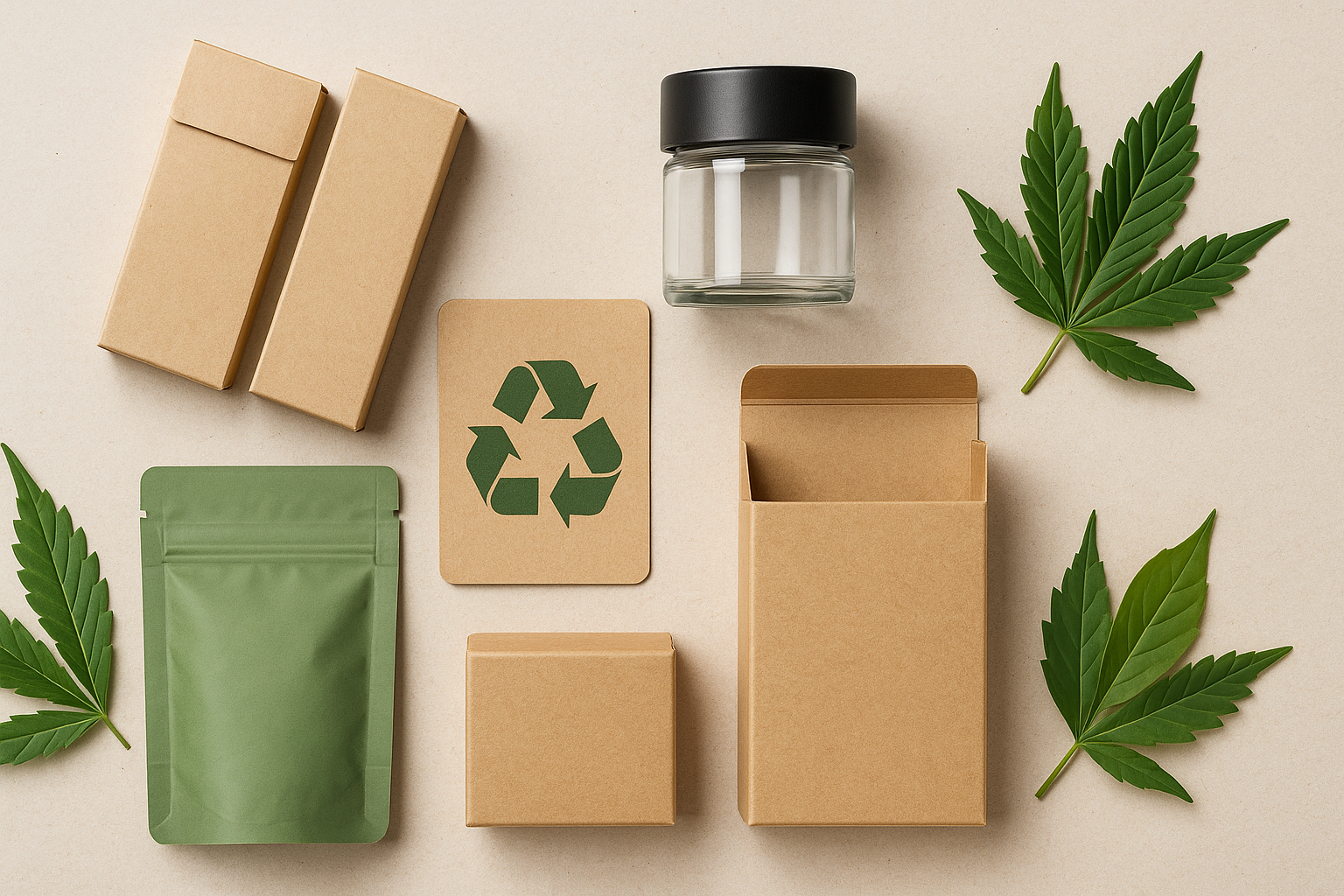
The right sample depends on the product, filling method, state rules, and retail channel. These current 420 Packaging options illustrate three different approval challenges. Product pages and images were checked on August 3, 2026. A structure described as child-resistant or tamper-evident still needs documentation and a finished-pack review against the requirements that apply to your product.
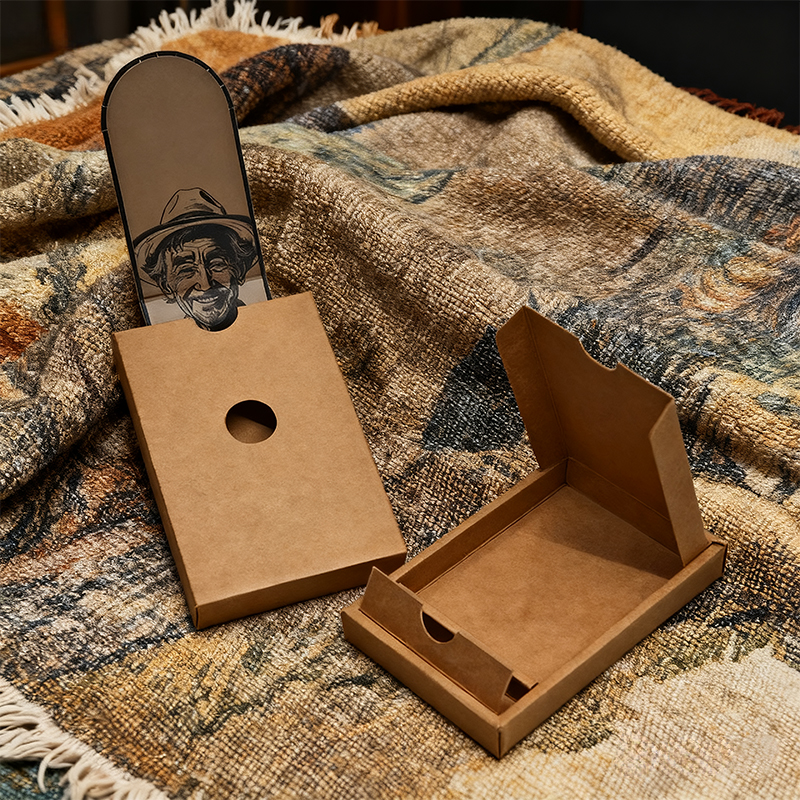
Child-Resistant Kraft Paper Pre-Roll Packaging Box
This kraft paperboard format uses an outer sleeve, sliding inner tray, and locking tab, with capacity and divider options customized to the pre-roll size and count. It is a useful sample for testing push-and-slide operation, cone clearance, divider retention, repeated closing, warning-panel space, and assembly time.
Ask to verify: the exact structure covered by any child-resistant documentation, internal dimensions with your cone and divider, lock engagement after repeated cycles, and whether final ink or finish changes friction at the sliding surfaces.

Custom 510 Vape Cartridge Box With Window and Peel Seal
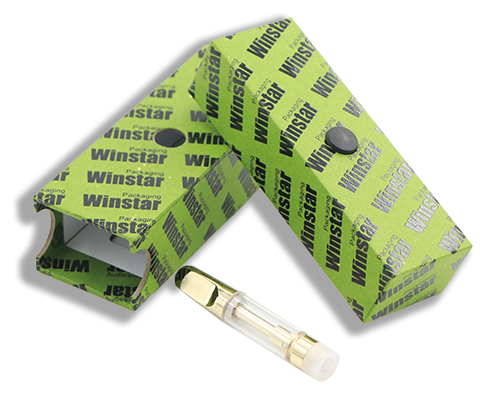
This paperboard cartridge carton offers a window, fitted insert options, dedicated information panels, and a peel-to-open tamper cue. It is suitable for checking cartridge fit, window alignment, seal evidence, code placement, finish durability, and whether the proposed insert holds 0.5 mL or 1.0 mL hardware without rattle.
Ask to verify: whether a window is allowed for the target product and market, the exact hardware drawing used to cut the insert, the seal material and application process, and any child-resistant upgrade needed for the final package.
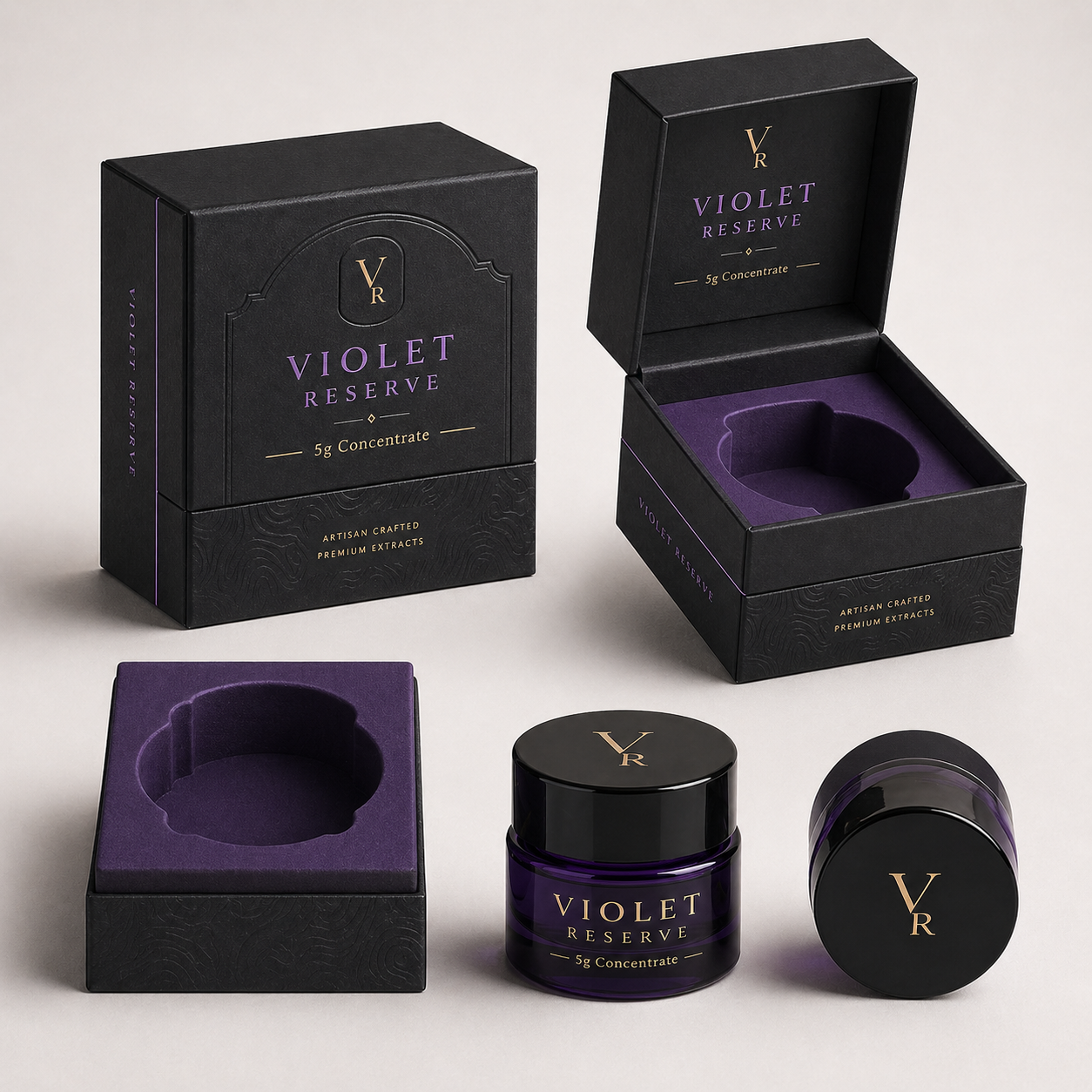
5g Concentrate Violet Glass Packaging Box
This rigid paperboard setup box is customized around a 5g violet glass jar and can use a paper, foam, EVA, or molded insert. Its product page lists a 1,000-piece MOQ. It is a strong sample candidate for checking jar retention, hinge and lid alignment, insert compression, finish scuffing, label-panel space, and case-pack protection.
Ask to verify: the jar diameter and height tolerance, final insert material and density, whether the immediate container also needs specific labeling, and what primary child-resistant and tamper-evident components are required for the sellable configuration.
Create a Supplier Handoff and Golden-Sample Record
Once the sample passes, turn approval into a controlled production reference. Mark and sign one undamaged sample across a seam so it cannot be substituted silently. Store it away from heat, moisture, and direct light, and photograph all sides beside a scale or ruler.
Minimum handoff record
- Supplier, factory, project, SKU, and purchase order
- Dieline, artwork, and specification revision numbers
- External and internal dimensions with tolerances
- Board or material, thickness, finish, adhesive, insert, closure, and seal
- Color targets and approved finish locations
- Product or hardware version used for fit testing
- Applicable test reports and the exact configuration they cover
- Photos, code-scan matrix, pack-out trial result, and distribution-screen result
- Open deviations, approver names, approval date, and reapproval triggers
Add a pre-shipment inspection plan to the purchase order. It should identify which measurements, visual defects, functional checks, and document checks will be sampled before the lot ships. The golden sample then becomes a comparison tool, not a substitute for lot inspection.
Common Sample Approval Mistakes
- Approving a render as if it were a production sample: a render cannot prove fit, friction, seal performance, finish cracking, or assembly time.
- Testing an empty package: the filled configuration can change closure load, balance, label adhesion, and shipping behavior.
- Using only one ideal product unit: hardware and jars have tolerances; test the high and low ends of the actual range.
- Assuming a child-resistant claim transfers across sizes: request evidence for the exact or properly covered package specification.
- Approving color from a monitor: use a physical target and state which lighting and substrate were used.
- Testing a QR code before lamination or folding: gloss, curvature, seams, and final scale can change scan performance.
- Leaving comments unresolved: if a note changes fit, safety, required information, or function, obtain a corrected proof or sample.
- Failing to define change control: an unapproved adhesive, board, insert, tool, or factory change can invalidate the sample decision.
Frequently Asked Questions
What is a cannabis packaging sample checklist?
It is a documented set of checks used before mass production to verify fit, closure, tamper evidence, artwork, label space, code scanning, finish, pack-out efficiency, shipping durability, and supporting records.
Is a digital proof enough to approve cannabis packaging?
No. A digital proof is useful for artwork and layout, but it cannot confirm internal fit, material feel, closure operation, insert retention, adhesive performance, tamper evidence, or transit durability. Use a physical production-intent sample for those decisions.
How many packaging samples should I request?
Three identical samples are a practical minimum when available: one for destructive or transit checks, one for repeated-use and filling-line trials, and one clean sample for final approval and retention.
Does approving a child-resistant sample prove compliance?
No. An internal opening test is not standardized child-resistant testing. Obtain the applicable test documentation, confirm that it covers the exact proposed configuration, and review the finished package under current state requirements.
Should I test with the actual cannabis product?
Use the actual legally handled product within your licensed process when permitted, or a safe representative substitute that matches its dimensions, weight, container, and physical behavior. The goal is to reproduce the final pack-out without creating legal or safety issues.
What should be included in a golden sample?
The retained sample should match the approved structure, material, print, finish, insert, closure, and seal. Link it to the approved dieline, artwork, specification, test records, photographs, approver, and date.
When does a packaging change require a new sample?
Recheck when there is a change to dimensions, product hardware, material, thickness, closure, insert, seal, adhesive, finish, artwork affecting required information, tooling, manufacturing site, or a regulation relevant to the package.
How should QR codes be tested on the sample?
Scan the finished, folded package with multiple phones and the intended retail scanner under different lighting. Confirm the link or data matches the correct batch, remains live, and does not replace information that must appear physically on the package.
Can a packaging supplier guarantee cannabis compliance?
A supplier can provide specifications, test reports, production controls, and design support, but the licensee must determine whether the finished product-package-label combination meets the rules of each market where it will be sold.
What defects should automatically stop mass production?
Stop for product misfit, unreliable closure, access without the intended tamper cue, missing or obstructed required information, wrong artwork revision, unreliable codes, unsupported safety claims, or damage that makes the product unsafe or unsaleable.
Request Packaging Guidance
Send the product dimensions, product type, target state, pack count, preferred structure, label-space requirements, and desired order quantity. Ask for a production-intent sample plan and clearly identify which safety or compliance documents you need before approving the bulk run.