
Last updated: August 11, 2026

Quick Answer
Concentrate jar liner compatibility is the combined ability of the jar rim, closure, liner, application process, and actual formulation to maintain a consistent seal without unwanted uptake, staining, swelling, wrinkling, odor transfer, or product change. A liner name alone cannot predict the result. Validate the exact component lots with the real product, using controls, documented closure application, upright and inverted screening, planned inspections, and a defined release decision. Then test the jar inside its fitted secondary box and shipping case. This is a product-quality exercise, not proof that a package satisfies every state rule or child-resistant requirement.
Small concentrate jars create a difficult packaging interface: a narrow sealing land, a short closure, a high-value formulation, and little room for component variation. A package can look secure at filling and still show a wet rim, a compressed or distorted liner, visible residue, or a changed product profile later. The practical response is not to choose a material from a generic ranking. It is to define the complete jar–liner–product system and test it before artwork approval and production scale-up.
Concentrate Jar Liner Compatibility: What You Are Actually Validating
The primary package is a system, not a list of independent materials. The sealing result depends on the jar finish, rim flatness, closure thread engagement, liner diameter and thickness, liner construction, how the closure is applied, storage conditions, and the filled product. Changing only one of those inputs can change the outcome.
That is why a supplier statement such as “this liner works with glass jars” is not a release decision. Ask which jar finish, closure, liner construction, test medium, temperature, duration, and acceptance criteria supported the statement. If those details do not match your configuration, treat the information as a starting point for testing.
Define the test unit before ordering
- Jar: manufacturer, model, nominal capacity, finish dimensions, color, and lot.
- Closure: manufacturer, thread design, liner retention method, and lot.
- Liner: full construction, nominal thickness, facing layer, backing or foam, diameter, and lot.
- Product: formulation code, batch, fill mass, fill temperature, and relevant physical characteristics.
- Process: filling method, rim-cleaning step, closure application setting or controlled hand method, and time before inspection.
- Distribution pack: insert, paper box, shipper orientation, and case count.
Separate Seal Failure, Liner Uptake, and Secondary-Box Damage
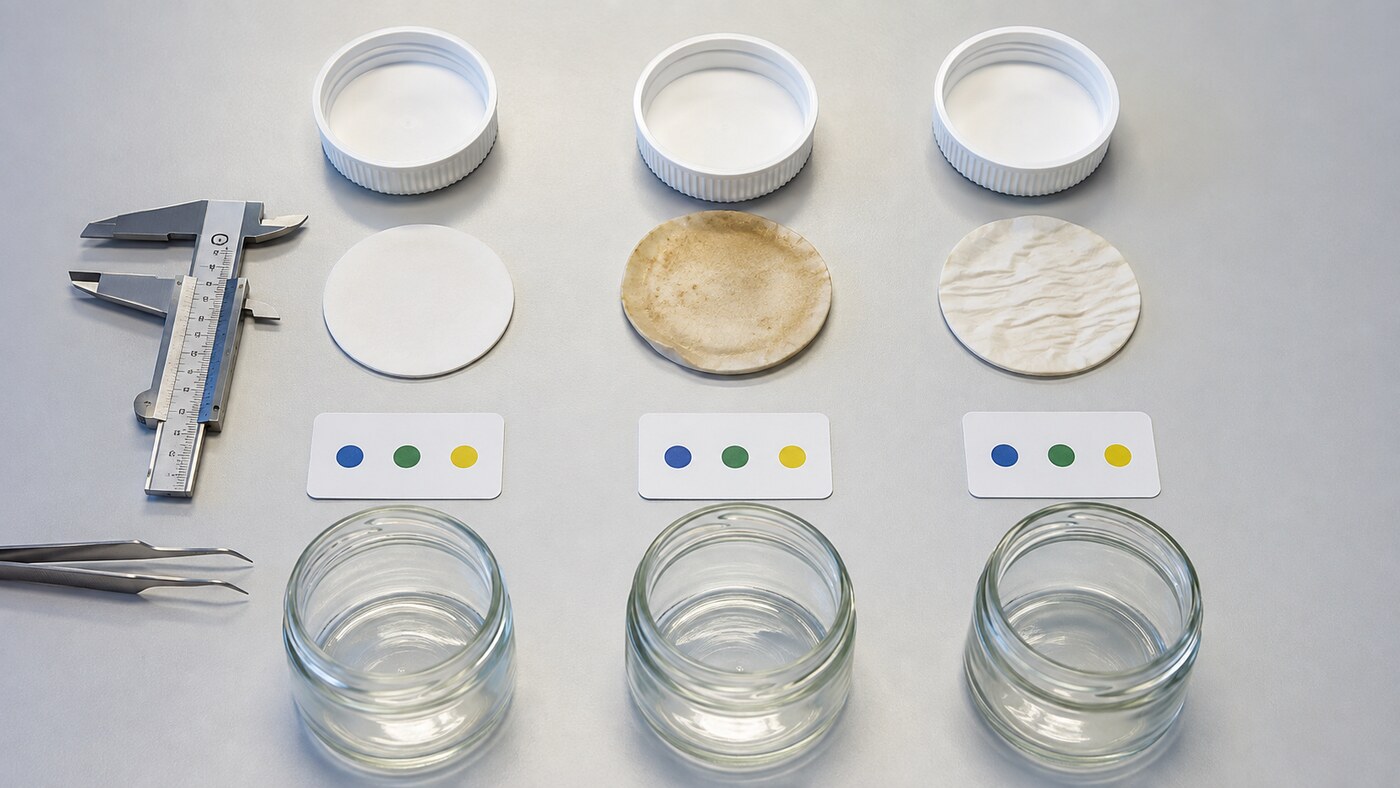
A stained liner does not automatically prove leakage, and a clean exterior does not prove that the liner is chemically inert. Diagnose the failure signature before changing components.
| Observed signature | Possible mechanism | Immediate check | Do not assume |
|---|---|---|---|
| Wet rim or residue outside the jar | Contaminated sealing land, low compression, damaged thread, product migration, or handling contamination | Inspect rim cleanliness, closure engagement, witness pad, and matched controls | That liner chemistry is the only cause |
| Liner staining, swelling, softening, or mass change | Uptake, extraction, surface wetting, or formulation interaction | Compare exposed liners with unused and vehicle controls; retain samples for qualified analysis | That no product-quality change occurred because the jar did not leak |
| Wrinkled or off-center liner | Incorrect liner diameter, poor retention, excessive application force, or rim mismatch | Measure liner position and compression pattern across multiple closures | That more closure force will correct a geometry problem |
| Scuffed jar, cracked insert, or stained paper box | Insufficient insert clearance, jar movement, compression, or a primary-package leak reaching the secondary pack | Inspect jar and liner first, then measure insert fit and repeat distribution screening | That a stronger paper box will fix a leaking primary jar |
Build the Jar–Liner–Product Compatibility Matrix
Use a matrix when you have more than one formulation, jar source, or liner candidate. The point is traceability: each observation should lead back to a specific component lot and process condition.
| Matrix field | Record | Why it matters |
|---|---|---|
| Configuration code | Jar + closure + liner + product + process revision | Prevents results from being applied to an untested combination |
| Lot identity | All component lots and product batch | Reveals lot-specific variation and supports investigation |
| Closure application | Equipment, setting or documented hand method, operator, and date | Separates material issues from inconsistent closing |
| Exposure condition | Orientation, temperature, duration, light, and secondary pack | Makes comparisons meaningful and repeatable |
| Acceptance criteria | Seal evidence, appearance, mass-change rule, odor or analytical criteria, and allowable defects | Prevents a subjective decision after results are known |
Include unused liners and a suitable control in the plan. If a visual, gravimetric, sensory, or chemical measurement affects product release, use a documented method and qualified equipment or laboratory. A casual smell check is not a substitute for product-specific analytical evaluation.
Inspect the Rim and Closure Before Testing
Compatibility work can be misleading when basic package geometry is uncontrolled. Before filling, sample jars and closures from every lot you intend to test.
- Inspect the sealing land under consistent light for chips, waves, flash, contamination, or uneven surfaces.
- Confirm the closure starts smoothly and reaches its intended seated position without cross-threading.
- Check that the liner is centered, retained, and sized for the actual closure cavity.
- Close empty jars using the planned production method and examine the liner contact pattern.
- Record any application setting supplied or approved by the component manufacturer. Do not invent a universal torque value.
- Reject obvious defects before exposure testing so they do not obscure compatibility results.
Keep several unfilled, closed controls from the same component lots. They help distinguish storage-related liner deformation from product-contact effects.
Run a Small-Batch Compatibility Screen
A screen is designed to find weak configurations before a larger validation or commercial run. It is not a certification test. Build the protocol around realistic and justified conditions, with technical review from the product manufacturer and package suppliers.
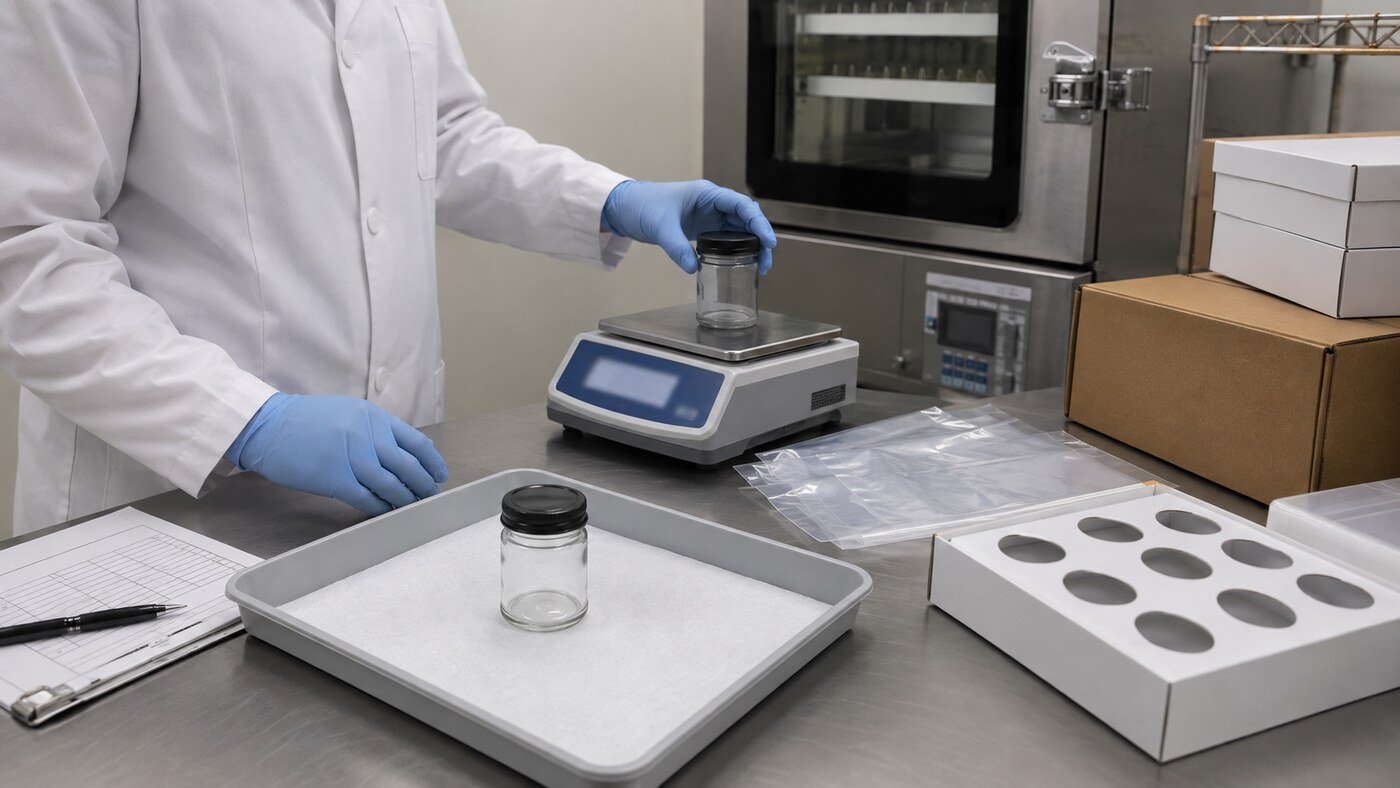
Eight-step screening workflow
- Approve the protocol: define sample count, controls, conditions, inspection points, acceptance rules, and responsibilities before filling.
- Condition components: bring jars, closures, liners, and product to the specified filling environment.
- Inspect and identify: assign a unique sample code tied to every component lot and product batch.
- Fill consistently: control fill mass, product placement, and rim cleanliness. Photograph unusual observations.
- Close consistently: use the intended application process and document any deviation.
- Split orientations: retain upright controls and, when technically appropriate and safely contained, use a defined inverted or side-position screening group on witness material.
- Inspect on schedule: record exterior residue, liner condition, closure engagement, total package mass, product appearance, and any planned analytical result.
- Review trends: compare configurations and lots; do not release from a single clean sample.
Use containment and handling controls appropriate to the product. If elevated-temperature exposure is part of the plan, justify it with actual distribution data and qualified technical review. Heat can change both the formulation and the package, so an aggressive condition may create a failure that does not represent normal use—or conceal the mechanism you need to understand.
Recommended Secondary Packaging Options to Sample
After the primary jar configuration passes its product-contact review, sample the secondary box with the exact filled jar. These options can support presentation, insert control, and transport protection. They do not make the jar–liner seal chemically compatible, airtight, child-resistant, or compliant by themselves. Confirm every claimed function for the finished configuration and destination market.

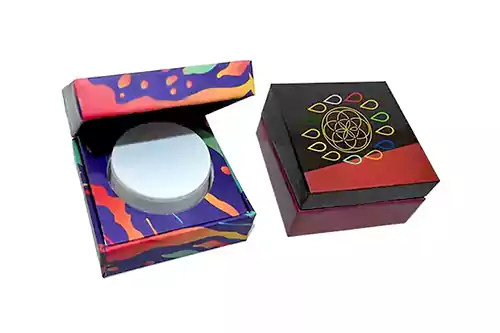
Custom Dab Containers Box – Premium Packaging for Concentrates Wholesale
This rigid paperboard box is listed for one to three commonly sized 5 ml or 7 ml glass or silicone jars. The current page offers drawer-style or flip-top structures, custom foam or paperboard inserts, CMYK or Pantone printing, and optional finishing. The stated MOQ is 1,000 units, with production listed as 10–15 business days after design approval.
Sample it when: one platform must accommodate different jar counts or when insert retention and label space need to be evaluated. Send physical jar samples and confirm that any optional child-resistant mechanism is documented and validated for the final configuration.
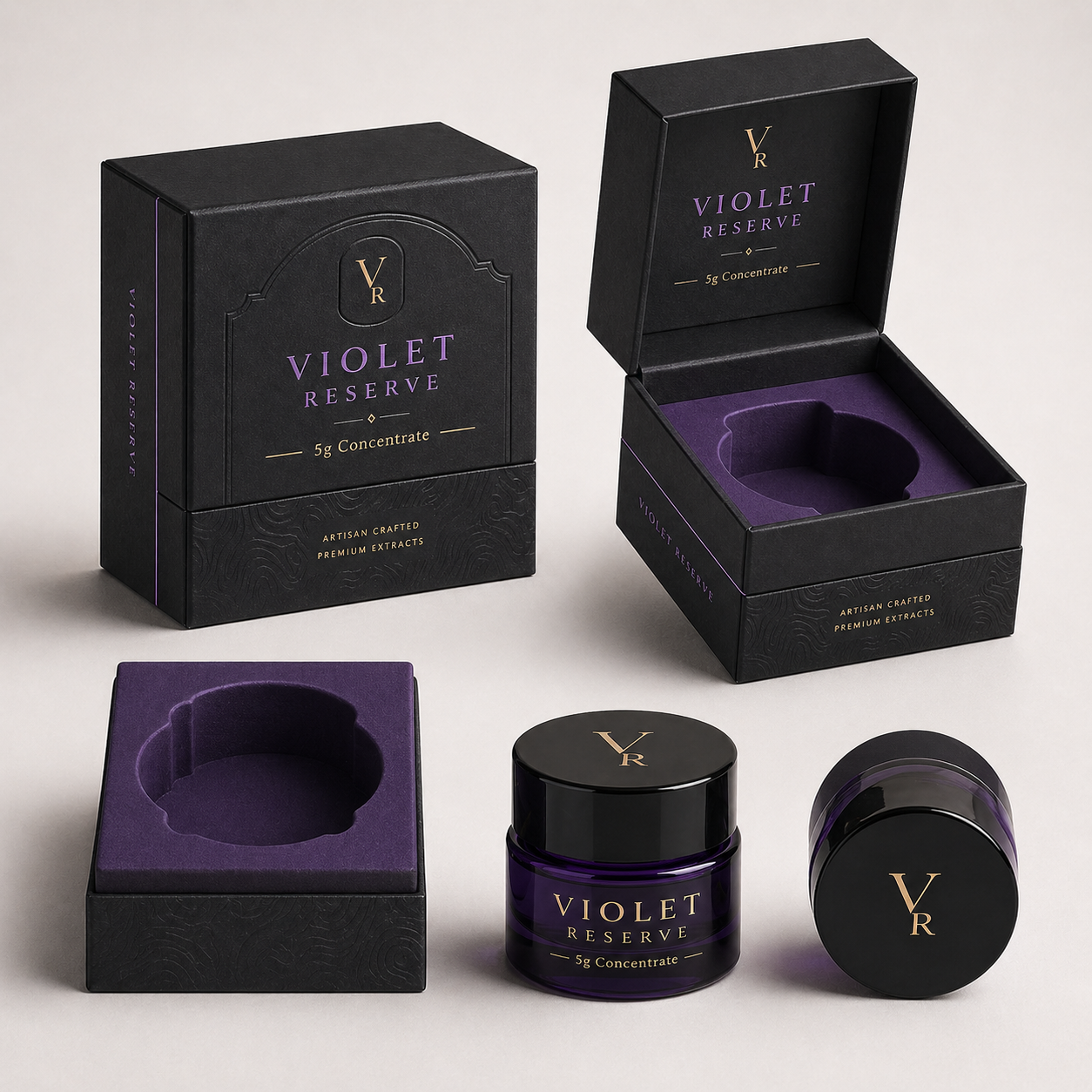
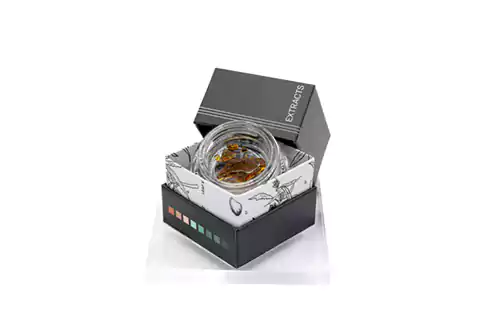
5g Concentrate Violet Glass Packaging Box
This rigid paper box is designed around a 5 g violet glass jar and can use a custom paper, foam, EVA, or molded insert. Its dimensions are customized to jar diameter, height, and insert structure. The product page lists an MOQ of 1,000 pieces and several printing and finishing choices.
Sample it when: the primary jar is already selected and the project needs a fitted single-jar presentation. Check insertion force, lid clearance, removal access, abrasion, and whether the insert loads the closure during transit.
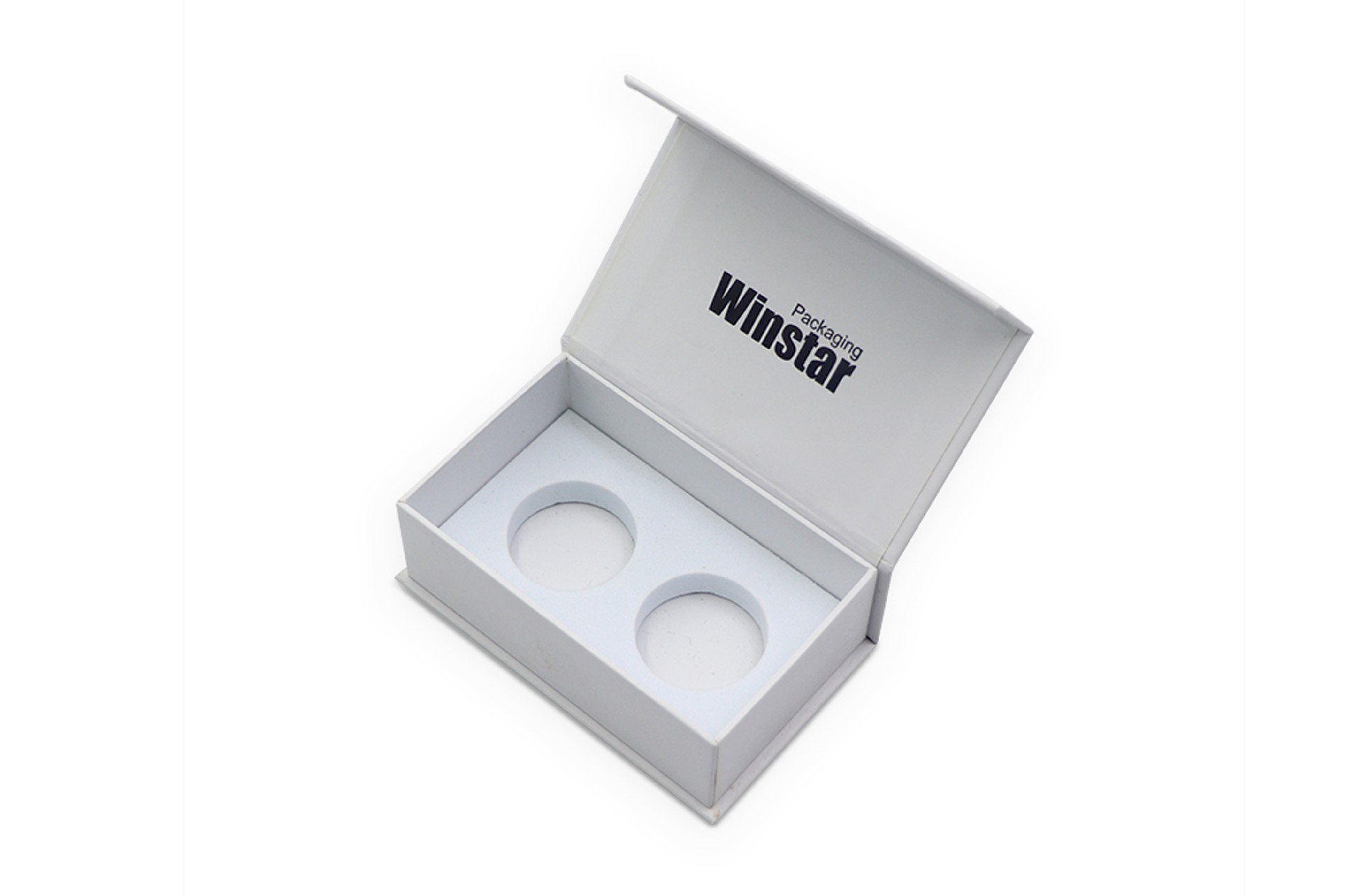
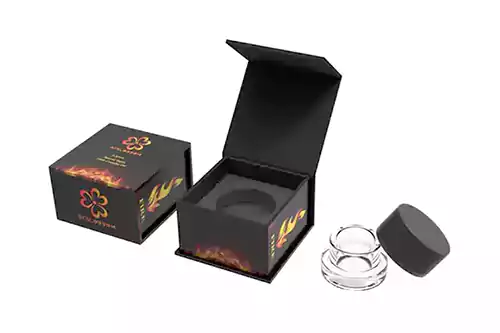
Custom Logo Double Jar Resin Packages Magnetic Flap Concentrate Packaging
This paper box is designed to hold two glass jars and uses a clamshell-style magnetic flap. The page lists customizable dimensions, CMYK or PMS printing, coating and finishing options, an MOQ of 1,000, and a stated turnaround of 7–14 business days.
Sample it when: two jars must remain oriented and separated. Check that neither jar contacts the other, that both cavities match production tolerances, and that a drop or vibration event cannot transfer load through one jar into the second.
Add the Secondary Box and Shipping Case
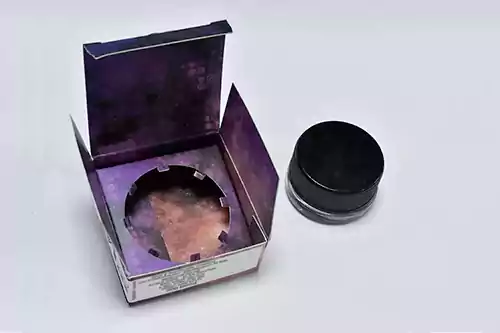
Repeat a defined portion of the test after placing jars in the final insert, retail box, and case. The insert can solve movement and presentation problems, but it can also press on a closure, trap leaked material, hide an exterior stain, or abrade a jar coating.
- Measure cavity fit with jars from more than one production lot.
- Verify clearance above the closure and around the jar shoulder.
- Confirm users can remove the jar without pulling on the closure.
- Inspect the box and insert for staining after upright, side, and justified transit orientations.
- Run the selected distribution simulation with the actual case count and dunnage.
- Open every tested unit; an intact outer box can hide a loose closure or distorted liner.
Browse the current concentrate packaging range only after the primary jar envelope is defined. A box dieline approved from nominal dimensions alone may not account for real jar and closure tolerances.
Use Results to Release, Correct, or Hold
Write the decision rule before reading the final observations. That prevents commercial pressure from turning unexplained evidence into a pass.
| Decision | When it may apply | Required record |
|---|---|---|
| Release | All predefined criteria pass across the tested configuration and lots, with no unexplained trend | Approved report, configuration specification, retained samples, and change-control triggers |
| Correct and retest | A cause is supported, the correction is controlled, and affected results cannot simply be reused | Root-cause evidence, revised process or component, and a new protocol or justified retest scope |
| Hold | Leakage, interaction, product change, inconsistent closure, lot dependence, or unexplained data remains | Quarantine identification, investigation owner, risk assessment, and disposition authority |
After approval, define what forces a review: a new liner construction, jar supplier, closure resin, component dimension, filling temperature, formulation, production setting, secondary insert, or distribution route. “Same size” is not sufficient change control.
Keep the Compliance Boundary Clear
Package compatibility supports product quality, but it does not replace jurisdiction-specific packaging, labeling, child-resistance, tamper-evidence, or testing obligations. California’s current Product Quality Plan guidance states that manufacturers should identify risks from component intake through product transfer, define preventive measures, monitor their effectiveness, and act when controls fail. It also places responsibility on manufacturers to ensure components are suitable for their products.
California’s final-form cannabis packaging checklist separately addresses tamper-evident, child-resistant, resealable, opaque, and contamination-protection requirements. Requirements vary by jurisdiction and product. Review the current rules for every destination and retain qualified regulatory counsel or compliance expertise where needed.
Published container studies can inform questions, not approve your package. One experimental container comparison from Calyx observed different volatile-transmission and uptake behavior among tested container systems and cautioned that findings were container-specific. That supports testing the exact assembled package rather than transferring a result from a generic material name.
Questions to Ask Jar, Liner, and Box Suppliers
- What are the complete jar, closure, and liner specifications, including tolerances and facing-layer construction?
- Which exact component combination was used for any compatibility or seal data you provide?
- What products or test media, conditions, durations, sample sizes, and acceptance criteria were used?
- What closure application method and equipment settings are recommended for this configuration?
- Which incoming inspections and lot documents are available?
- What changes to material, tooling, supplier, dimensions, or manufacturing site trigger customer notification?
- Can you provide production-representative samples from identified lots for filling trials?
- How should the fitted insert be toleranced against the physical jar, not just a nominal drawing?
- Which claims require separate certification or finished-package testing?
- Who owns corrective action if component variation appears during scale-up?
For a broader sourcing review, use this cannabis packaging supplier checklist alongside the product-specific compatibility protocol.
Common Validation Mistakes
- Testing water instead of the actual formulation: a convenient surrogate may not represent product interaction.
- Recording only leaks: liner uptake, swelling, residue, product change, or closure inconsistency may occur without visible exterior leakage.
- Using one jar and one closure lot: apparent success may disappear when normal component variation enters production.
- Changing application force until the jar looks sealed: excess force can distort the liner or hide a dimensional mismatch.
- Testing the primary jar without the insert: the fitted box can load the lid, scuff the jar, or change orientation during transit.
- Using vague acceptance language: “looks fine” cannot support a repeatable release decision.
- Calling a screen a certification: an in-house inversion or storage screen does not establish child resistance, legal compliance, or long-term shelf life.
- Ignoring change control: a new liner, finish, tool, lot, or formulation can create a new untested system.
Frequently Asked Questions
What does a concentrate jar liner do?
It forms part of the sealing interface between the closure and jar rim. Depending on its construction, it may provide compression, a product-contact facing, or other functions. Performance depends on the assembled system.
Is there one liner material that works for every concentrate?
No. Formulation, liner construction, jar finish, closure geometry, application process, storage, and time all matter. Test the exact combination rather than relying on a universal material ranking.
Does an inverted jar test prove shelf life?
No. It can be a useful screening condition when technically justified and safely contained, but it does not by itself establish long-term seal integrity, product stability, or regulatory compliance.
Why can a liner stain without an exterior leak?
The facing or backing may be wetted, absorb material, or interact with the formulation while the exterior remains clean. Compare controls and use qualified analysis when the observation may affect product quality.
Should closure torque be the same for every small jar?
No universal value should be assumed. Use the jar and closure suppliers’ technical guidance, the intended application equipment, and validation of the actual configuration.
How many samples are needed?
There is no responsible universal number. Set sample size from risk, expected variability, number of lots and configurations, destructive inspections, statistical needs, and applicable quality procedures.
Can a paper box stop concentrate from leaking?
No. A fitted secondary box can limit jar movement and show staining, but the primary jar, closure, and liner must provide the intended product-contact seal.
When should the insert be tested?
After the primary jar envelope is defined and before production tooling or mass printing. Use physical, production-representative jars and repeat relevant distribution checks with the final case pack.
What should trigger revalidation?
Changes to product formulation, jar, closure, liner, supplier, tooling, manufacturing site, dimensions, filling process, secondary insert, or distribution conditions should trigger documented review and an appropriate test decision.
Does a passing compatibility test make the package compliant?
No. Compatibility is one product-quality question. Child resistance, tamper evidence, labeling, testing, and other requirements must be assessed separately for the product and jurisdiction.
Explore Concentrate Packaging Options
Bring the physical jar, closure height, maximum diameter, proposed case orientation, and the primary-package validation status to the box discussion. 420 Packaging can then help evaluate paper structures and fitted inserts around the real container envelope.