
Last updated: November 3, 2026
Cannabis edible brands should not assume a paper box, grease-resistant wrapper, coated carton, gummy pouch or “food-grade” package is automatically PFAS-free. Start by separating the package into direct-food-contact and secondary components, then document the exact paperboard, coating, film laminate, adhesive, ink, liner, insert and closure used in the production version. FDA says PFAS-containing grease-proofing agents for paper and paperboard food packaging are no longer being sold into the U.S. market, but that is not the same as a universal federal statement that every package is PFAS-free. State laws can be broader. Minnesota, for example, prohibits cannabis flower, cannabis products and certain hemp products from being packaged in material that contains or is coated with PFAS. Ask suppliers for a written non-intentionally-added-PFAS declaration for the exact package construction, food-contact documentation where applicable and change-control commitments. Use laboratory testing when required by the target market, customer specification or risk assessment rather than treating one generic “PFAS-free” certificate as proof for every packaging SKU.
PFAS packaging rules are not uniform across the United States. Some laws cover plant-fiber food packaging, some cover specified food-package categories, and Minnesota’s cannabis statute directly addresses cannabis packaging. A federal bill introduced in September 2026 would prohibit intentionally added PFAS in food packaging beginning in 2028 if enacted, but it is currently a bill—not federal law. Always verify the current rules for the state where the product will be sold before approving the final package.
A cannabis gummy brand asks its packaging supplier a simple question:
“Is this box PFAS-free?”
The supplier answers:
“Yes, it is paper.”
That answer is not enough.
Paperboard is only the base substrate.
The finished package may also include:
- a grease- or moisture-resistant coating;
- lamination;
- printing inks;
- adhesives;
- a plastic window;
- an inner wrapper;
- a pouch;
- a foam or plastic insert;
- a pressure-sensitive compliance label.
For edible products, the most important material may not even be the printed carton consumers see on the shelf.
It may be the inner pouch, wrapper, cup, liner or film that actually touches the gummy or chocolate.
That is why PFAS review should not start with:
“Is this packaging paper?”
It should start with:
“What materials are in the final pack, which ones contact the edible, and what evidence supports the PFAS statement for each relevant component?”
What Are PFAS and Why Were They Used in Food Packaging?
PFAS stands for per- and polyfluoroalkyl substances, a large family of fluorinated chemicals.
Historically, certain PFAS-containing substances were useful in food packaging because they could help create resistance to:
- grease;
- oil;
- water;
- staining.
That made them relevant to products such as grease-resistant paper wrappers and paperboard food containers.
FDA says the food-contact use that raised the primary dietary-exposure concern was PFAS-containing grease-proofing agents applied to paper and paperboard food packaging. FDA announced in February 2024 that these substances were no longer being sold for that use in the U.S. market, and in January 2025 it determined that 35 related Food Contact Notifications were no longer effective because the uses had been abandoned.
FDA — Authorized Uses of PFAS in Food Contact Applications
FDA — Market Phase-Out of PFAS Grease-Proofing Substances
Why Cannabis Edible Brands Should Care
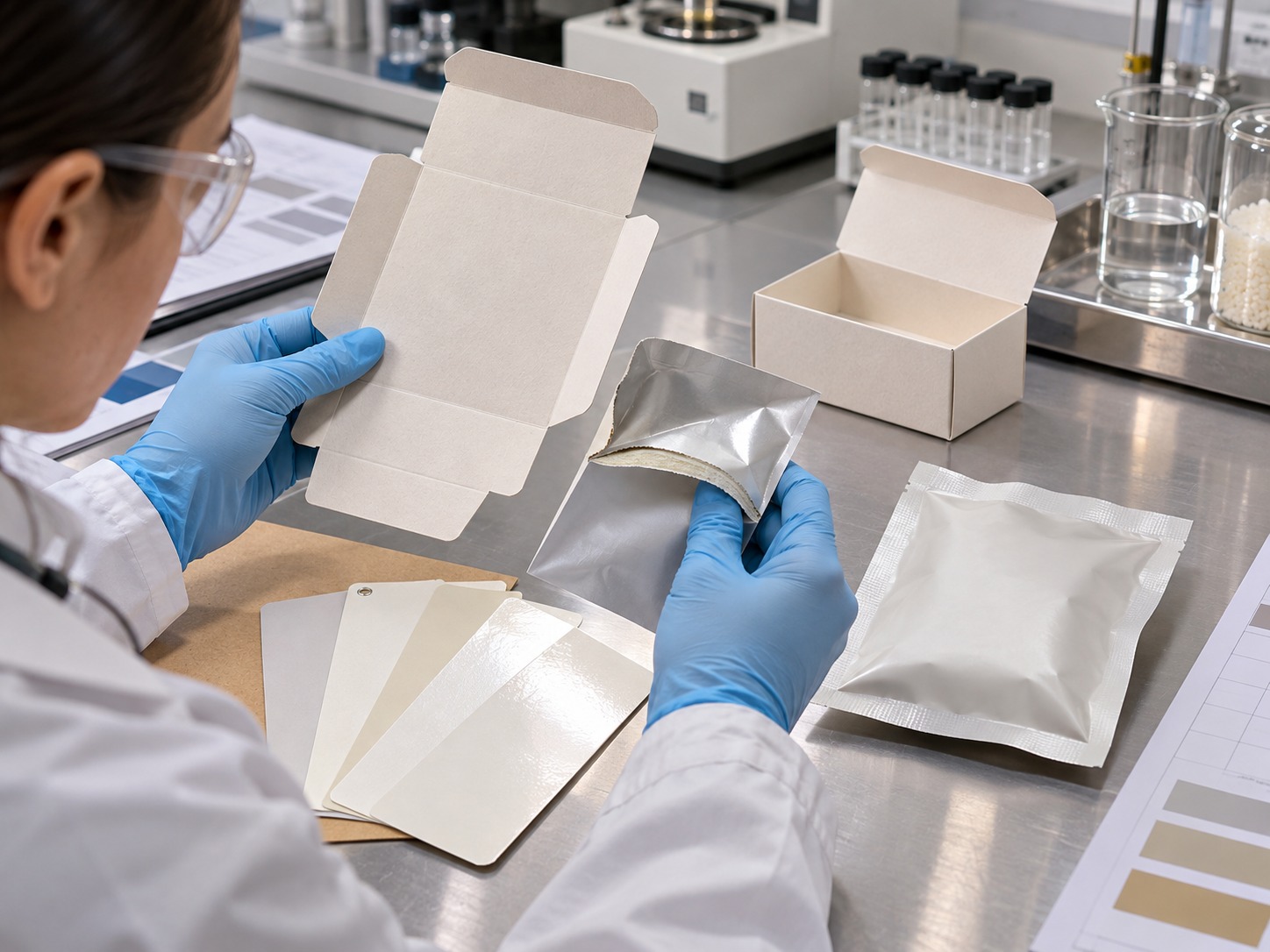
Cannabis edibles sit at the intersection of two packaging systems:
- regulated cannabis packaging;
- food-contact packaging.
A gummy package may need to manage:
- child resistance;
- tamper evidence;
- opacity in certain markets;
- resealability;
- food contact;
- oil or grease resistance;
- moisture barrier;
- oxygen barrier;
- heat exposure;
- labeling;
- environmental chemical restrictions.
Changing one material to address PFAS can therefore affect another part of the packaging system.
Example: chocolate packaging
A brand removes a grease-resistant coating from a paper wrapper.
That may reduce one chemical concern, but if the alternative allows cocoa butter or oil to migrate into the printed carton, the finished pack may now:
- stain;
- lose structural quality;
- damage printed information;
- create a poor shelf appearance.
The solution is not simply:
“Remove the coating.”
It is:
“Select a compliant material system that still performs its required packaging function.”
What FDA’s PFAS Food-Packaging Phase-Out Actually Means
This point is frequently oversimplified online.
FDA announced that PFAS-containing grease-proofing substances for paper and paperboard food packaging are no longer being sold into the U.S. market for that use.
That is important progress.
But it does not mean every package on the market can automatically be described as:
“PFAS-free.”
FDA’s action specifically addresses a use category
The phase-out concerns PFAS-containing grease-proofing agents used on paper food packaging.
FDA’s current PFAS information also discusses other limited food-contact uses, such as certain manufacturing aids, gaskets and polymerized non-stick applications, separately.
Therefore, when a supplier says:
“FDA removed PFAS from food packaging,”
ask them to be more precise.
What you actually need to know
- Was PFAS intentionally added to this packaging material?
- Does the declaration apply to the exact coating?
- Does it apply to the final printed and converted package?
- Which component does the declaration cover?
- What regulatory definition is being used?
FDA’s market-wide phase-out is useful regulatory context, but your brand still needs documentation connecting the actual material you buy to the package you sell.
PFAS Packaging Rules Differ by State
For a multi-state cannabis brand, one of the biggest mistakes is creating one PFAS statement and assuming it has the same legal meaning everywhere.
| Jurisdiction | Relevant Packaging Scope | Key Point for Cannabis Brands |
|---|---|---|
| Federal / FDA | Food-contact substances and authorized uses | PFAS grease-proofing agents for paper food packaging have been phased out of the U.S. market |
| California | Plant-based food packaging | No intentionally added PFAS; California also specifies a total-fluorine threshold |
| Minnesota | Food packaging plus cannabis-specific packaging rules | Cannabis packaging itself may not contain or be coated with PFAS |
| Washington | Specified plant-fiber food-packaging categories | Restrictions apply to defined food-packaging categories and manufacturers maintain compliance certificates |
| Federal bill proposed in 2026 | Food packaging with intentionally added PFAS | Would create a broader federal prohibition if enacted; currently not law |
The exact language matters.
“No intentionally added PFAS,” “no PFAS,” “total fluorine below a threshold” and “specified food-package categories” are not interchangeable regulatory concepts.
Why Minnesota Is Especially Important for Cannabis Packaging
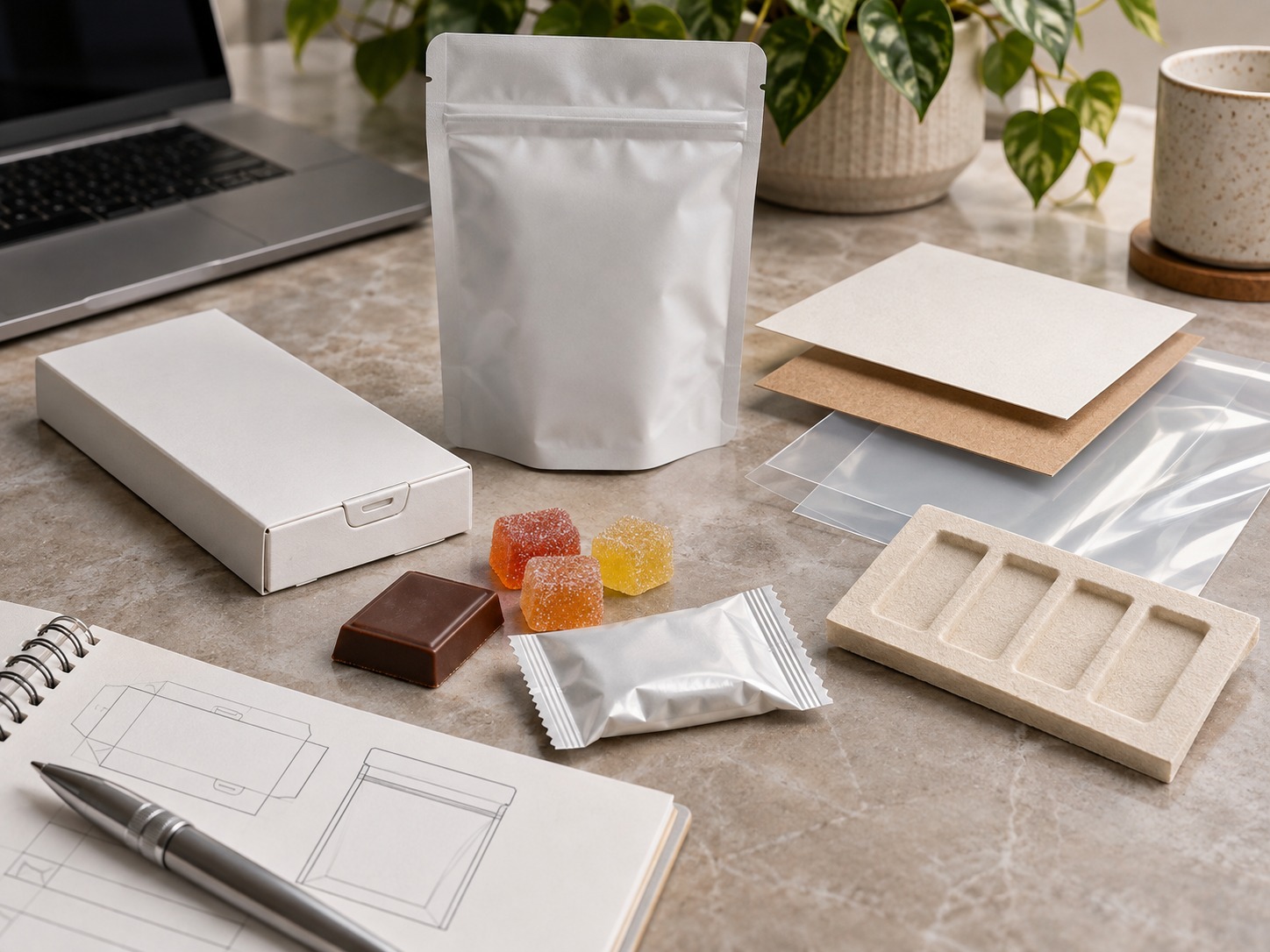
Minnesota is unusually relevant because its cannabis statute speaks directly to cannabis packaging.
Current Minnesota Statutes section 342.62 states that packaging for cannabis flower, cannabis products, lower-potency hemp edibles and hemp-derived consumer products must not contain or be coated with any perfluoroalkyl substance.
The same section also says edible cannabis products and lower-potency hemp edibles must not be packaged in material that is not approved by FDA for use in food packaging.
Minnesota Statutes §342.62 — Cannabis Packaging
Why this changes the review
A brand may normally think PFAS matters only for the food-contact wrapper.
For a Minnesota cannabis SKU, the legal review may need to consider the wider cannabis package configuration.
That means the outer carton should not automatically be excluded from PFAS review merely because it does not directly touch the edible.
Do not rely only on a generic “food contact safe” certificate for the inner pouch. Map the complete packaging configuration and verify the current cannabis-specific statute before release.
California PFAS Rules for Plant-Fiber Food Packaging
California’s Department of Toxic Substances Control explains that AB 1200 restricts PFAS in food packaging made substantially from paper, paperboard or other plant-derived fibers.
DTSC states that manufacturers may not intentionally add PFAS to covered food packaging.
Its current FAQ also identifies a total-fluorine threshold used by the statute.
California DTSC — Toxics in Packaging FAQ
For cannabis edible brands, pay particular attention to:
- paper gummy cartons;
- paper chocolate boxes;
- paper sleeves;
- plant-fiber trays;
- paper wraps;
- fiber-based inner packaging.
Do not assume an outer carton is always covered exactly like a direct-contact wrapper
Determine the actual statutory definition and packaging function.
Food packaging definitions can be broader than “the material touching the gummy.”
That is why your compliance file should describe how each component is used rather than simply marking:
“primary” or “secondary.”
Washington Food-Packaging Restrictions
Washington State has phased in restrictions on intentionally added PFAS in specified food-packaging categories made of paper or other plant fiber.
Washington’s Department of Ecology also states that manufacturers must maintain a certificate of compliance or applicable exemption documentation.
Washington Department of Ecology — PFAS in Food Packaging
This provides a useful procurement lesson even for brands operating outside Washington:
supplier declarations should be controlled documents, not informal email statements.
The 2026 Federal PFAS Food-Packaging Bill
On September 24, 2026, U.S. senators introduced S.5516, the Keep Food Containers Safe from PFAS Act of 2026.
The bill proposes amending federal law to prohibit introduction into interstate commerce of food packaging containing intentionally added PFAS.
The bill text states that the proposed prohibition would apply beginning January 1, 2028.
U.S. Congress — S.5516, Keep Food Containers Safe from PFAS Act of 2026
Do not describe this as current federal law
As of this article update, it is proposed legislation.
It is still strategically relevant because it signals continued regulatory attention to PFAS in packaging.
What procurement teams can do now
- remove unnecessary fluorinated treatments;
- build material inventories;
- collect supplier declarations;
- avoid vague PFAS claims;
- create change-control procedures.
Those steps remain useful whether or not the bill becomes law in its current form.
Primary vs. Secondary Packaging: What Needs Review?
Start by mapping every layer around the edible.
Example: cannabis gummy retail pack
| Component | Typical Role | PFAS Review Priority |
|---|---|---|
| Flexible pouch | Direct product contact and barrier | High |
| Inner flow wrap | Direct contact | High |
| Paperboard carton | Secondary retail package | Review based on jurisdiction and construction |
| Paper insert | Product positioning | Review material and applicable scope |
| Compliance label | Variable data / regulatory information | Include in complete BOM |
| Master carton | Distribution | Separate review based on applicable packaging law |
A strong packaging specification should identify all of these components.
Otherwise, a “PFAS declaration” may apply only to one layer while the brand assumes it covers the complete packaging system.
Paper and Paperboard Cannabis Edible Boxes
Paperboard is highly relevant to 420 Packaging because many of the site’s edible formats use printed cartons or rigid paper structures.
Paperboard itself does not automatically create a PFAS problem.
The higher-value questions are:
- Is the board treated?
- What coating is applied?
- Is it laminated?
- Does the coating provide grease resistance?
- Does the supplier intentionally add fluorinated chemistry?
- Does the statement cover printing and converting?
Plain secondary cartons can simplify the review
If an edible is already protected by an approved food-contact pouch or wrapper, the outer carton may not need to provide the same grease, oil or moisture resistance.
That can allow the brand to avoid unnecessary functional treatments on the carton.
But the answer depends on actual distribution conditions.
Chocolate oil migration, gummy surface oils, condensation and leakage can still reach the carton if the primary packaging does not fully contain them.
Coatings Are Where Buyers Need More Detail
“Coated paper” is not a complete chemical specification.
A product page may accurately describe a board as coated while giving the buyer no information about the exact coating chemistry.
Ask the supplier:
- What is the coating type?
- Who supplies it?
- Is PFAS intentionally added?
- Is the declaration specific to this coating grade?
- Is the coating approved for the intended food-contact use if direct contact occurs?
- Does printing or finishing introduce another coating?
Do not confuse grease resistance with PFAS
Modern packaging can achieve grease or oil resistance using PFAS-free systems.
The performance requirement remains valid.
The chemistry used to achieve it is what needs review.
Instead of asking “Is your coated paper safe?”, ask: “Please provide the food-contact declaration where applicable and a written declaration covering intentionally added PFAS for the exact paperboard and coating used in production.”
Flexible Gummy and Edible Pouches
Flexible packaging deserves a separate review because pouches are often multilayer structures.
A gummy pouch may combine layers selected for:
- printing;
- oxygen barrier;
- moisture barrier;
- light protection;
- puncture resistance;
- heat sealing;
- child-resistant closure performance.
Do not request a declaration only for the outer printed film.
Request the complete laminate
Ask for the actual structure in a format such as:
outer print layer / barrier layer / sealant-contact layer
Then identify which layer contacts the edible.
Food contact and PFAS are separate questions
A supplier should be able to support:
- food-contact suitability for the intended direct-contact layer;
- PFAS-related declarations required by the project;
- material identity;
- change control.
One certificate should not be assumed to prove all four.
What About Inks, Adhesives and Labels?
The biggest mistake in chemical-compliance reviews is focusing entirely on the base substrate.
The finished package can contain:
- printing ink;
- lamination adhesive;
- carton glue;
- pressure-sensitive label adhesive;
- surface varnish;
- spot coatings;
- foil-transfer systems.
Does every component need laboratory PFAS testing?
Not automatically.
A risk-based program generally starts with:
- supplier declarations;
- material specifications;
- regulatory documentation;
- known intentionally added chemistry;
- the applicable law.
Testing is then added where needed.
Do not ignore decorative changes
If the original package uses:
uncoated paperboard
and the next production run adds:
a new grease-resistant coating,
the old PFAS documentation should not automatically be carried forward.
What Documentation Should You Request?
A useful packaging compliance file should connect the document to the exact material you are buying.
| Document | What It Should Tell You | What It Does Not Automatically Prove |
|---|---|---|
| PFAS non-use declaration | Whether supplier intentionally adds PFAS under the stated scope | That no PFAS molecule can ever be detected analytically |
| Food-contact declaration | Suitability or regulatory basis for intended food-contact use | Child resistance or cannabis compliance |
| Material specification | Substrate, laminate, coating or resin identity | Finished-package performance |
| Laboratory report | Result for specific analytes or screening method | Every PFAS compound unless method scope supports that conclusion |
| Certificate of compliance | Supplier attestation to a stated regulation | Requirements outside the certificate’s scope |
| CR test documentation | Child-resistant performance of the covered configuration | Food-contact or PFAS status |
Document identity matters
A useful declaration should ideally identify:
- supplier;
- material grade or item number;
- covered components;
- statement being made;
- regulatory reference when applicable;
- issue date;
- authorized signatory.
A one-line PDF saying “our products are PFAS-free” with no product scope is much less useful.
When Should You Test for PFAS?
Laboratory testing can be appropriate when:
- the target law sets a concentration threshold;
- a customer contract requires test evidence;
- supplier documentation is incomplete;
- a high-risk coating is being used;
- materials change;
- the brand makes a specific analytical claim;
- regulatory counsel or quality personnel require verification.
Understand the difference between screening and targeted testing
PFAS is a large chemical family.
Different laboratory methods answer different questions.
A test might measure:
- specific targeted PFAS;
- a defined sum of PFAS;
- total fluorine or organic fluorine as a screening approach.
These are not interchangeable.
Do not ask the lab only for “a PFAS test”
Tell the laboratory:
- target market;
- applicable regulation;
- material type;
- whether the sample is raw material or finished package;
- the claim you need to support.
The laboratory can then help identify an appropriate analytical scope.
What Does “PFAS-Free” Really Mean?
This phrase sounds simple but can describe very different evidence levels.
| Statement | Meaning |
|---|---|
| No intentionally added PFAS | PFAS was not deliberately added for a functional purpose under the stated supplier scope |
| Selected PFAS not detected | The named analytes were below the laboratory reporting limits |
| Meets a regulatory PFAS threshold | The tested package complies with the stated legal threshold and method |
| “PFAS-free” | Potentially broad marketing statement that needs a clearly defined evidence basis |
Why absolute claims are risky
Incidental trace contamination can occur in complex material supply chains.
A method may not measure every member of the PFAS family.
That is why many regulatory programs focus on concepts such as:
- intentionally added PFAS;
- specific targeted compounds;
- fluorine thresholds.
Use the wording that your evidence can actually support.
A supplier statement such as “No PFAS are intentionally added to material grade X during manufacture” is much more clearly defined than an unsupported blanket statement that “all our packaging is 100% PFAS-free.”
A 10-Step Packaging Approval Workflow
Step 1: Define the sales markets
List every state where the SKU will be sold.
Do not perform a PFAS review without knowing the jurisdiction.
Step 2: Map the complete package
List:
- primary container;
- inner wrapper;
- pouch;
- carton;
- insert;
- label;
- closure.
Step 3: Identify direct-food-contact surfaces
For each component, mark:
- direct contact;
- indirect contact;
- secondary packaging only.
Step 4: Build the material BOM
Record:
- substrate;
- coating;
- lamination;
- adhesive;
- ink;
- liner;
- closure material.
Step 5: Request supplier declarations
Match the declarations to the specific material grades.
Step 6: Confirm food-contact status separately
For direct-contact packaging, verify the relevant food-contact documentation.
Step 7: Compare state requirements
Build a small state matrix for:
- PFAS;
- child resistance;
- tamper evidence;
- opacity;
- labeling.
Step 8: Test where necessary
Select testing based on the applicable rule and risk.
Step 9: Lock the approved structure
Do not allow a supplier to substitute:
- coating;
- board;
- film;
- liner;
- adhesive.
without review.
Step 10: Retain the evidence with the SKU
Store the packaging documents alongside:
- artwork revision;
- approved sample;
- purchase specification;
- supplier lot information.
This makes repeat orders much easier to control.
PFAS Review by Cannabis Edible Format
| Edible Format | Packaging Components to Review First | Common Mistake |
|---|---|---|
| Gummies in pouch | Direct-contact sealant film, full laminate, zipper | Reviewing only the printed outer film |
| Gummies in pouch + carton | Pouch first, then carton/coating under target-state scope | Assuming one document covers both |
| Chocolate bar | Inner wrapper, grease/oil barrier, outer carton | Focusing only on the cardboard |
| Baked edible | Grease-resistant direct-contact material | Using generic “food-safe paper” wording |
| Mints / hard candy | Primary pouch/jar and closure | Ignoring liner or inner bag |
| Multi-pack edible box | Each individual wrapper plus outer CR box | Reviewing only the consumer-facing outer pack |
Material Changes That Should Trigger Re-Review
A PFAS review is only valid for the structure that was actually reviewed.
Recheck after changes to:
- paperboard supplier;
- paper grade;
- grease-resistant treatment;
- aqueous coating;
- lamination;
- pouch laminate;
- sealant resin;
- adhesive;
- liner;
- insert;
- window film;
- food-contact wrapper.
“Equivalent material” is not enough
If a supplier says:
“The new board is equivalent,”
that may be adequate for:
- color;
- thickness;
- printing.
It does not automatically prove equivalence for chemical-compliance documentation.
420 Packaging Options to Evaluate
CR Chocolate Bar Paper Packaging
420 Packaging currently lists this format as a customizable child-resistant chocolate box using cardboard/coated paper, with a listed MOQ of 1,000 units and customizable dimensions, CMYK or Pantone printing.
For a PFAS-sensitive edible project, this is exactly the kind of package where buyers should go one step beyond the commercial product description.
Before approval, request:
- exact paperboard grade;
- exact coating type;
- PFAS non-use declaration for the board and coating;
- food-contact documentation if the carton directly contacts the edible;
- confirmation of any inner wrapper or liner;
- change-control requirements.
Child Proof CBD Chocolate Bar & Gummy Box 4 Pack
The current product page lists a button-release child-resistant structure, custom sizes and shapes, CMYK/PMS printing, paper stocks from 10pt to 28pt, and optional gloss, matte and Spot UV finishes.
Those options illustrate why PFAS review must use the final production specification.
A plain kraft version and a heavily coated version are not the same material configuration.
For edible projects, lock:
- paper stock;
- coating;
- window option if used;
- insert;
- primary food-contact package;
- supplier documentation.
Wholesale Child Resistant Edible Packaging
This current rigid paper format is listed for chocolates, gummies, candies, cookies and similar edible products, with a sliding child-resistant structure. The product page lists coated paper and grayboard construction and offers either cardboard or PVC insert options.
That insert choice demonstrates another important rule:
the compliance file must match the exact configuration ordered.
A paper-insert version and a PVC-insert version should not automatically share one generic material statement.
How This Topic Differs From Existing 420 Packaging Content
| Existing Content | Primary Search Intent | This Article Does Not Compete Because |
|---|---|---|
| Marijuana Edible Packaging Guide | General edible packaging selection and compliance | This page targets PFAS chemistry, documentation and regulatory review |
| Best Packaging for Gummies | Choosing pouch vs. box vs. display packaging | This page does not try to rank gummy packaging formats |
| Cannabis Gummy Packaging Heat Test | Summer temperature and package-performance testing | This page targets chemical-material compliance rather than heat |
| Sustainable Cannabis Packaging Guide | Environmental material selection | PFAS is a chemical-restriction and food-contact issue, not a generic sustainability keyword |
This separation is important for SEO.
The main target phrase should remain:
PFAS cannabis packaging
with supporting clusters around:
- PFAS edible packaging;
- PFAS-free cannabis packaging;
- PFAS gummy packaging;
- cannabis food-contact packaging.
Do not optimize this page around the broad head term:
edible packaging
because that search intent already belongs to the site’s category and general edible guide.
PFAS Cannabis Edible Packaging Approval Checklist
| Review Item | Approval Question |
|---|---|
| Target market | Which U.S. states will receive the product? |
| Product | Gummy, chocolate, baked edible, mint or other food form? |
| Primary package | What material directly touches the edible? |
| Secondary package | What carton, sleeve or rigid box surrounds it? |
| Paperboard | What exact grade is used? |
| Coating | Is any grease-, oil- or moisture-resistant treatment applied? |
| Flexible film | Is the full laminate structure documented? |
| Food contact | Is the direct-contact material supported for its intended use? |
| PFAS declaration | Does the supplier statement cover the exact material grade? |
| Testing | Does the target rule or customer specification require analytical evidence? |
| Child resistance | Does any material change alter the approved CR configuration? |
| Barrier performance | Does the PFAS-free alternative still provide needed grease/moisture protection? |
| Artwork | Are any PFAS-free or chemical-safety claims printed on the package? |
| Change control | Must the supplier obtain approval before changing materials? |
| Traceability | Can production lots be linked to the approved material documentation? |
FDA — Authorized Uses of PFAS in Food Contact Applications
FDA — Market Phase-Out of Grease-Proofing Substances Containing PFAS
Minnesota Statutes §342.62 — Cannabis Packaging
Minnesota Statutes §325F.075 — PFAS in Food Packaging
California DTSC — PFAS in Food Packaging FAQ
Washington Department of Ecology — PFAS in Food Packaging
U.S. Congress — Keep Food Containers Safe from PFAS Act of 2026
Do not approve the box from appearance alone. Send the target states, edible type, primary food-contact package, required child-resistant structure, carton material, coating, insert and barrier needs with the RFQ. 420 Packaging can provide custom edible cartons, child-resistant paper structures and packaging samples, while your compliance review should verify the exact food-contact and PFAS documentation required for the final production configuration.
View Cannabis Edible Packaging
View Child-Resistant Packaging
Frequently Asked Questions
1. What does PFAS mean in cannabis packaging?
PFAS refers to per- and polyfluoroalkyl substances. Certain PFAS-containing substances were historically used to provide grease, oil or water resistance in food packaging. Cannabis edible brands should review the actual materials, coatings and food-contact layers in their packaging rather than assuming material names prove PFAS status.
2. Is PFAS banned in all cannabis packaging in the United States?
No single federal rule currently creates that exact nationwide statement. FDA has completed a market phase-out of PFAS-containing grease-proofing agents for paper and paperboard food packaging, while individual states have separate laws. Minnesota also has cannabis-specific packaging language addressing PFAS.
3. Is Minnesota cannabis packaging required to be PFAS-free?
Minnesota Statutes section 342.62 states that cannabis flower, cannabis products, lower-potency hemp edibles and hemp-derived consumer products must not be packaged in material that contains or is coated with any perfluoroalkyl substance. Brands should verify the current statutory text and their exact product category before release.
4. Does FDA say all U.S. food packaging is PFAS-free?
No. FDA states that PFAS-containing grease-proofing agents for paper and paperboard food packaging are no longer being sold into the U.S. market for that use. That statement should not be expanded into an unsupported claim that every packaging material contains no PFAS.
5. Is coated paperboard safe for cannabis edibles?
The answer depends on the exact coating and intended use. Request the paperboard and coating specifications, relevant food-contact documentation when direct contact occurs and PFAS documentation applicable to the target market.
6. Does a secondary cannabis edible box need PFAS review?
Potentially. The answer depends on the jurisdiction and the package’s role. Minnesota’s cannabis packaging statute is particularly important because its PFAS packaging language is not limited only to the direct-food-contact layer.
7. Are gummy pouches affected by PFAS rules?
They can be, depending on their material structure and the applicable law. Flexible pouches should be reviewed using the complete laminate, including the direct-contact sealant layer and any closure components, rather than using the generic term “Mylar bag.”
8. What should a PFAS supplier declaration include?
It should identify the supplier, exact material or item grade, the scope of the statement, the PFAS claim being made, issue date and ideally the regulatory basis. A generic declaration covering undefined “products” is less useful for a controlled packaging program.
9. Do I need laboratory PFAS testing for every packaging order?
Not automatically. Testing needs depend on the applicable law, customer specifications, material risk and supplier documentation. When testing is needed, define whether the method targets specific PFAS, a sum of compounds or fluorine screening rather than requesting an undefined “PFAS test.”
10. Is “no intentionally added PFAS” the same as “PFAS-free”?
No. “No intentionally added PFAS” describes manufacturing intent under a defined scope. “PFAS-free” can imply an absolute absence that may be broader than the available analytical or supplier evidence. Use claims that match the documentation you actually have.
11. Can a PFAS-free coating still protect chocolate or gummies?
Yes. PFAS-free barrier technologies are available, but they still need to be validated for the product. Check grease resistance, moisture exposure, print appearance, adhesion, heat conditions and product compatibility before bulk production.
12. What packaging changes should trigger a new PFAS review?
Re-review after changes to paper grade, coating, film laminate, sealant resin, food-contact wrapper, adhesive, liner, insert, supplier or another material covered by the original compliance documentation.