
Quick answer: To read a cannabis label, start with the product type and net quantity, then check total THC and CBD, serving size, batch or lot number, testing information, package and expiration dates, ingredients, allergens, storage directions, required warnings, and the state cannabis symbol. Scan the QR code only after matching the Certificate of Analysis (COA) to the batch number on the package. Because U.S. cannabis labels are regulated mainly at the state level, a symbol or required field in one state may look different in another.
Last updated: July 31, 2026
A legal cannabis package can carry more numbers and warnings than a typical grocery label. The useful information is there, but it is rarely arranged in the order a shopper actually needs it. This guide gives you a repeatable way to read flower, pre-roll, edible, vape, and concentrate labels without treating the largest THC number as the whole story.
Table of Contents
What to Check First on a Cannabis Label
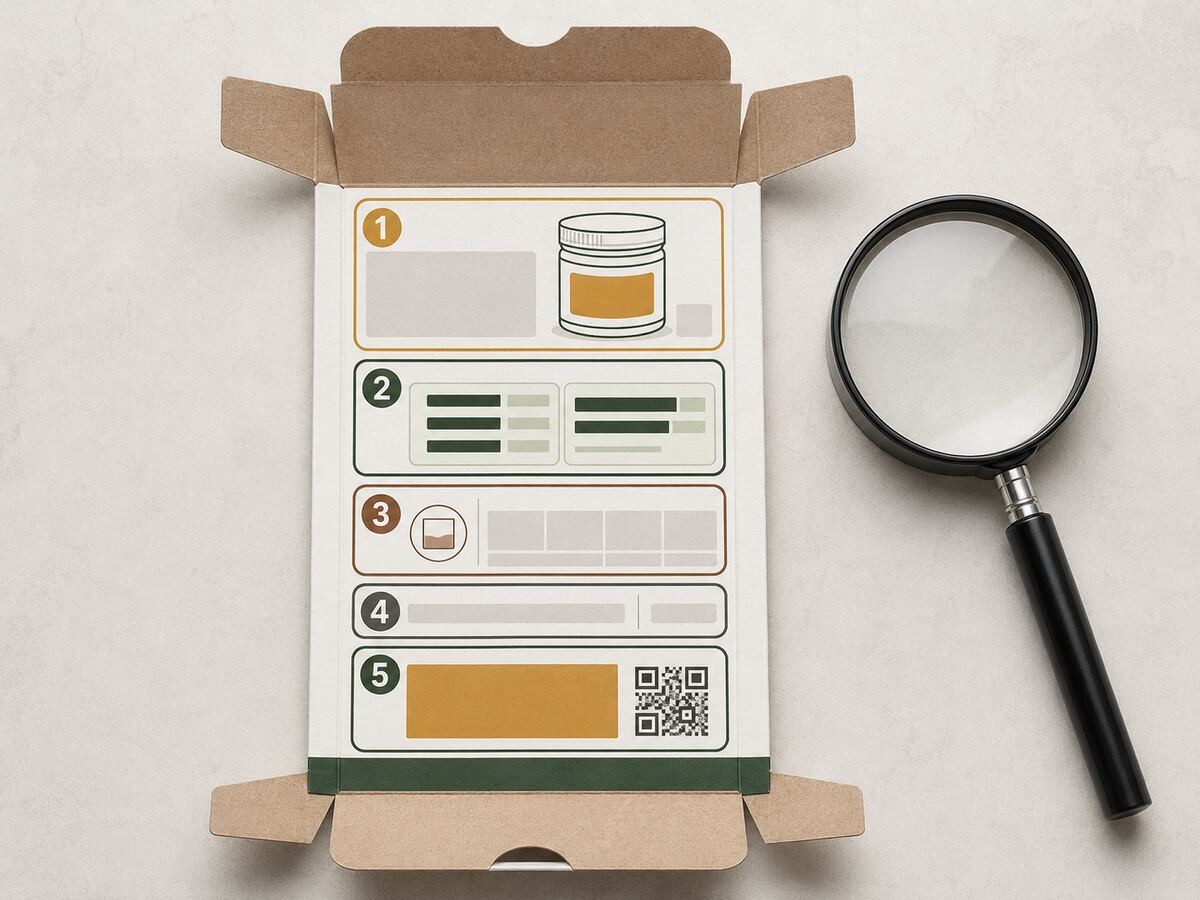
Read the label in layers. The first pass answers “What is it and how much is in it?” The second answers “How strong is it?” The third checks whether the specific package can be traced to a tested production lot.
Confirm the product form. Flower, pre-rolls, gummies, beverages, tinctures, vapes, and concentrates express potency differently.
Find the net quantity. Look for grams, milliliters, fluid ounces, item count, or another unit appropriate to the product.
Separate per-serving potency from total-package potency. A package containing ten 5 mg pieces contains 50 mg total THC, not 5 mg total.
Locate the batch or lot identifier. This is the link between the retail package, the production run, and its laboratory results.
Check the package and expiration dates. These dates answer different questions and should not be treated as interchangeable.
Read ingredients, allergens, storage instructions, and warnings. These details can matter more than strain artwork or marketing language.
Open the COA and match the batch. A QR code is useful only when it leads to results for the same lot printed on your package.
State rules are not interchangeable. For example, New York’s current guidance distinguishes the principal packaging display panel from other information on the outermost layer and requires a scannable code leading to a COA. California uses its own universal symbol and state-specific label rules. Always use the regulator for the state where the product is sold, not a generic checklist, as the final authority.
How to Read THC, THCA, CBD, and Serving Numbers
The most common label-reading mistake is comparing unlike units. Flower and inhalable products are commonly expressed as a percentage by weight, while edibles and beverages usually show milligrams per serving and per package. A percentage and a milligram number cannot be compared directly without knowing the product weight and form.
| Label term | What it generally tells you | What to verify | Common mistake |
|---|---|---|---|
| Total THC | An estimate that accounts for THC already present plus the potential THC contributed by THCA after conversion. | Whether the number is a percentage, mg per serving, or mg per package. | Comparing a flower percentage directly with edible milligrams. |
| THCA | The acidic precursor that can convert into THC when heated. | Whether the label also supplies Total THC so you do not count both numbers twice. | Adding the full THCA value to THC without applying the jurisdiction’s required calculation. |
| Total CBD | CBD plus the potential contribution from CBDA, when the jurisdiction requires this calculation. | The unit and whether the amount is per serving or per package. | Assuming “CBD present” means the product is non-intoxicating. |
| Serving size | The quantity the label defines as one serving. | How many pieces, drops, milliliters, or portions equal one serving. | Assuming one package equals one serving. |
| Servings per package | The number of labeled servings inside the retail package. | Whether each physical piece is one serving or contains multiple servings. | Multiplying the wrong number when calculating package total. |
New York’s Office of Cannabis Management currently states the calculation as Total THC = THC + (THCA × 0.877) and uses the equivalent approach for CBD and CBDA. That formula illustrates why THCA and THC should not simply be added at full value. It is a regulatory example, not a substitute for checking the rules and laboratory method for your state. See the New York OCM packaging and labeling guidance.
A Simple Edible Example
Suppose a pouch contains ten gummies. The label lists 5 mg THC per serving, one gummy per serving, and ten servings per package. The package contains 50 mg THC in total. Reading only the 5 mg figure would understate the package total by a factor of ten.
A Simple Flower Example
A 3.5 g flower package labeled 20% Total THC is expressing concentration by weight, not saying the package contains a 20 mg serving. Effects cannot be predicted from percentage alone; dose, route, tolerance, terpene profile, product condition, and individual response all matter.
Batch Codes, Dates, and COAs: The Traceability Check
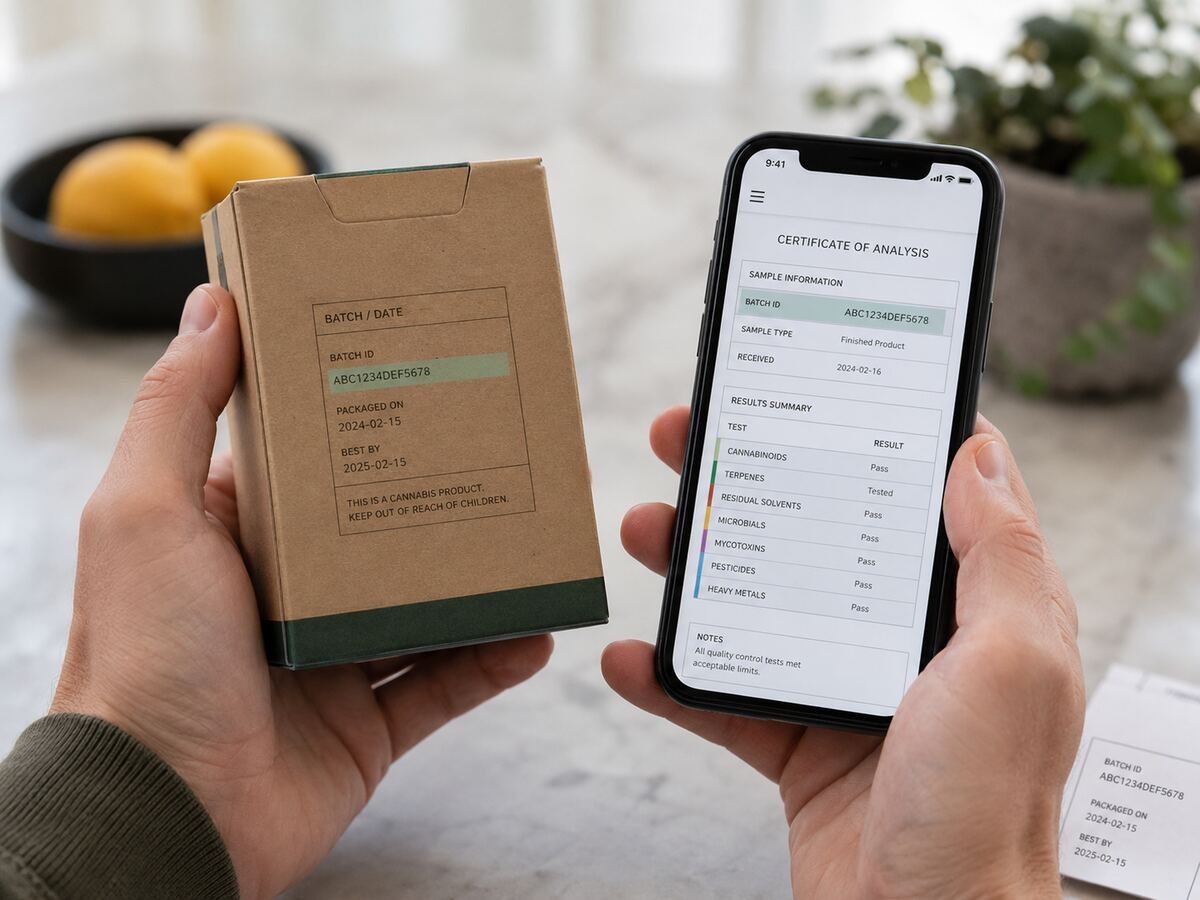
A polished QR code is not proof by itself. The useful test is whether the destination identifies the same batch or lot printed on the physical package.
| Field | Why it matters | What a careful reader should do |
|---|---|---|
| Batch or lot number | Connects the item to a specific manufacturing or production run and supports recalls. | Match it character-for-character with the number on the COA. |
| UID or track-and-trace code | May connect the package to a state inventory tracking system. | Do not confuse it with the laboratory sample ID; both may appear. |
| Test date | Shows when the laboratory analyzed the sample. | Check whether the report is reasonably connected to the package and lot dates. |
| Package date | Provides a reference point for time spent in the finished package. | Use it with storage conditions and product type, not as a universal freshness deadline. |
| Expiration or use-by date | Represents the date established for the unopened product under applicable rules and stability information. | Do not replace it with a guess based only on the package date. |
| COA QR code or URL | Provides access to the Certificate of Analysis or a page where it can be downloaded. | Confirm the domain, batch match, laboratory identity, test date, and complete report. |
What to Look for on a COA
Product or sample name
Batch or lot identifier
Laboratory name and credential information
Sample received and test dates
Cannabinoid results and units
Pass/fail or result fields for required contaminant panels
Method references where provided
Signs that the report is complete rather than a cropped screenshot
Required contaminant categories and action limits vary by state and product type. A consumer guide cannot turn one state’s list into a national standard. If the package is sold in New York, use New York OCM resources; if it is sold in California, begin with the state or local regulator’s current guidance, such as the City of Los Angeles Department of Cannabis Regulation’s explanation of how to read a California cannabis product label.
Cannabis Symbols, Warnings, and the Front Display Panel
There is no single visual symbol used identically across every U.S. jurisdiction. “Universal symbol” usually means the symbol adopted by the relevant state, not a guarantee that the same artwork applies nationwide. Look for the symbol required where the item is legally sold and verify it against that regulator’s website.
Required warnings also vary. Common themes include keeping the product away from children and pets, age restrictions, pregnancy and nursing warnings, impairment warnings, delayed-effect language for orally ingested products, and product-specific statements for inhaled or topical products. A warning panel should be readable and should not disappear when a tamper-evident feature is removed.
Do Not Let a QR Code Replace the Printed Label
A QR code is convenient for laboratory reports and supporting information, but it does not automatically replace information that must be printed on the package. New York’s current guidance, for example, says required information still has to appear on the retail package or marketing layer and allows certain small-format solutions such as accordion or peel-and-reseal labels. The practical lesson is simple: scan the code for detail, but judge the printed package on its own required fields.
What Changes by Cannabis Product Type?
| Product type | Read first | Then check | Easy-to-miss detail |
|---|---|---|---|
| Flower | Total THC/CBD percentage and net weight | Batch, harvest/package dates if supplied, COA, storage | Percentage is concentration, not a serving recommendation. |
| Pre-roll | Total THC/CBD percentage, net weight, and count | Whether the pre-roll is infused, batch, COA, storage | An infused pre-roll may include concentrate and should not be compared with flower-only products by artwork or strain name alone. |
| Edible | THC per serving, THC per package, serving size | Ingredients, allergens, delayed-effect warning, expiration date | One piece is not always one serving. |
| Beverage | THC per serving, number of servings, total volume | Ingredients, storage after opening, expiration, serving instructions | The entire bottle or can may contain multiple servings. |
| Vape | Cannabinoid concentration and net contents | Ingredients, extraction or formulation information, batch, COA | A high percentage does not reveal hardware quality or the full contaminant panel. |
| Concentrate | Cannabinoid concentration, net weight, product form | Batch, COA, ingredients or additives, storage | Consistency names such as resin, rosin, wax, or sauce do not replace the tested composition. |
| Topical | Total cannabinoids, package quantity, directions | Ingredients, allergens, warnings, intended external use | Do not assume a topical is intended for ingestion. |
For a deeper packaging-focused overview of label space, child resistance, traceability, and product format, see 420 Packaging’s Medical Marijuana Packaging Guide. Brands planning print production may also find the Cannabis Packaging Finishes and Production Guide useful for keeping required information clear when adding decorative finishes.
Cannabis Label Red Flags Worth a Second Look
No single missing field proves a product is illegal because requirements vary. Still, the following signs justify pausing and checking the applicable regulator or licensed retailer:
No identifiable batch or lot number.
A QR code that opens a generic homepage instead of batch-specific results.
A COA whose lot number does not match the package.
Potency numbers without units or without clarity about serving versus package total.
A multi-serving edible with no clear portion or serving explanation.
Required warnings hidden under a sticker, seam, or removable tamper seal.
A product date that appears altered, covered, or inconsistent with the COA.
Health claims that promise to diagnose, treat, cure, or prevent a disease.
Packaging that appears designed to imitate a familiar candy, snack, or youth-oriented product.
No identifiable licensed manufacturer or processor information where the jurisdiction requires it.
Why the Package Itself Still Matters
A correct label cannot compensate for a package that opens accidentally, loses its seal, damages the product, or leaves required information unreadable. Package structure, barrier performance, child-resistant operation, tamper evidence, label adhesion, and usable print area should be evaluated together.
Product Bridge: A Customizable Format With Usable Label Space
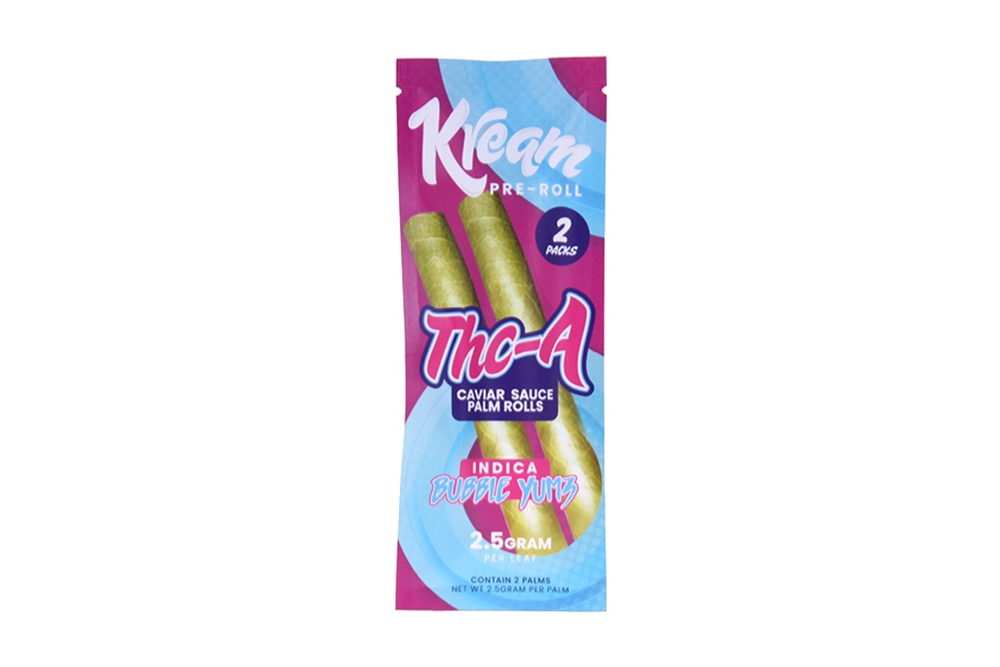
420 Packaging THC Pre Roll Mylar Bags are presented by the manufacturer as food-grade, tear-resistant mylar packaging with a barrier against light, moisture, and oxygen, a resealable zipper, customizable sizes and designs, and space for branding and product information. The listed range is $0.01–$0.50 per piece; final pricing depends on specifications and order details.
This format can provide room for batch information, warnings, potency fields, storage directions, and a COA access code. However, customization does not make a finished package compliant by itself. Child-resistance, testing documentation, label content, material restrictions, and other requirements must be confirmed for the exact product and sales jurisdiction.
Packaging only; no cannabis or pre-roll product is included.
View THC Pre Roll Mylar Bags or explore the broader child-resistant packaging selection.
A 30-Second Label Check Before You Buy
Identify the product form and net quantity.
Read the correct potency unit for that form.
Separate per-serving and total-package THC.
Find the batch number and package date.
Scan the COA and match the batch.
Review ingredients, allergens, storage, and warnings.
Verify the state symbol and licensed business information.
Check that the package is intact and required text remains readable after opening.
Frequently Asked Questions
What is the most important number on a cannabis label?
There is no single most important number. For edibles, the relationship between THC per serving and THC per package is essential. For flower and inhalable products, potency percentage, net weight, batch number, and COA all matter. Read the numbers as a set.
What does Total THC mean?
Total THC generally accounts for measured THC plus the potential THC contribution from THCA after conversion. The formula and display requirements should be checked against the rules for the state where the product is sold.
Is THCA the same as THC?
No. THCA is an acidic precursor that can convert into THC when heated. Labels may show both THCA and Total THC; do not add the full values together unless the applicable regulatory method specifically instructs you to do so.
How can I tell whether a COA belongs to my package?
Compare the product name and batch or lot number on the COA with the physical package. Also check the laboratory, test date, sample information, units, and whether the full report includes the panels required for that product in your state.
Does a QR code prove cannabis is lab tested?
No. A QR code is only a route to information. It should lead to a legitimate, readable COA or an official page where the batch-specific COA can be obtained. A generic brand homepage or mismatched report is not enough.
Is one gummy always one serving?
No. The label may define one piece as one serving, part of a piece as one serving, or another amount. Check the serving size, THC per serving, number of servings, and total THC per package.
Are cannabis universal symbols the same in every state?
No. States can use different symbols and placement rules. Verify the symbol against the current regulator guidance for the jurisdiction where the product is sold.
What is the difference between a package date and an expiration date?
The package date records when the product was placed into its finished package. The expiration or use-by date reflects the producer’s established period for the unopened product under applicable requirements and stability information. They answer different questions.
Can required cannabis label information appear only online?
Not necessarily. Some information may be accessible through a QR code, but states can require specific details to remain printed on the retail package or outer marketing layer. Small packages may use approved extended-label formats where allowed.
Does compliant packaging make the product safe for children?
No package is “child-proof.” Child-resistant packaging is designed to make access more difficult under specified testing conditions. Cannabis products should still be locked away, kept in their original package, and stored out of sight and reach of children and pets.
Plan the Package Around the Label, Not After It
Before approving artwork, map the principal display panel, warnings, potency fields, batch area, dates, storage text, COA code, and tamper-evident feature on the actual dieline. Then confirm the final system against the rules for every state where the product will be sold.
View packaging options · Browse product formats · Request a packaging guide or quote