
Last updated: August 20, 2026
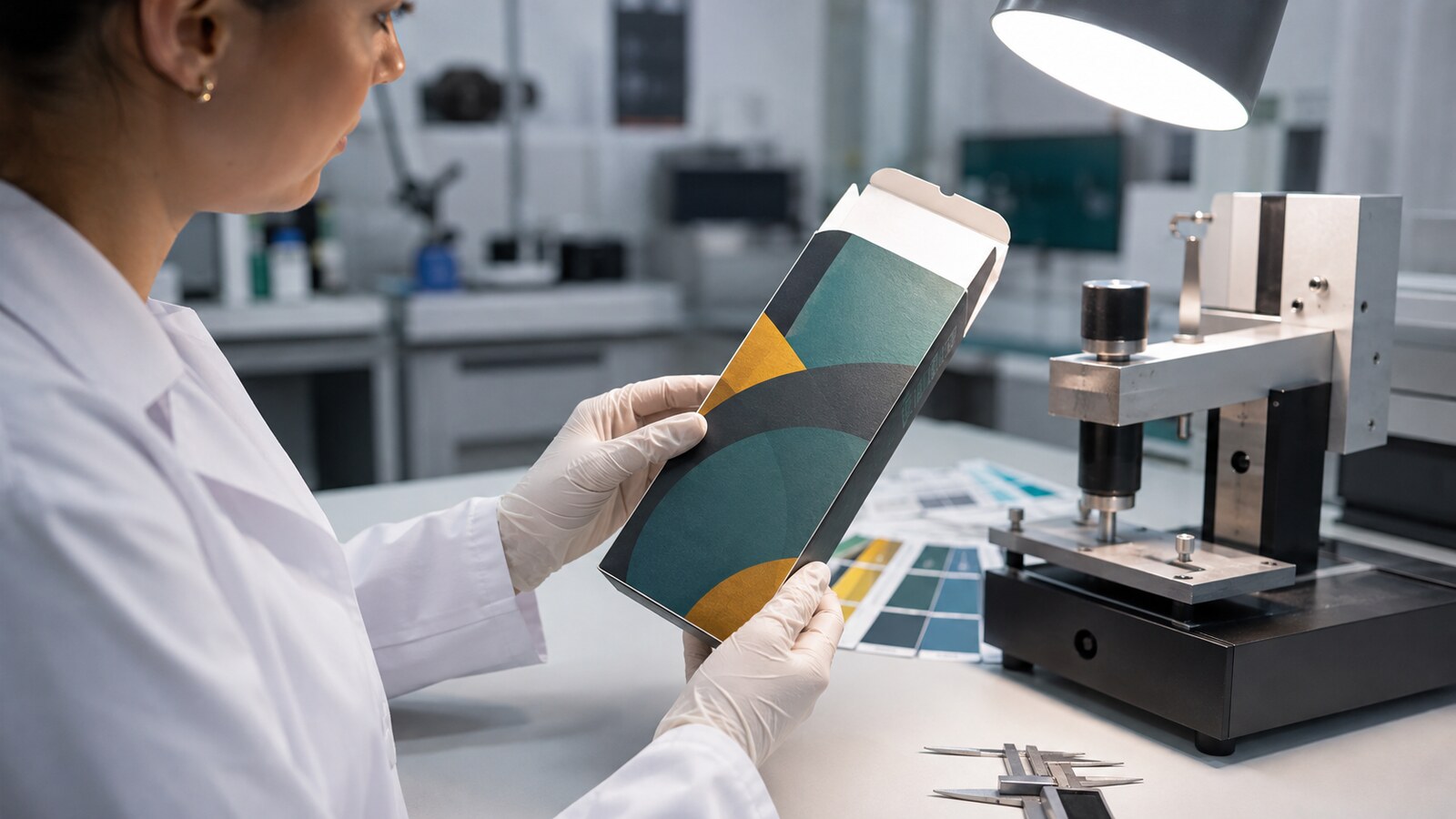
Quick Answer: A cannabis packaging rub test checks whether ink, coatings, foil, labels, and variable data remain readable after the contact they will face during packing, shipping, dispensary handling, and consumer use. Start with production-representative samples, test the actual surfaces that touch each other, and inspect both appearance and function. A passing sample should preserve required information, keep barcodes or QR codes scannable, avoid objectionable ink transfer, and stay within a written defect limit. Do not copy an arbitrary cycle count from another package. Set conditions from your distribution route, then use a recognized laboratory method when formal comparison or supplier qualification is needed.
Printed cannabis packaging can look clean at press approval and arrive with dulled graphics, exposed paper fibers, smeared lot codes, or unreadable symbols. The problem is often not “weak ink” alone. Board texture, curing time, coating choice, carton geometry, case packing, and the surface rubbing against the print all change the result.
This guide turns a cannabis packaging rub test into a practical release check. It does not certify regulatory compliance or replace state-specific legal review. It helps a brand define what must remain intact, reproduce realistic contact, diagnose failures, and give a printer an actionable acceptance standard.
Contents
- What a Cannabis Packaging Rub Test Should Protect
- Build a Representative Sample Set
- Run the Cannabis Packaging Rub Test
- Score Damage and Find Root Causes
- Recommended Printed Packaging Options
- Production Release Checklist
- Questions for Printers and Packaging Suppliers
- FAQ
What a Cannabis Packaging Rub Test Should Protect
A useful test protects information and package function before it protects cosmetic perfection. California’s Department of Cannabis Control explains that labeling is intended to inform consumers and help prevent unintended use, and its manufactured-product checklist requires goods to be in final packaged and labeled form before transfer for regulatory compliance testing. Your own state may organize required information differently, so approve the legal copy first and then rank each printed zone by consequence.
| Print zone | What to check after rubbing | Suggested release rule |
|---|---|---|
| Warnings, identity, ingredients, net contents | Characters remain complete and readable | Reject any loss that changes meaning or legibility |
| Universal symbol or state-required mark | Shape, contrast, and boundaries remain recognizable | No obstruction or material loss in the required mark |
| Batch, lot, date, or variable data | Every character can be read and traced | Zero ambiguous characters |
| Barcode or QR code | Scan from the intended distance using actual devices | Meet the written scan-rate target before and after testing |
| Decorative ink, foil, or spot coating | Scuff area, gloss change, transfer, and exposed substrate | Use an approved visual defect limit, not an unwritten opinion |
| Closure instructions | Directions stay visible through repeated opening | Reject if safe-use instructions become unclear |
Photograph a signed “limit sample” for cosmetic zones. A pass/fail reference prevents production, purchasing, and the printer from applying three different definitions of an acceptable scuff.
Build a Representative Sample Set
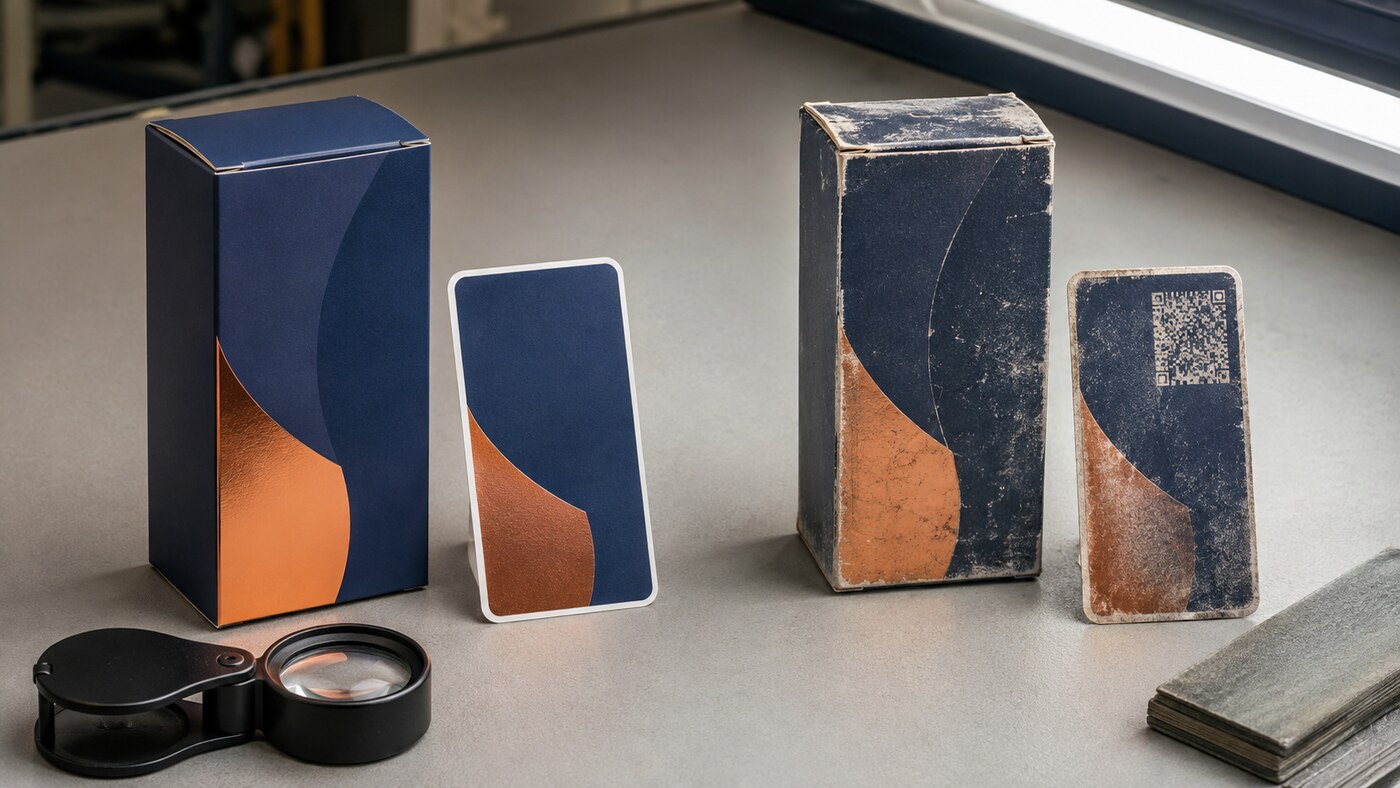
Do not test only a hand-finished white sample. Pull from the intended board or film, ink system, coating, adhesive, foil, and variable-data process. Include the darkest solid ink, fine reverse type, high-gloss areas, folds, edges, and the panel that faces another package inside the shipper.
Use a contact map, not a random sample
- Pack units exactly as fulfillment will pack them, including dividers, tissue, sleeves, or direct carton-to-carton contact.
- Mark every contact point: face-to-face panels, corners, locks, rails, pouch seams, caps, and corrugated walls.
- Choose samples from the beginning, middle, and end of a production run. Record press, ink or coating batch, date, and cure time.
- Condition comparison samples together so moisture and temperature do not become hidden variables.
- Keep one untested control in a clean sleeve for side-by-side scoring.
If lot codes or labels are applied later, test those production steps too. The strongest carton coating cannot protect a thermal-transfer code printed with the wrong ribbon or a label whose topcoat is incompatible with cleaning products.
Run the Cannabis Packaging Rub Test
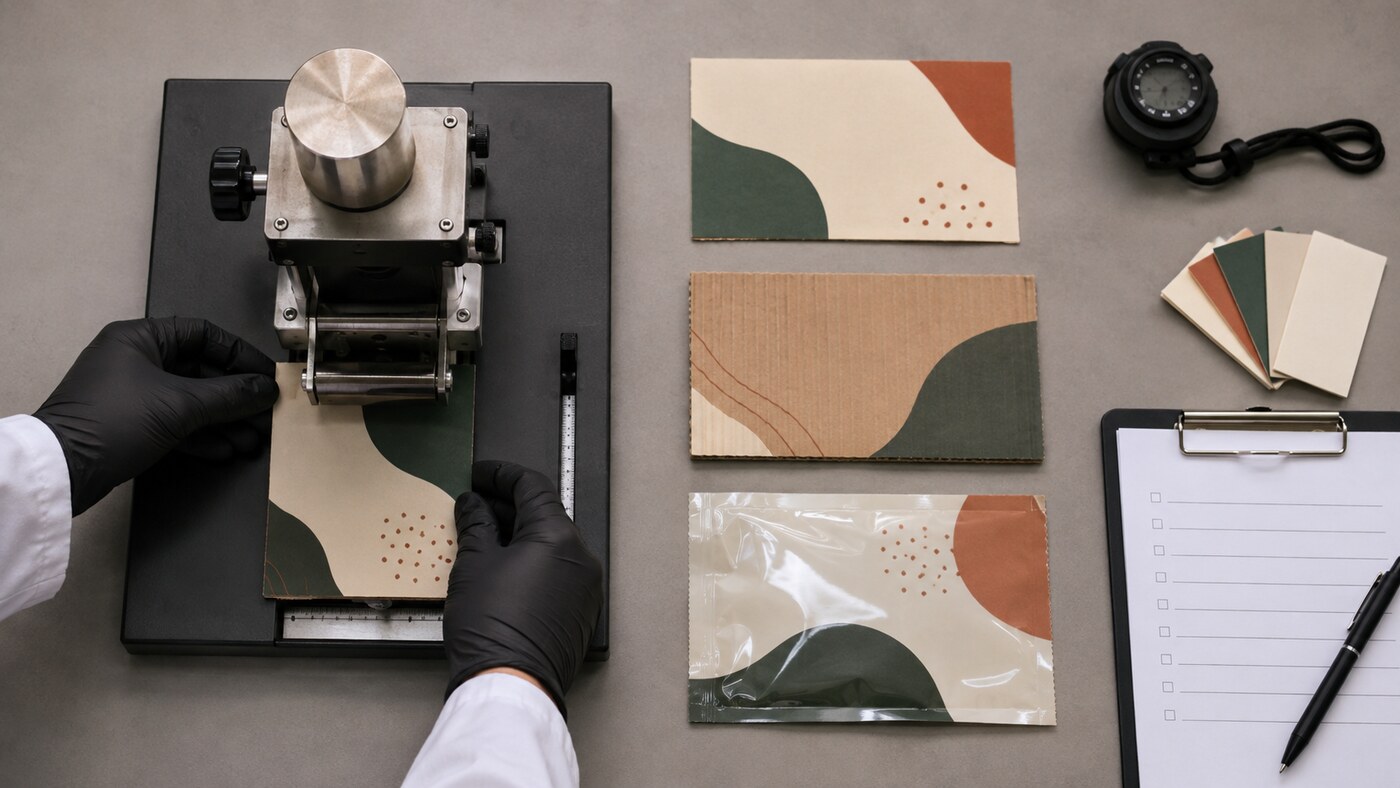
ASTM lists D5264 as the practice for abrasion resistance of printed materials using a Sutherland rub tester. The full standard is licensed, and a test report should identify the exact edition and conditions used. A bench screening test can compare options, but it should not be described as ASTM testing unless the procedure actually follows the applicable standard.
A repeatable internal screening workflow
- Write the question. Examples: Does a matte carton transfer black ink to an adjacent carton? Does the lot code remain readable after case transport? Does spot UV lose gloss at the child-resistant button?
- Define the rub pair. Test the printed face against the real opposing material: another carton, corrugated liner, pouch film, insert, or cap.
- Record conditions. Note sample age, conditioning, contact face, load or fixture setting, speed, stroke count, and any test fluid.
- Run dry first. Dry package-to-package contact represents many packing and shipping risks. Add wet or chemical exposure only when the actual use case supports it.
- Inspect at planned intervals. Early checkpoints show whether damage begins suddenly or accumulates gradually.
- Scan variable data. Test every barcode and QR code on the devices and apps used in receiving, inventory, and consumer access.
- Compare with the control. Use the same lighting, viewing distance, and defect scale. Photograph results.
Avoid improvised “thumb rub” acceptance alone. It can reveal obvious under-cure or transfer, but pressure, speed, skin oils, and judgment vary too much for lot release. Use it only as an early warning before a controlled comparison.
Score Damage and Find Root Causes
| Observed failure | Likely contributors to investigate | Next comparison |
|---|---|---|
| Ink transfers but substrate is intact | Incomplete cure, ink/coating incompatibility, excessive setoff pressure | Longer verified cure, alternate coating, reduced face-to-face pressure |
| White fibers appear at folds and corners | Brittle print layer, tight score, board grain, exposed high-contact geometry | Adjusted score, alternate board, protected artwork at the edge |
| Foil or raised detail dulls first | High profile at a contact point, foil adhesion, incompatible overprint treatment | Move artwork, recess contact, or compare finish systems |
| Variable code smears | Ribbon/ink mismatch, unclean surface, insufficient dry time, topcoat conflict | Production code on each candidate surface, then scan after rubbing |
| Only shipper-facing panels scuff | Case vibration, corrugated roughness, loose count, divider design | Packed-case simulation with corrected restraint or separator |
| Label edge lifts while print survives | Edge contact, tight radius, adhesive/surface-energy mismatch | Change label position, corner radius, adhesive, or application pressure |
Separate critical defects from major cosmetic defects and minor change. A faded decorative patch may be commercially unacceptable without affecting information; one missing digit in a batch code is critical even when the package otherwise looks new.
Recommended Printed Packaging Options
The package style changes the contact map, so compare finishes on the structure that will actually ship. These current 420 Packaging options provide useful starting points for a rub-test specification; product pages describe available construction and customization, but the finished package still needs project-specific testing and state review.
Wholesale Spot UV Pre-Roll Joint Packaging
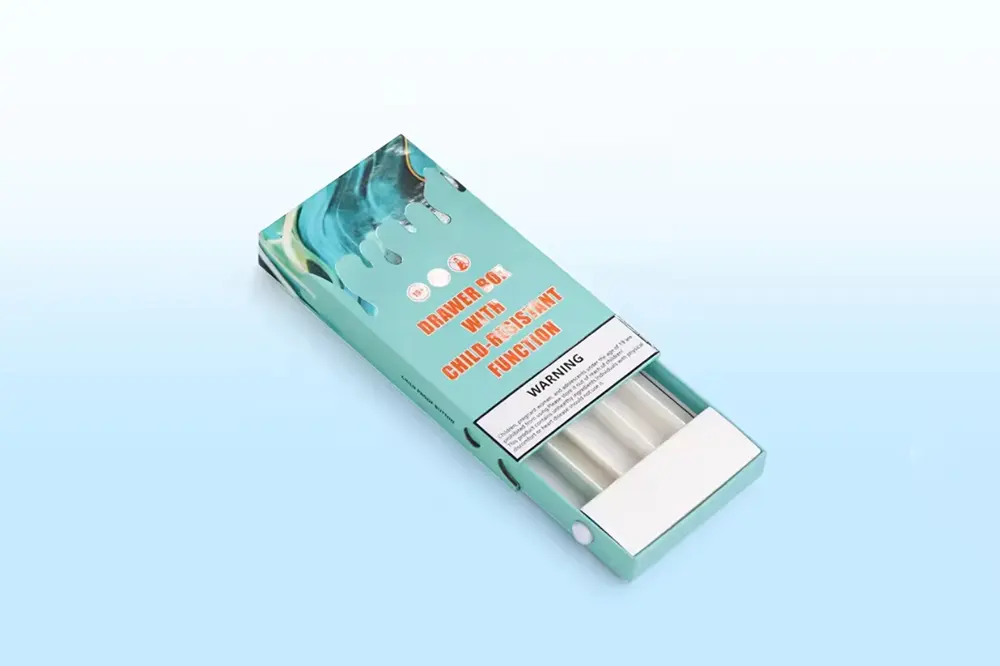
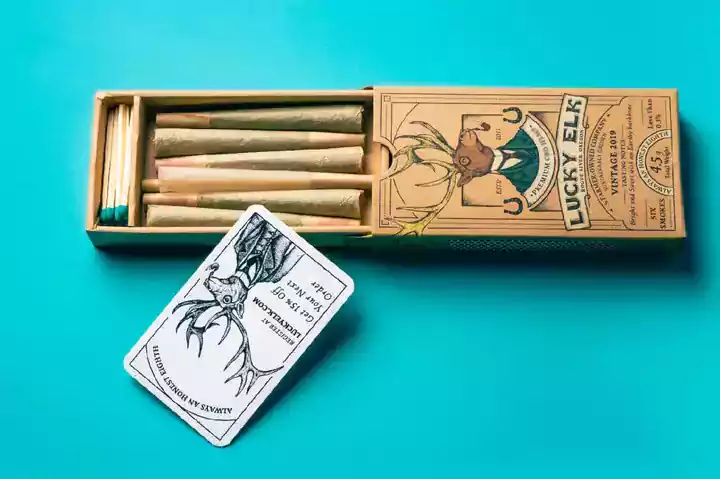
This drawer-style paper box has a side child-resistant button and supports customized dimensions, inserts, CMYK or PMS printing, and gloss, matte, or spot UV coating. Rub-test the outer sleeve against neighboring cartons and inspect the high-contact button area separately. Confirm the required child-resistant documentation and finished configuration for the target market.
Wholesale Child Resistant Edible Packaging
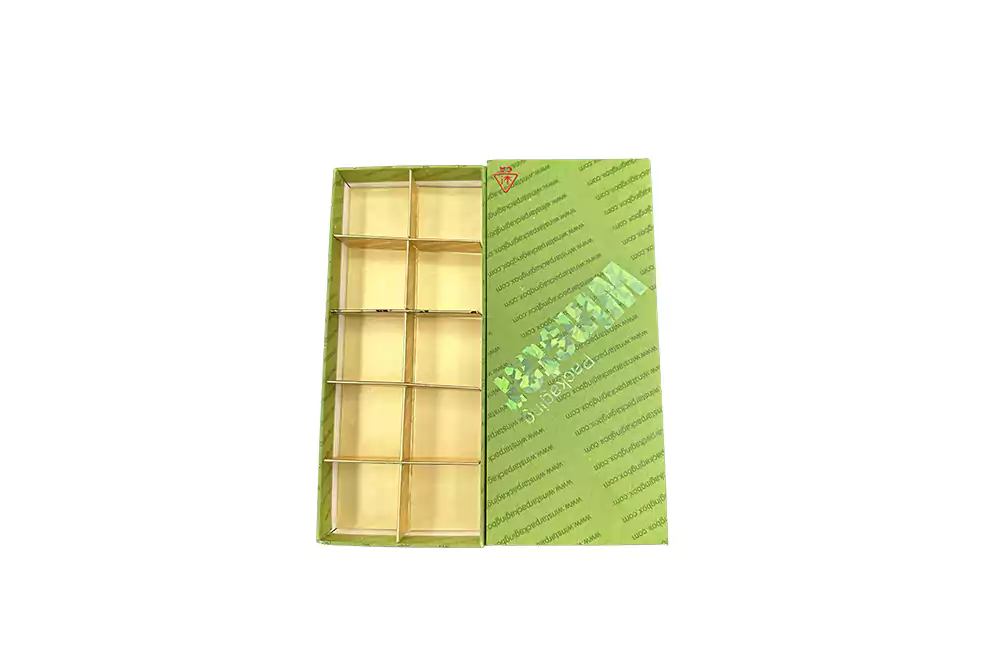
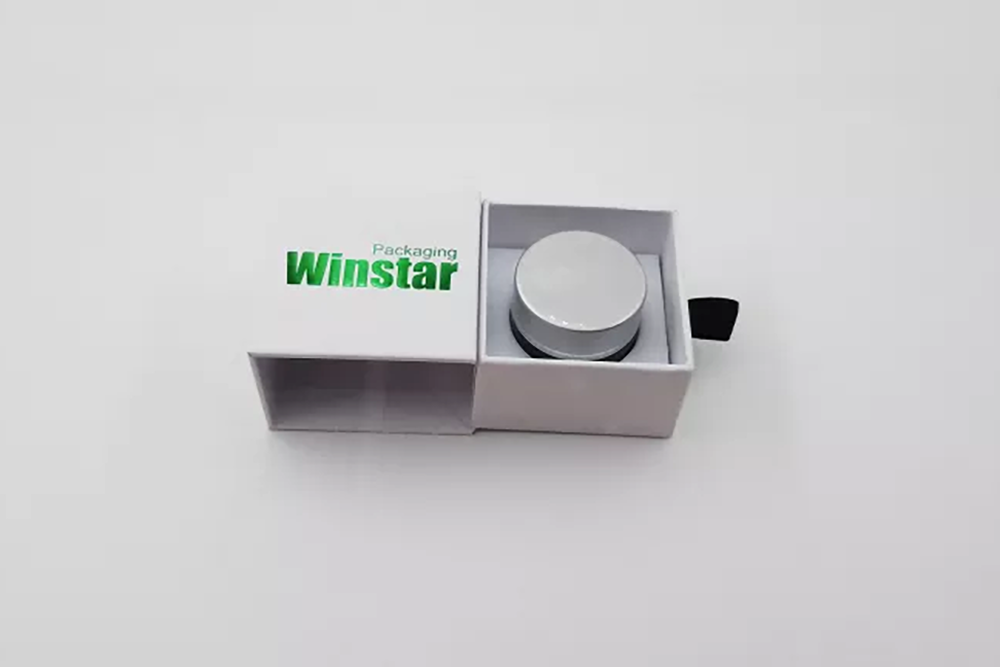
The product page describes a rigid paper sliding box with a back-lock button, offset printing, and finish options including foil stamping, UV coating, and embossing. For edible programs, include the variable label or production code in the same test and check any friction created by the sliding action.
Custom Pre Roll Boxes Retail Wholesale
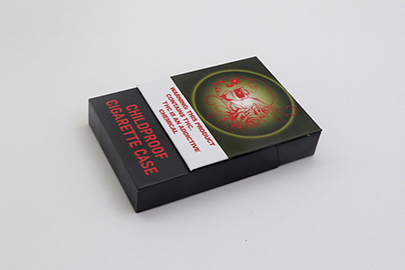
This five-count format uses a push-button lock, magnetic flip top, and optional divider. The page lists CMYK or PMS printing and gloss, matte, or spot UV coating. Test rub at the lid edge, button, and carton faces, then repeat after normal opening because the contact pattern can change when the box is handled.
For a coating comparison before requesting samples, review 420 Packaging’s Varnishing & Spot UV overview. A finish can improve resistance, but performance depends on its compatibility with the ink, substrate, forming, cure, and actual distribution contact.
Production Release Checklist
- The test sample matches approved production substrate, print, coating, foil, label, and variable-data process.
- Beginning, middle, and end-of-run samples are represented.
- Actual opposing surfaces and high-contact edges are included.
- Conditioning, cure time, fixture, load, speed, strokes, and checkpoints are recorded.
- Required copy, symbols, instructions, and traceability data remain legible.
- Every barcode and QR code meets the written scan criterion after testing.
- No unacceptable ink transfer, exposed substrate, foil loss, gloss change, or label lift exceeds the signed limit sample.
- Any wet or chemical exposure represents a documented real-world condition.
- Failures are traced to material, print, cure, conversion, code application, or pack-out rather than hidden by rework.
- Results, photos, sample IDs, decision, and approver are retained with the lot record.
When a change affects substrate, ink, coating, printer, converter, artwork contact zones, case count, or fulfillment method, treat it as a reason to requalify instead of assuming the old result still applies.
Questions for Printers and Packaging Suppliers
- Which ink, coating, laminate, foil, and substrate combinations have been tested together?
- What cure or dwell time is required before converting, coding, packing, and shipment?
- Can you provide a production-representative physical sample rather than only a digital mock-up?
- Which opposing surface, load, speed, strokes, conditioning, and evaluation method are used in your rub test?
- Is the report a controlled internal comparison or testing to a named standard and edition?
- How are barcodes, QR codes, warnings, and variable lot data evaluated after abrasion?
- What change-control triggers require a new proof or requalification?
- How will approved limit samples and retained production samples be identified and stored?
- Can pack-out changes reduce rubbing before adding a more complex finish?
Ask for evidence, not adjectives. “Scuff resistant” is incomplete without a sample construction, procedure, acceptance limit, and result.
FAQ
What is a cannabis packaging rub test?
It is a controlled check of how printed packaging, labels, coatings, foil, and variable data withstand repeated contact. It can compare materials, investigate failures, or support lot release when the procedure and limits are written.
Is a finger rub test enough?
No. It is useful for spotting obvious smearing or under-cure, but hand pressure, oils, speed, and judgment vary. Use a controlled fixture or qualified laboratory when results drive supplier approval or release.
How many rub cycles should cannabis packaging pass?
There is no universal number for every package. Define the opposing surface and severity from the distribution route, or follow the exact named standard and client specification. Record the chosen conditions so lots remain comparable.
Should I test dry and wet rub resistance?
Start with dry package-to-package contact. Add water, oil, sanitizer, condensation, or another fluid only when it represents documented handling. State the fluid and exposure precisely because “wet rub” is not one condition.
Does passing a rub test make packaging compliant?
No. It only supports the durability criteria tested. Cannabis packaging and labeling still require review against the current rules for the product, license type, and destination state.
Do QR codes and barcodes need a separate check?
Yes. Visual inspection cannot prove scan performance. Scan before and after testing with the devices, lighting, distance, and software used in the actual workflow, and set a measurable acceptance target.
When should rub testing happen?
Use it during material selection, on a physical proof, at production start-up, and after meaningful changes. Pull production samples across the run when the result is part of lot release.
Can spot UV or lamination prevent all scuffing?
No finish prevents every failure. Coatings and films can improve resistance, but folds, edges, foil, raised details, incompatible inks, insufficient cure, or rough pack-out surfaces may still fail.
Why does a package pass flat but fail after forming?
Scoring and folding stretch the printed layer, expose fibers, and create high points. Test finished cartons and normal opening cycles, not only flat sheets.
What records should be kept?
Keep sample IDs, material and ink batches, production timing, conditioning, procedure settings, contact surfaces, photos, scan results, defect scores, retained controls, decision, and approver.
Need production-representative samples for a print durability comparison?
Share the package style, artwork contact zones, finish candidates, and distribution route so the physical proof can be planned around your real rub risks.