
Last updated: August 15, 2026
Quick Answer
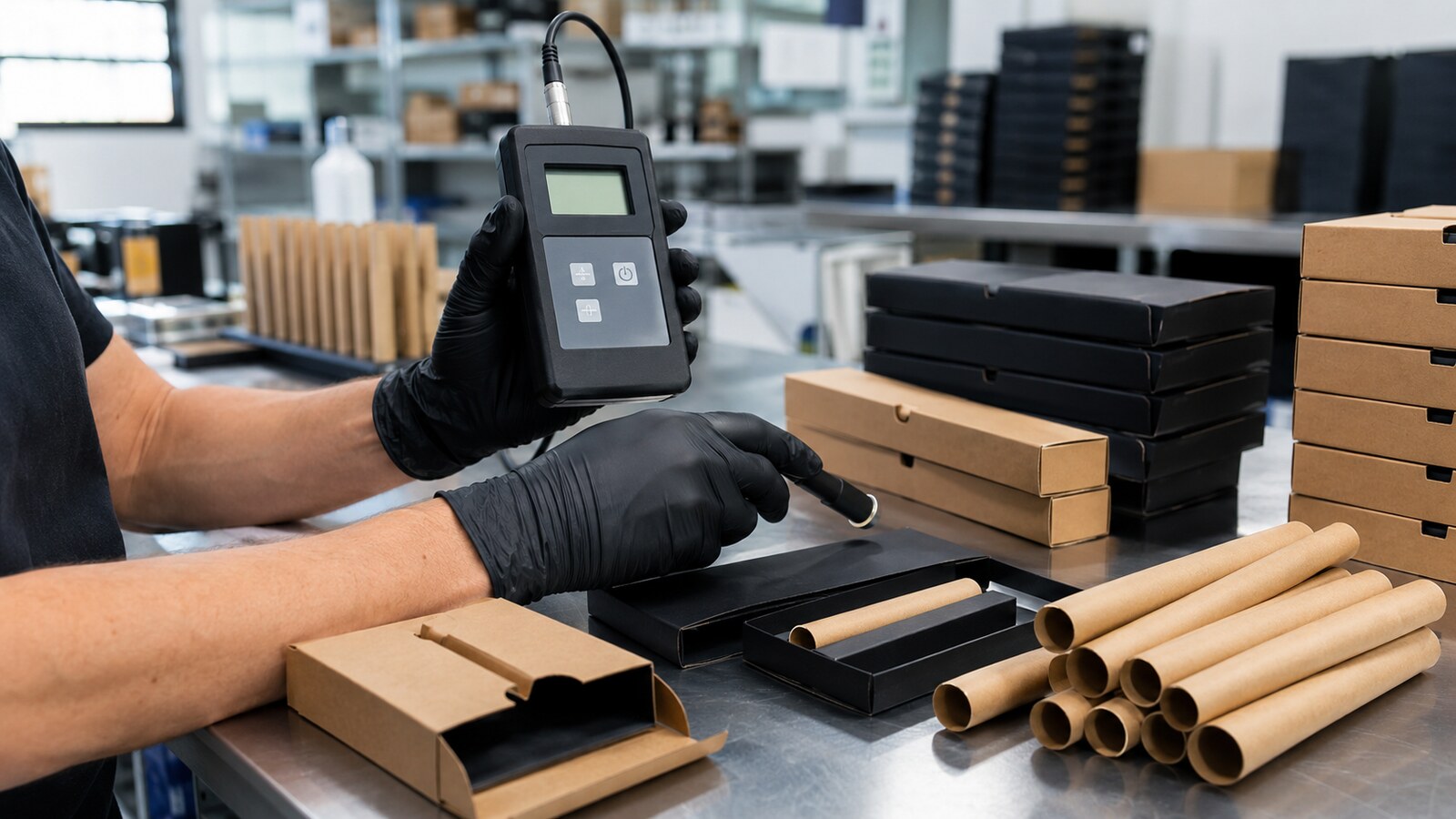
Static electricity in pre-roll packaging can make lightweight inserts double-feed, attract paper dust and product crumbs, pull film toward machine parts, and contaminate closure or adhesive areas. Diagnose it by recording when and where the problem appears, comparing material lots, checking room conditions, observing component separation, and measuring charge with suitable equipment when available. Start with housekeeping, material conditioning, controlled handling, and equipment maintenance. Grounding, bonding, ionization, or conductive components should be selected with qualified production and safety personnel—especially where combustible dust, flammable cleaning products, or solvent-based processes may be present. A packaging change should be validated on the finished pack before release.
A pre-roll box can pass structural testing and still run poorly on the packaging line. Paperboard inserts may cling together, empty tubes may repel or attract one another, clear windows can collect dust, and tiny particles can migrate to adhesive or sealing areas. These symptoms are often blamed on “bad material,” but static charge is created by a system: material pairs, speed, separation, friction, air conditions, equipment surfaces, and operator handling.
Contents
- How Static Shows Up on a Pre-Roll Packaging Line
- Why Pre-Roll Packaging Builds Static
- A Seven-Step Static Diagnostic
- Symptom-to-Cause Decision Matrix
- Packaging Options to Evaluate
- Run a Controlled Improvement Trial
- Safety Boundaries for Static Control
- Supplier Questions Before Production
- Common Troubleshooting Mistakes
- Frequently Asked Questions
- Request Packaging Guidance
How Static Shows Up on a Pre-Roll Packaging Line
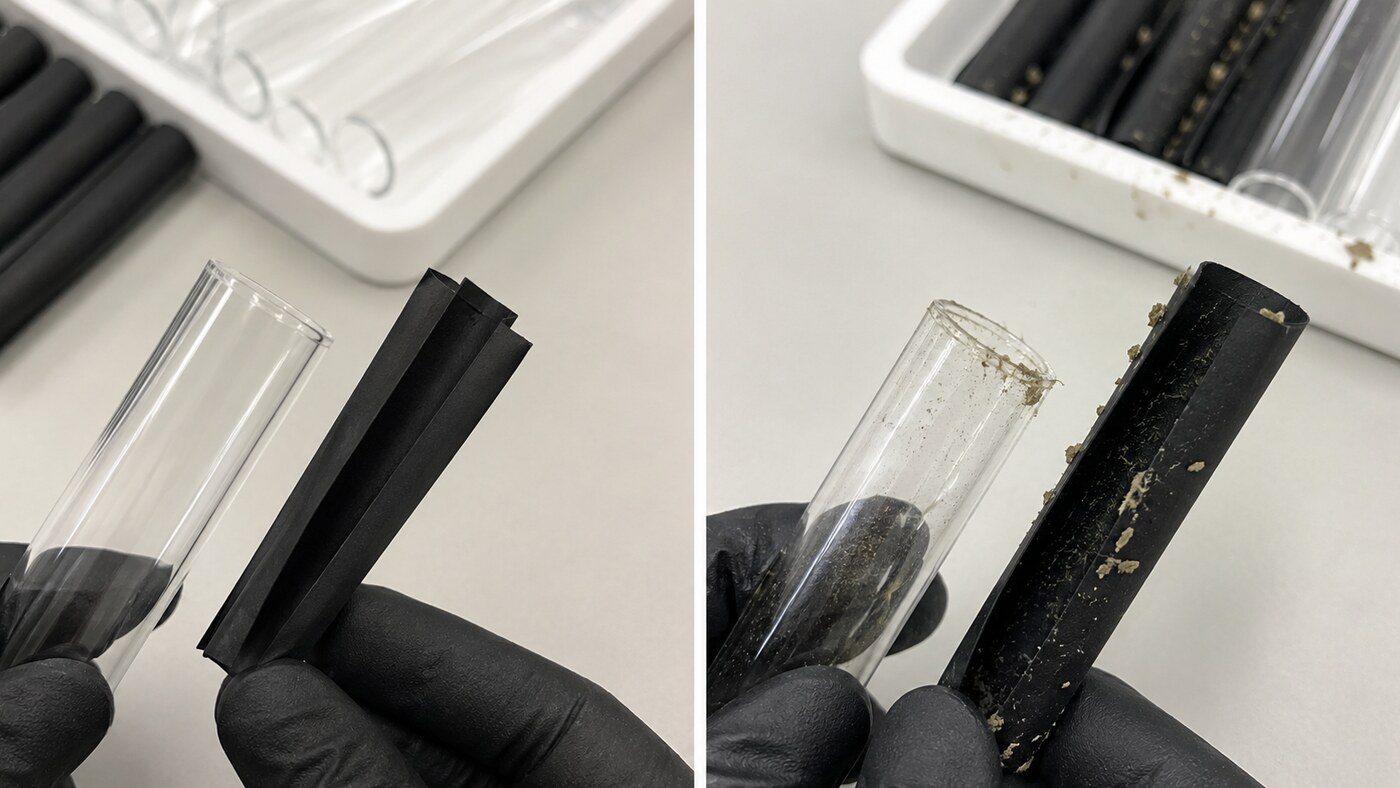
Static is invisible, so operators usually see its effects first. One symptom alone is not proof. Look for a repeatable cluster:
- Paper inserts or instruction slips lift two at a time.
- Lightweight tubes cling together or jump toward guides.
- Film, labels, or window material pulls away from its intended path.
- Paper fibers and fine product particles collect on dark surfaces.
- Dust reappears soon after wiping.
- Adhesive areas receive particles before closure.
- Minor jams increase when line speed rises or during dry weather.
- Operators feel small shocks or hear snapping near components.
A 2025 study on static electricity in printing and packaging reports that charged paper and films can attract dust and affect handling and print quality. That research supports the mechanism, but your plant still needs to identify its own charge source and failure point.
Why Pre-Roll Packaging Builds Static
Contact and separation
When dissimilar materials touch and separate, charge can transfer. Feeding, sliding, peeling liners, unwinding film, and separating nested components all create opportunities.
Speed and repeated motion
A manual trial may appear normal while a production feeder generates problems after hundreds of cycles. Speed changes dwell, friction, separation rate, and the time available for charge to dissipate.
Low humidity and conditioned materials
Dry air often allows charge to persist longer, but humidity is not a universal setting to raise without limits. Paperboard, adhesives, printed coatings, botanical products, and facility requirements may each impose their own storage window.
Insulating surfaces
Plastic guides, trays, films, gloves, and synthetic clothing can hold charge. A metal machine frame does not automatically neutralize isolated nonconductive components.
Dust and fines
Static may not create the dust, but it can move and concentrate it. First find the particle source—paper cutting, abrasion, product handling, cartons, clothing, or incoming components—then address both generation and attraction.
A Seven-Step Static Diagnostic
- Freeze the process description. Record packaging SKU and lot, insert and tube material, line speed, machine, operator, room readings, cleaning method, and failure count.
- Mark the first failure location. Separate feeder, transfer, filling, closure, labeling, and final inspection. Do not treat the entire line as one cause.
- Run a slow-motion observation. Watch how components separate, rotate, slide, and approach guides. Video can reveal a sheet lifting before the jam.
- Compare lots and materials. Change one component at a time. A different coating, film, liner, or board moisture condition can change behavior.
- Use a particle witness. Place clean contrasting inspection surfaces at defined points and compare particle pickup over equal run times.
- Measure when appropriate. A suitable electrostatic field meter can help locate charge and compare before/after conditions. Follow its distance, grounding, calibration, and safety instructions.
- Confirm with a controlled intervention. Trial one authorized change, repeat the same sample size, and compare jams, particle counts, handling, and finished-package quality.
Symptom-to-Cause Decision Matrix
| Symptom | Check first | Useful comparison | Do not assume |
|---|---|---|---|
| Two inserts feed together | Separation point, board coating, storage | Slow vs. production speed | Feeder pressure is the only cause |
| Dust returns after wiping | Particle source and charged surface | Equal-time witness surfaces | More wiping solves generation |
| Film clings to a guide | Unwind path, roller material, speed | Before and after contact point | Film thickness alone explains it |
| Only one lot jams | Lot conditioning and surface finish | Approved retain vs. new lot | The machine suddenly changed |
| Problem appears in dry weather | Room and material history | Same SKU across documented days | Uncontrolled humidification is safe |
Packaging Options to Evaluate
These current 420 Packaging products illustrate different handling challenges. Use real samples from the intended construction; online descriptions do not establish line performance or compliance.
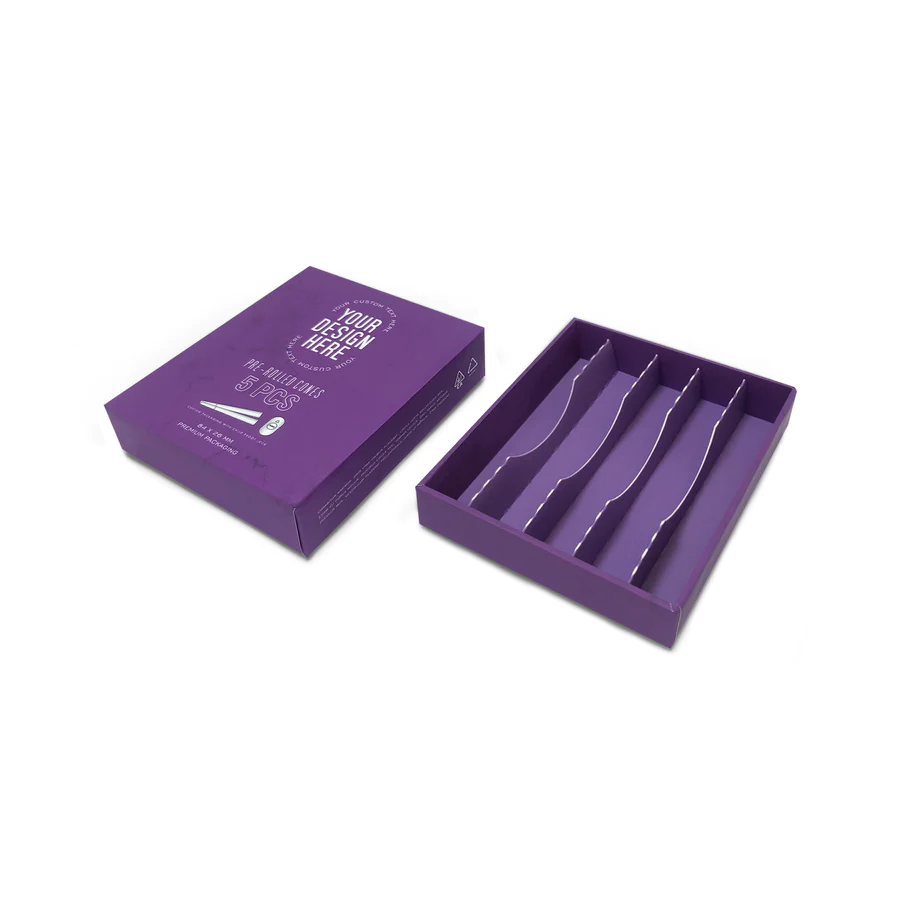
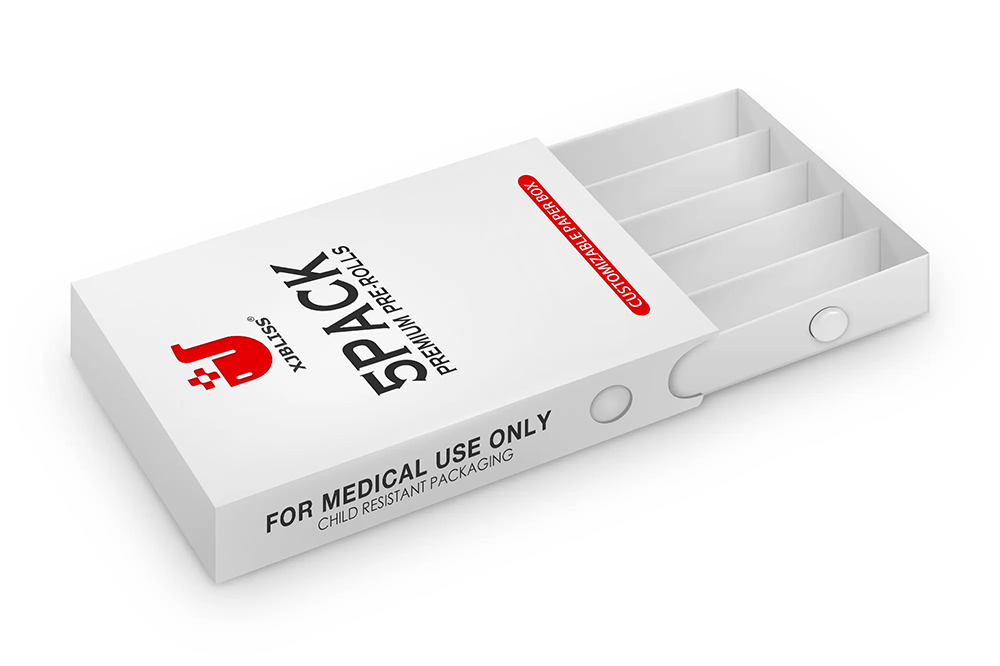
Child-Resistant Pre Roll Box 5 Pack
The live page describes a paper drawer holding up to five pre-rolls with a child-resistant button. During line trials, watch drawer separation, insert feeding, paper dust, and whether cleaning or static controls affect the button mechanism.

Paper Pre Roll Tubes Box
The official page lists paper construction, a push-and-pull opening mechanism, and a sealing lid. Compare tube nesting, surface fibers, closure fit, and component separation at the intended production speed.
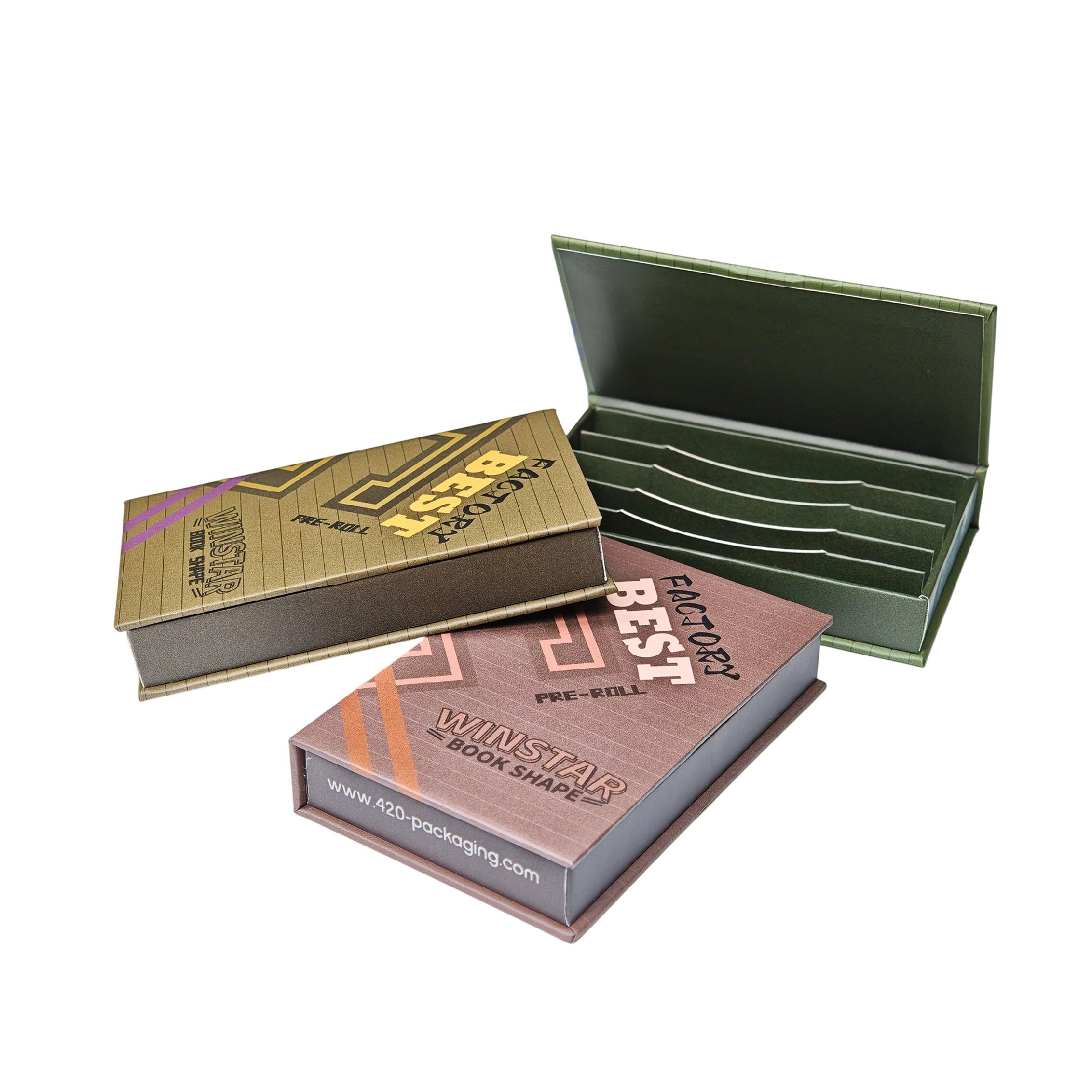
Flip-Top Book-Shape Pre-Roll Packaging Box
The current page describes a rigid paperboard box with a magnetic flip lid and removable custom dividers. The separate components make it useful for testing insert pickup, surface dust, assembly sequence, and final presentation.
Compare additional formats in the Pre-Roll Packaging collection.
Run a Controlled Improvement Trial
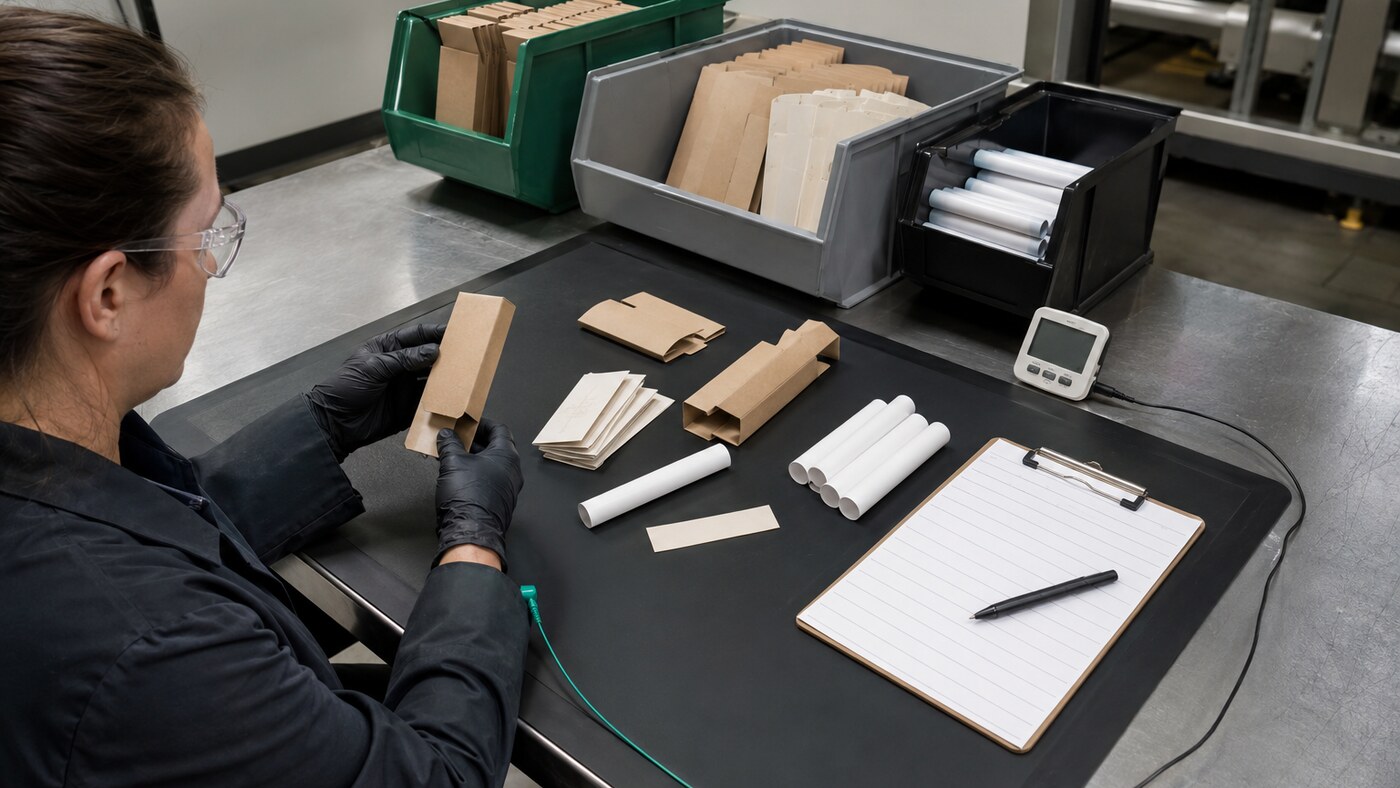
Use an A/B trial rather than changing humidity, line speed, cleaning, component storage, and ionization at once. Hold the product, package lot, operator, machine, and run length constant. Then compare one authorized intervention.
| Record | Baseline | Trial |
|---|---|---|
| Components attempted | Same fixed count | Same fixed count |
| Double-feeds or jams | Count by location | Count by location |
| Particle findings | Defined inspection area | Same inspection area |
| Charge reading | Same distance and point | Same distance and point |
| Finished-pack defects | Documented criteria | Same criteria |
Safety Boundaries for Static Control
Do not turn a quality experiment into an electrical or fire hazard. OSHA’s combustible dust guidance notes that dry powders can accumulate charge through transfer and mixing and calls for appropriate precautions. Whether a particular plant material, paper dust, solvent, or process presents a combustible hazard requires a facility-specific assessment.
- Involve EHS, engineering, equipment manufacturers, and qualified contractors where ignition risk may exist.
- Do not improvise grounding wires, ionizers, conductive additives, or electrical modifications.
- Verify that equipment is suitable for the classified or operating environment.
- Control dust generation and accumulation through an approved housekeeping plan.
- Review flammable cleaning agents, printing solvents, and nearby ignition sources.
- Treat humidity as a controlled process variable, not a universal static cure.
Supplier Questions Before Production
- What board, coating, film, window, insert, and adhesive materials are used?
- What storage and conditioning range is recommended for each component?
- Have surface treatments or suppliers changed since the approved sample?
- Which dimensions affect feeder separation and automated handling?
- Can production-intent samples and lot retains be supplied?
- What controls limit paper dust, die-cut debris, and loose fibers?
- Are antistatic treatments present, and could they affect printing, adhesion, food-contact review, recycling, or regulatory documentation?
- How are material and process changes communicated before shipment?
Common Troubleshooting Mistakes
- Buying an ionizer before locating the first charge-generating step.
- Changing five variables and crediting the one that sounds most technical.
- Testing a few components by hand instead of at production speed.
- Removing particles without finding their source.
- Assuming a room humidity number applies to every material and product.
- Ignoring seasonal, shift, clothing, glove, and lot differences.
- Using compressed air without an approved contamination and safety procedure.
- Failing to recheck closure, adhesive, print, and child-resistant functions after a change.
Frequently Asked Questions
Can static electricity attract cannabis particles to packaging?
It can attract lightweight particles to charged surfaces, but confirm both the particle source and charge location before selecting a control.
Why do inserts double-feed only on some days?
Room conditions, material conditioning, surface finish, lot variation, speed, and handling can change charge generation and dissipation.
Will increasing humidity eliminate static?
Not reliably, and uncontrolled humidity can affect paper, adhesives, equipment, and product. Use supplier and facility limits and test a documented range.
Can I ground a plastic packaging component?
Insulating plastics do not behave like conductive metal. Have qualified personnel evaluate the material, equipment, and appropriate control method.
Does wiping a surface remove static?
It may remove particles, but rubbing can also generate charge. The result depends on wipe material, chemistry, surface, and procedure.
Should I use compressed air to clean pre-roll packaging?
Only under an approved procedure that addresses air quality, particle redistribution, product contamination, worker exposure, and facility hazards.
How do I prove static caused a jam?
Document the failure location, measure or compare charge consistently, run a controlled intervention, and show repeatable improvement without other changes.
Can static affect labels or adhesive closures?
Yes. Charged film or paper can misfeed or attract contamination into an adhesive area. Check application alignment and bond after any control change.
Does antistatic packaging guarantee a clean line?
No. Dust generation, storage, equipment, speed, housekeeping, and material compatibility still matter.
Do static controls affect child-resistant performance?
They can indirectly affect assembly or materials. Any packaging or process change should be reviewed against the exact certified structure and finished-pack requirements.
Request Packaging Guidance
Share your component stack, pack count, insert design, line speed, observed failure point, and target market when requesting samples. Request packaging guidance and confirm current specifications for every shortlisted pre-roll package.