
Last updated: September 20, 2026
A cannabis package should not be called “smell-proof” simply because no odor is noticeable immediately after filling. Odor can escape through an incomplete heat seal, zipper channel, closure interface, pinhole, fold, contaminated exterior, or slowly through the packaging material itself. A useful odor-barrier evaluation therefore tests the finished pack—not just the film—under controlled fill, closure, storage, handling, and reopening conditions. Compare sealed test packs with empty controls, inspect the outside for product contamination, evaluate new and cycled closures separately, and document when and where odor becomes detectable. Oxygen-transmission, moisture-transmission, and seal-strength tests can support material selection, but none of them alone proves that a package is “smell-proof.”
Odor containment is one of the most commonly requested features in cannabis packaging, especially for flower, infused pre-rolls, bulk cannabis, and other aromatic products. It is also one of the easiest packaging claims to oversimplify.
A pouch can use a high-barrier laminate and still leak odor through a poorly formed heat seal. A rigid container can have an excellent wall barrier but lose performance at the lid or liner. A package can also appear to “leak” even when the barrier is intact because flower dust, oil, or aromatic residue contaminated the outside during filling.
For cannabis brands, co-packers, dispensary suppliers, and packaging buyers, the practical question is not simply, “Does this material block smell?” The better question is:
Where can odor escape from the finished package, under the actual way it will be filled, closed, handled, stored, opened, and reclosed?
What Does “Smell-Proof” Cannabis Packaging Actually Mean?
“Smell-proof” is widely used as a commercial packaging description, but buyers should turn that broad claim into measurable purchasing requirements.
For a practical cannabis packaging project, odor containment can be broken into at least four questions:
- Does the base material resist the passage of volatile compounds?
- Does the finished package have continuous, undamaged seams?
- Does the zipper, lid, cap, liner, drawer, or other closure remain tightly engaged?
- Does performance remain acceptable after handling, storage, opening, and reclosing?
A positive answer to only one of these questions is not enough.
For example, a flexible pouch may use a multilayer barrier structure, but if dried flower enters the heat-seal area during filling, a channel can form through the final seal. Odor may then escape through that channel much faster than it would ever permeate through the film itself.
The same principle applies to jars and tubes. The wall material may provide excellent barrier performance, but the finished package still depends on the cap, liner, thread engagement, closure torque, gasket condition, and dimensional fit.
Evaluate “smell-proof” as a property of the finished package system, not as a property of one film, jar, cap, or zipper.
The Five Main Paths for Cannabis Odor to Escape
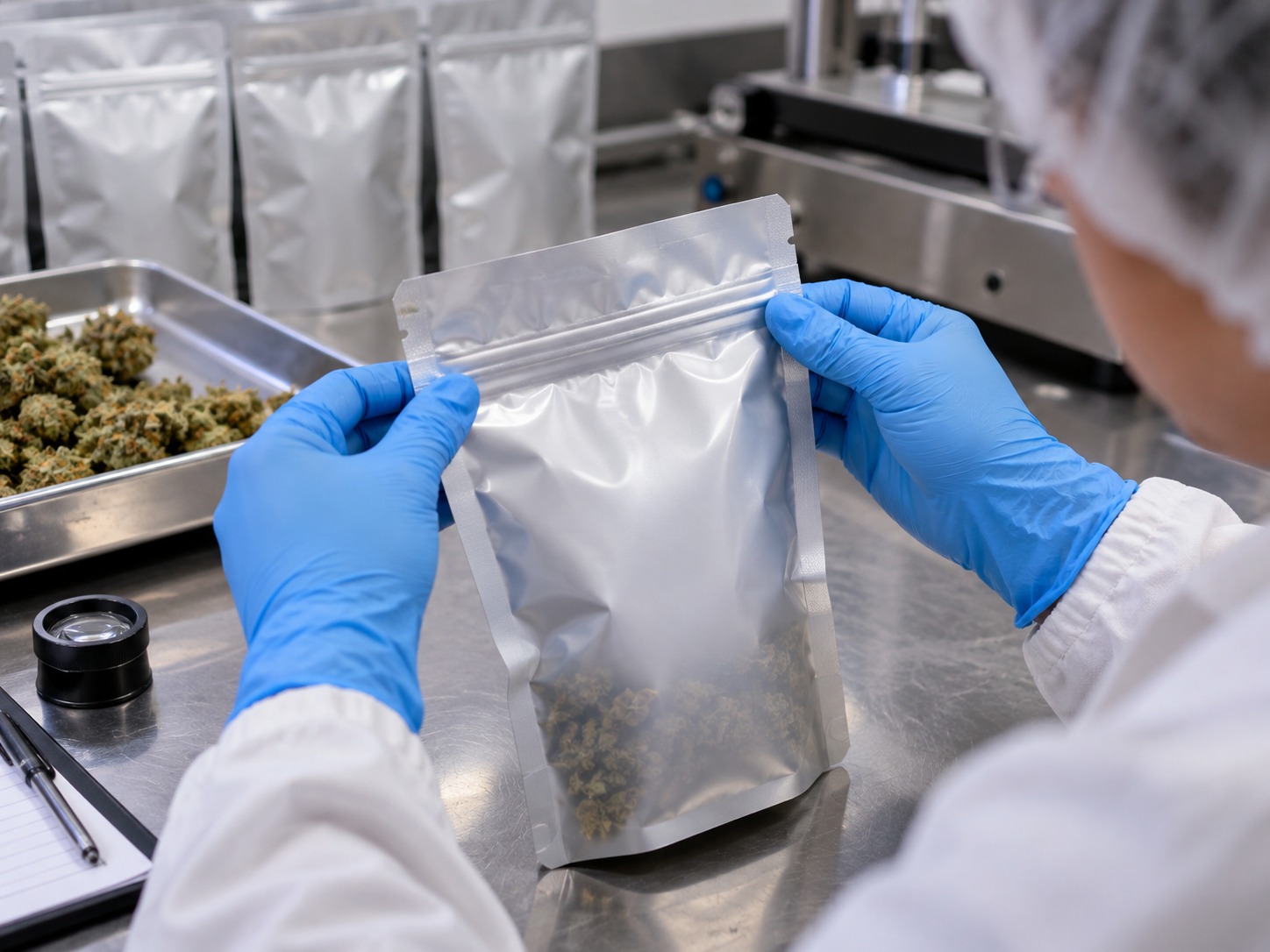
When a sealed cannabis package smells strongly from the outside, there are several possible explanations. Separating them makes root-cause analysis much faster.
| Odor Path | What Happens | Typical Clue | First Check |
|---|---|---|---|
| Seal leak | Odor moves through an open channel or incomplete seal | Strong odor near one edge or seal | Seal continuity and contamination |
| Closure leak | Odor escapes through zipper, cap, lid, liner, or interface | Odor strongest near opening area | Closure engagement and fit |
| Material permeation | Volatile compounds slowly pass through the package wall | Odor increases gradually despite intact seals | Barrier structure and exposure time |
| Package damage | Pinhole, crack, crease, puncture, or abrasion creates a path | Localized odor after transport or handling | Visual and leak inspection |
| Exterior contamination | Cannabis residue is already on the outside of the package | Odor appears immediately after filling | Clean the exterior and retest |
1. Seal leakage
For flexible cannabis packaging, the seal is often a more immediate failure point than the film itself. Wrinkles, trapped product, dust, inconsistent temperature, uneven pressure, and poor seal alignment can create small pathways through what otherwise looks like a closed pouch.
420 Packaging already has a separate Cannabis Flower Pouch Seal Test covering seal-land cleanliness, zipper cycling, and production QA. Odor testing should build on that seal evaluation rather than replace it.
2. Closure leakage
Resealable packaging introduces additional interfaces. A zipper may look closed while one section is not fully interlocked. A jar lid may be installed but not seated consistently. A pop-top tube may close but lose fit after repeated use.
For lifetime or repeatedly used packaging, the closure should be evaluated after multiple realistic opening-and-closing cycles, not only when new.
3. Material permeation
Even when there is no visible opening, volatile compounds can move through some packaging materials over time. The rate depends on the material structure, thickness, temperature, humidity, chemical properties of the volatile compounds, and concentration gradient.
This process is different from a hole or open seal. A leak can create a relatively direct pathway; permeation is transport through the packaging material itself.
4. Mechanical damage
Films can develop pinholes or stressed folds. Rigid containers can crack. Closure edges can be damaged during packing. Retail cartons may rub against primary containers and alter the closure position.
This is why odor-barrier screening should include the final distribution configuration, not only pristine samples straight from the packaging supplier.
5. Exterior contamination
This is one of the most overlooked causes of a failed “smell test.” During filling, aromatic flower fragments, resin, dust, or oils may touch the exterior of the pouch or container.
A person later smells the package and concludes that odor passed through the material, when the odor source was actually sitting on the outside from the beginning.
Odor Barrier vs. Oxygen and Moisture Barrier
Packaging buyers often receive data sheets listing OTR and WVTR and assume those values automatically establish odor containment. They do not.
| Measurement | What It Evaluates | Useful For | Does It Prove “Smell-Proof”? |
|---|---|---|---|
| OTR | Oxygen transmission through a material | Comparing oxygen-barrier performance | No |
| WVTR | Water-vapor transmission through a material | Comparing moisture-barrier performance | No |
| Seal strength | Mechanical strength of a flexible-package seal | Process consistency and seal comparison | No |
| Leak testing | Detectable openings in the finished package | Finding package-integrity defects | Not by itself |
| Odor challenge | Observable odor escape under defined conditions | Finished-package screening | Directly relevant, but test conditions must be defined |
ASTM D3985 is used for oxygen-gas transmission through plastic film and sheeting. ASTM F1249 addresses water-vapor transmission through flexible barrier materials. ASTM F88 is used for measuring flexible-package seal strength.
These methods are useful engineering tools, but none of them measures “cannabis smell-proofness” as a universal single number.
A package with excellent OTR data can still fail because the zipper is not closed. A package with a strong heat seal can still allow volatile compounds to permeate slowly through an inappropriate film structure.
Barrier data helps you compare materials. Finished-package testing helps you determine whether the complete packaging system works for your product.
A Practical Cannabis Packaging Odor Test Protocol
A useful internal screening test does not need to pretend to be a universal regulatory standard. It needs to be consistent enough that different packaging options can be compared fairly.
Step 1: Define what you are comparing
Write down the exact packaging configuration:
- supplier and packaging lot;
- pouch laminate or container material;
- package dimensions;
- film thickness if applicable;
- zipper or closure type;
- heat-seal process if applicable;
- liner or gasket configuration;
- print, coating, and finish;
- product fill weight;
- secondary carton or insert if used.
Do not compare two pouches only by appearance. Visually similar packaging may use different film structures, closure components, or seal conditions.
Step 2: Prepare empty controls
Keep several unused packages from the same production lot completely empty.
These controls help reveal whether the packaging itself, printing inks, coatings, adhesives, or storage cartons have a noticeable odor that could be confused with product odor.
Step 3: Fill representative samples
Use the intended product and target fill weight when legally and operationally permitted. The fill level matters because it changes headspace, product contact, closure contamination risk, and pressure on the package.
A one-ounce pouch tested with only a few grams is not necessarily representative of a production pack-out.
Step 4: Keep the seal area clean
For pouches, inspect the heat-seal land before sealing. Flower particles, fine dust, stems, oils, or folds crossing the seal can create leakage paths.
Record whether a failed pack had contamination in the seal region instead of treating every failure as a material-barrier problem.
Step 5: Clean the exterior
After filling and closing, clean the exterior according to a documented procedure that does not damage the package.
The goal is to remove accidental product residue so later odor detection is more likely to represent actual escape from the package.
Step 6: Store test packs separately
Do not place all samples together in one sealed container. One leaking pouch can contaminate neighboring samples and make every package smell as though it failed.
Use separate clean secondary containers or test chambers where practical, and include blank controls.
Step 7: Evaluate at defined intervals
A practical schedule might include:
- immediately after packing;
- after initial equilibration;
- after one day;
- after several days;
- after the intended internal validation interval;
- after closure cycling;
- after representative distribution or storage exposure.
The exact timing should reflect your product and sales cycle rather than an arbitrary universal schedule.
Step 8: Record where odor is strongest
Do not record only “pass” or “fail.” Record the location:
- heat-seal edge;
- zipper;
- cap;
- lid seam;
- container sidewall;
- bottom fold;
- corner;
- puncture or abrasion point;
- entire outside surface.
This turns a subjective observation into more useful root-cause information.
Use a 2 × 2 × 2 Test Matrix Instead of One Sample
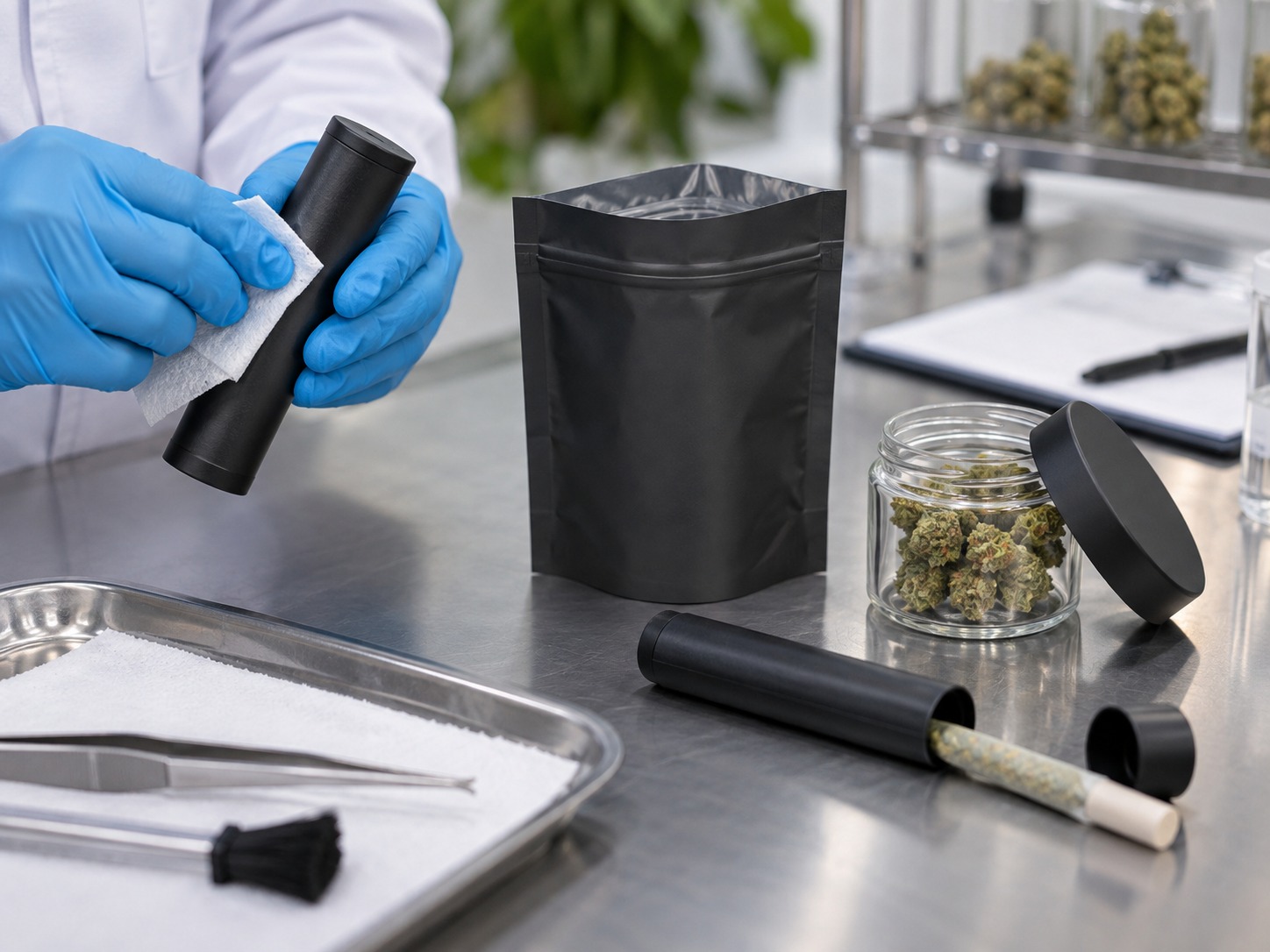
One freshly sealed pouch tells you very little. A stronger screen compares three variables at once.
| Variable | Condition A | Condition B |
|---|---|---|
| Contents | Empty control | Filled package |
| Closure condition | New / first closure | Cycled closure |
| Exposure | Normal storage condition | Representative elevated distribution condition |
This creates eight useful test combinations.
For example, if only the filled, repeatedly opened packages show noticeable odor while first-closure samples remain acceptable, the problem may be associated with zipper fatigue, contamination during reopening, or incomplete consumer reclosure rather than the base film.
If both new and cycled packages gradually develop odor even though seal integrity remains good, material permeation or another package-wide pathway deserves closer investigation.
If the empty package itself has a strong odor, the evaluation method needs to account for packaging-material odor before interpreting filled samples.
How to Diagnose Where the Odor Is Coming From
When a package fails, use a sequence rather than immediately changing the laminate.
- Clean: Confirm the package exterior is not contaminated.
- Locate: Identify where odor is strongest.
- Inspect: Check seams, closures, folds, pinholes, and damage.
- Compare: Evaluate an unopened control from the same packaging lot.
- Isolate: Change one variable at a time—seal condition, closure, material, fill level, or exposure.
Odor is strongest at the heat seal
Check for:
- flower or dust in the seal land;
- wrinkles crossing the seal;
- insufficient seal width;
- temperature variation;
- uneven pressure;
- short dwell time;
- film distortion;
- seal damage after packing.
Odor is strongest near the zipper
Check whether the zipper is fully engaged across its entire length. Repeat the evaluation with trained operators and after several opening cycles.
Also inspect whether the package is overfilled. Excessive fill can push outward on the zipper area or leave flower fragments in the closure track.
Odor is strongest around a jar or tube lid
Inspect:
- liner condition;
- cap alignment;
- thread engagement;
- gasket compression;
- closure application consistency;
- rim cleanliness;
- dimensional variation;
- damage after repeated opening.
Odor seems uniform across the package surface
If obvious leak paths have been ruled out, compare the material structure and barrier specification. This is the point where laboratory barrier testing and material-engineering support become more useful.
Testing Smell-Proof Cannabis Pouches
Flexible pouches remain popular for flower because they are lightweight, printable, space-efficient, and available with resealable and heat-sealable structures.
But the finished pouch includes several potential weak points:
- front and back film panels;
- side or bottom gussets;
- factory-made seams;
- zipper attachment;
- consumer zipper closure;
- top heat seal;
- tear notch;
- creases created during shipment;
- punctures from stems or sharp product components.
A good evaluation therefore includes both material and package geometry.
Check the pouch before filling
Inspect for:
- delamination;
- pinholes;
- seal wrinkles;
- crooked zipper tracks;
- damaged notches;
- inconsistent gussets;
- print or coating defects near the seal area.
Check the filled pouch
After filling, evaluate whether the product crowds the zipper or heat-seal area. Large buds, stems, humidity packets, inserts, or excessive fill can change the way a pouch closes.
If humidity-control packets are part of the pack-out, validate them inside the complete package rather than assuming they have no effect on geometry. See the Cannabis Humidity Packs in Flower Packaging Guide for a separate pack-out workflow.
Useful product bridge
For brands evaluating flexible formats, 420 Packaging currently lists several customizable weed-bag options that can be sampled for real pack-out testing.
The 420 Smell Proof Bags with Zipper use a resealable zipper format and support custom packaging specifications. Rather than relying only on a product description, request production-intent samples and test the actual size, film structure, fill weight, zipper, and sealing process planned for your SKU.
Another option is Weed Bags Smell Proof Packaging, which is offered as a customizable odor-barrier pouch format. Final performance should still be verified with the exact production configuration.
Testing Jars, Tubes, and Rigid Containers
Rigid packages require a different diagnostic mindset because the sidewall is often not the main concern.
The closure system becomes critical.
For screw-cap jars
Record:
- jar and cap lot;
- liner type;
- application method;
- closure position;
- rim cleanliness;
- visible liner compression;
- results after reopening and reclosing.
For concentrate packages using liners, compatibility should be evaluated with the actual formulation. The site's Concentrate Jar Liner Compatibility Guide provides a separate workflow for liner uptake, swelling, staining, seal behavior, and formulation interaction.
For pre-roll tubes
Evaluate whether the closure fully returns to its intended locked position after repeated opening. Check tube deformation, lid fit, rim damage, and whether the pre-roll itself interferes with closure.
Do not assume that “airtight,” “child-resistant,” and “odor-resistant” are interchangeable claims. Each function should be checked independently.
Why Repeated Opening and Closing Matters
A cannabis package may spend most of its consumer life after first opening.
This creates an important distinction:
| Stage | Main Barrier | Typical Failure |
|---|---|---|
| Before first opening | Heat seal, tamper seal, original lid system | Manufacturing or shipping leak |
| After first opening | Zipper, cap, lid, or reclosable feature | Incomplete reclosure or closure wear |
| After repeated use | Worn closure and handled package | Debris, deformation, fatigue, damaged seal surfaces |
If the package is intended to preserve odor containment after opening, test it after realistic closure cycling.
A simple internal screen might open and close several packages repeatedly while recording:
- closing force;
- alignment difficulty;
- visible closure engagement;
- product debris in the closure;
- package deformation;
- odor observations after each defined interval.
This usability screen does not replace child-resistant certification or formal package testing. It answers a different question: whether the everyday closure remains functional during expected use.
How to Control Odor Barrier During Mass Production
Passing one development sample does not guarantee that every production lot will perform identically.
Production QA should monitor variables that can change odor containment.
For flexible pouches
- film and zipper lot;
- seal temperature;
- dwell time;
- seal pressure;
- seal width;
- seal contamination;
- fill weight;
- operator or line;
- package damage rate.
For rigid packaging
- container and closure lot;
- liner or gasket lot;
- rim cleanliness;
- closure application;
- dimensional fit;
- cracks or molding defects;
- reclosure performance.
Retain samples
Keep representative sealed samples from production lots when appropriate for your quality system. If odor complaints appear later, retained samples help distinguish packaging-lot problems from downstream storage, filling, or handling problems.
Do not ignore distribution
Warm storage, case compression, vibration, repeated handling, and retail stocking can expose weaknesses that are invisible during a five-minute factory inspection.
Use conditions that represent your actual supply chain. Extreme conditions that the product will never encounter may create failures with little practical relevance, while testing only at a comfortable office temperature can miss real distribution problems.
What to Ask a Cannabis Packaging Supplier
“Is this bag smell-proof?” is not enough information for a purchasing decision.
Ask more specific questions:
- What is the exact material or laminate structure being quoted?
- Will production use the same structure as the approved sample?
- What film thickness is being supplied?
- What zipper or closure system is used?
- Is the package intended to be heat sealed after filling?
- What sealing conditions should be validated on our equipment?
- What barrier data is available for the quoted material?
- Does the data apply to film only or to the complete package?
- What changes can the supplier make without customer approval?
- Can production-intent samples be tested before the full order?
- How should defects and packaging-lot information be traced?
- What documentation applies to food contact, child resistance, or other claims relevant to our market?
The site's Cannabis Packaging Supplier Guide covers documentation, samples, MOQs, quality control, lead times, and supplier change control in more detail.
What an Odor Test Can—and Cannot—Tell You
An internal odor challenge is useful for:
- comparing packaging options;
- finding gross closure failures;
- identifying seal-process problems;
- screening closure durability;
- checking whether exterior contamination affects evaluation;
- deciding which samples need laboratory analysis.
It does not automatically establish:
- regulatory compliance;
- a universal shelf life;
- child resistance;
- tamper evidence;
- oxygen-barrier performance;
- moisture-barrier performance;
- microbiological safety;
- that no volatile compound can ever leave the package.
Those functions require separate specifications and, where appropriate, standardized testing.
When requesting custom cannabis packaging, provide the product format, fill weight, package size, closure requirements, expected storage conditions, distribution method, artwork, and compliance needs. Production-intent samples can then be evaluated for product fit, sealing, odor containment, printing, label space, and real pack-out performance before mass production.
Frequently Asked Questions
1. What makes cannabis packaging smell-proof?
Odor containment depends on the entire package system, including the barrier material, heat seals, seams, zipper, cap, liner, closure fit, package damage, and how the package is filled and reclosed. A high-barrier material alone does not guarantee odor containment.
2. Are Mylar bags completely smell-proof?
Not automatically. Pouches commonly described as Mylar bags can use different laminate structures, thicknesses, zippers, and seals. The finished pouch should be evaluated with the intended product, fill weight, closure, and heat-sealing process.
3. Why can I smell cannabis through a sealed bag?
Possible causes include an incomplete heat seal, zipper leakage, pinholes, damaged folds, material permeation, or cannabis residue on the outside of the bag. Identify where the odor is strongest before changing the packaging material.
4. Does a low oxygen transmission rate mean a bag is smell-proof?
No. Oxygen transmission rate measures oxygen movement through a material under defined test conditions. It is useful barrier data, but it does not by itself measure odor containment through seals, zippers, closures, or the complete finished package.
5. Is WVTR the same as an odor-barrier rating?
No. WVTR measures water-vapor transmission. Moisture barrier can be important for cannabis quality, but a WVTR value should not be presented as direct proof of smell-proof performance.
6. How should cannabis brands test smell-proof packaging?
Test production-intent packages using representative fill weights, clean exterior surfaces, controlled sealing or closure procedures, empty controls, defined storage intervals, repeated closure cycles where relevant, and documented odor observations. Investigate seal and closure failures separately from material permeation.
7. Can cannabis odor come from the outside of the package instead of leaking through it?
Yes. Flower fragments, resin, dust, or aromatic residue can contaminate the outside during filling. Clean the package exterior before odor evaluation so surface contamination is not mistaken for barrier failure.
8. Should a smell-proof pouch be tested after opening?
Yes if the package is intended to provide odor containment after first use. Evaluate the zipper or other reclosable feature after repeated realistic opening and closing because performance can differ from the original factory-sealed condition.
9. Can seal-strength testing prove a cannabis pouch is smell-proof?
No. Seal-strength testing helps quantify mechanical seal performance, but odor containment can also be affected by micro-leaks, zipper performance, material permeation, package damage, and contamination. It should be one part of a broader validation program.
10. How many packages should be tested before mass production?
There is no universal sample count that fits every cannabis package or quality system. The sampling plan should reflect production volume, package risk, supplier history, product value, failure consequences, and any applicable customer or regulatory requirements. Test multiple packages and lots rather than relying on one approved sample.