
Table of contents
At-a-glance
-
Start with length
Many cigarette sticks are labeled by length such as regular (~70mm), king (~84mm), 100s (~100mm), and 120s (~120mm). A quick reference appears in the “Cigarette tube” sizing notes on Wikipedia’s cigarette overview.
-
Add clearance
A practical fit target is +6 to +10mm of internal case length beyond the measured stick length (more if the closure presses at the end).
-
Diameter changes capacity
Standard sticks are often around ~8mm in diameter, while slim formats can be narrower—capacity depends on internal width and how tight you pack.
-
Cigarillos run bigger
Cigarillos are typically short, narrow cigars; common ranges are roughly 75–100mm in length and 6–9mm diameter (varies by brand and wrap). See the general description on Wikipedia’s cigarillo page.
-
Inserts reduce crushing
Divider/pocket inserts can stop sticks from rubbing, bending, or “rattling.” One packaging spec example lists optional divider inserts and paperboard thickness ranges (10pt–28pt) on this cigarettes/cigarillos/snuff box spec page.
Real-life meaning
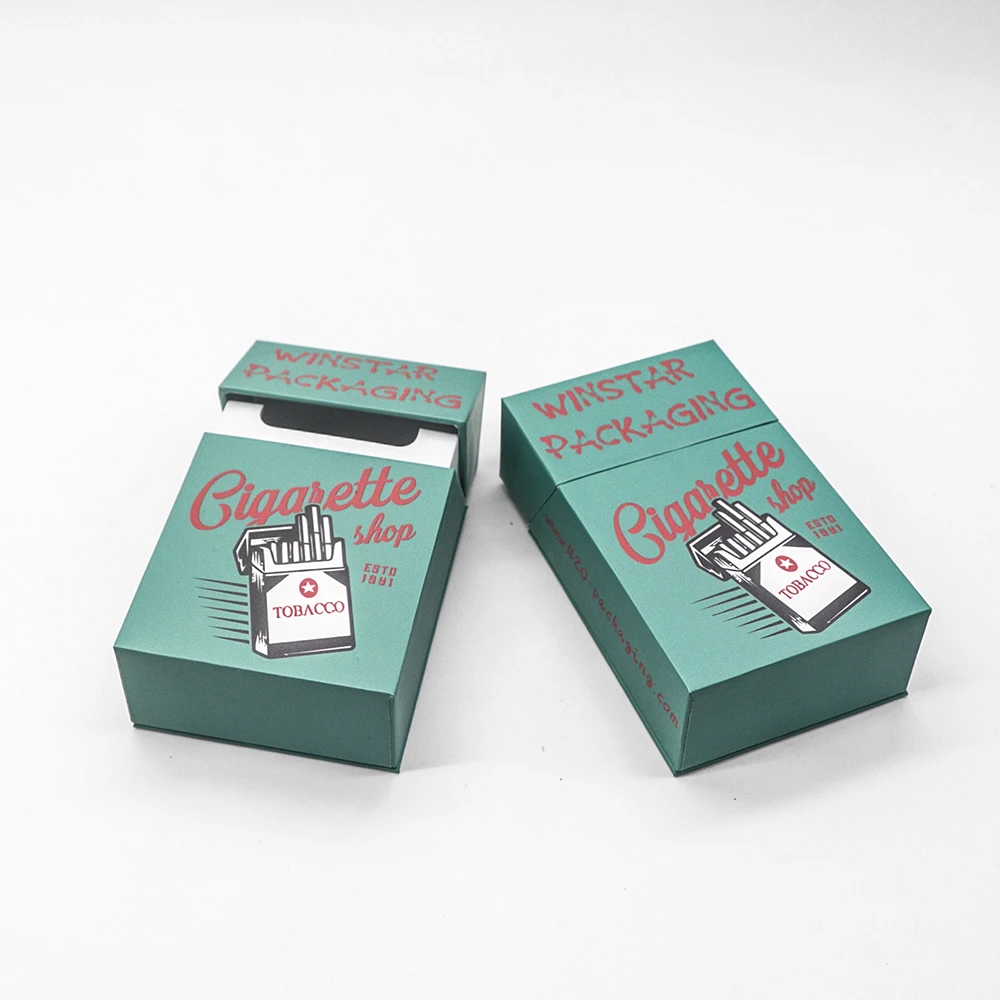
A “case” (or box) does three practical jobs: it keeps sticks from snapping, reduces lint/debris, and keeps your pocket or bag cleaner. Most fit problems come from one of three things: the case is too short, the closure presses at the end, or the inside is wide enough that sticks slide and bang into each other.
Smokeless products (often stored in a small tin or “snuff box”) add a different concern: the closure should be firm enough to reduce spills and limit accidental access by kids or pets. The CDC notes that smokeless products contain nicotine and can cause nicotine poisoning in children, which is one reason “out of reach” storage matters: CDC smokeless tobacco health effects.
Data table: Typical stick sizes → case fit targets
Use these as starting points, then measure what you actually carry. Labels can vary by brand, and filters/tips can change the real length.
| Item type | Typical length range | Typical diameter range | Suggested internal case length target | Notes that affect fit |
|---|---|---|---|---|
| Cigarette (regular) | ~70mm | ~7.5–8mm (common range) | 76–80mm | Filters can change “usable” space; hard end caps need extra clearance. |
| Cigarette (king) | ~84mm | ~7.5–8mm (common range) | 90–96mm | If the case has a rigid stop at the end, aim toward the higher end of the target. |
| Cigarette (100s) | ~100mm | ~7.5–8mm (common range) | 106–110mm | Longer sticks magnify small fit errors; a snug insert helps. |
| Cigarette (120s) | ~120mm | ~7.5–8mm (common range) | 128–135mm | If the closure presses inward, give yourself more headroom. |
| Cigarillo | ~75–100mm | ~6–9mm | Length + 8–12mm | Wraps can be less forgiving than paper; avoid tight corner pressure. |
| Smokeless tin / “snuff box” | Varies (often round/flat) | Varies | Choose a closure that resists popping open | Focus on spill resistance and child safety rather than “clearance.” |
Unit reminder: 25.4mm = 1 inch. If a case is listed in inches, multiply inches × 25.4 to compare to mm measurements.
Step-by-step: Measure, add clearance, check the closure
-
Measure what you carry. Use a ruler and measure one stick end-to-end in mm. Do this even if the label says “king” or “100s.”
-
Set your clearance target. Start with +6 to +10mm extra internal length. If the closure has a hard stop or compresses at the end, use +10mm or more.
-
Check internal width. If sticks can roll and collide, they’ll scuff and bend more easily. Inserts/dividers can keep items separated.
-
Do a gentle “pocket test.” Close the case and lightly shake once. If you hear repeated tapping, contents are moving too much.
-
Inspect after a day of carrying. Look for flattened tips, creases, or paper fuzz—these are signs of end pressure or rubbing.
Calculation example: Estimate capacity (how many fit)
Goal: Estimate how many standard-diameter sticks fit across the inside of a case without forcing them. This is an approximation—measure your actual internal width for the most accurate result.
Step 1: Measure internal width (W). Example: W = 55mm.
Step 2: Estimate stick diameter (D). Example: D = 8mm.
Step 3: Add a small packing gap (G) so you’re not squeezing. Example: G = 0.5mm.
Step 4 (math): Sticks per row ≈ floor( W ÷ (D + G) ).
Using the example: floor( 55 ÷ (8 + 0.5) ) = floor( 55 ÷ 8.5 ) = floor( 6.47 ) = 6 sticks per row.
Optional: If your case has two layers (or a divider creating two channels), multiply by layers. Example: 6 × 2 = 12 sticks.
Reality check: Slim formats, soft packs, or angled packing can change the result. If you need “no-crush” carrying, choose the number that fits without forcing the closure.
Data table: Quick self-check checklist
| What to check | How to check (fast) | Looks good | What it prevents |
|---|---|---|---|
| Internal length vs. stick length | Measure stick, then compare to case internal length | Ends don’t press into the walls when closed | Crushed tips, bent ends |
| Closure end pressure | Close slowly and feel for last-second resistance | Closes without a “crunch” feeling | Compression damage |
| Internal width & movement | Gentle shake once (closed) | Minimal tapping/rattle | Scuffing, torn paper |
| Divider/insert fit | Place one stick in a pocket or lane | Stays in place without rubbing hard | Collisions and rolling |
| Lint/debris protection | Check inside after pocket carry | Contents stay cleaner | Debris stuck to ends |
| Smokeless tin closure | Press lid edges and lightly squeeze | No easy pop-open or spill | Accidental spills and access |
Common misconceptions
-
“Outside dimensions tell me the fit.” Wall thickness, liners, and inserts can shrink the usable inside space.
-
“If it closes, it fits.” A tight last step of closing can still crush ends over time.
-
“Cigarillos fit wherever cigarettes fit.” Cigarillos can be thicker and less tolerant of pressure at corners.
-
“A tin is automatically safe around kids.” “Hard to open” is not the same as “child-resistant.”
Safety & standards (CR / TE + kid safety)
Child-resistant (CR): In the U.S., “special packaging” is defined and discussed under the Poison Prevention Packaging Act. The Consumer Product Safety Commission explains the concept and testing references in its PPPA special packaging FAQ, and the test procedure is described in 16 CFR 1700.20.
Tamper-evident (TE): “Tamper-evident” generally means there’s an indicator or barrier that shows if a package has been opened. A commonly cited U.S. definition appears in 21 CFR 211.132 (written for OTC drug packaging, but useful for understanding what “tamper-evident” means in plain terms).
Kid safety reminder: Nicotine products can cause poisoning if a child ingests them. The CDC has specifically warned about children ingesting cigarettes and cigarette butts and recommends consulting poison control if ingestion occurs: CDC MMWR report on child ingestion. The FDA also emphasizes safe storage to prevent accidental exposure to nicotine products: FDA consumer update on safe storage. If you suspect exposure, use Poison Control’s guidance and seek urgent care for severe symptoms.
FAQ
How long is a king-size cigarette?
Many references list king size around 84mm, but measure your exact stick because filters and brands can vary.
How much extra length should a case have?
Start with 6–10mm beyond the measured stick length, then increase if the closure presses at the end.
Why do sticks bend even in a hard case?
Common causes are a case that’s slightly too short, end pressure from the closure, or too much movement inside.
Do cigarillos fit in cigarette cases?
Sometimes. Many cigarillos can be thicker (and sometimes similar length), so check both diameter and length before carrying.
What do divider inserts do?
They create lanes or pockets that keep items separated, reduce collisions, and help prevent crushing during carry.
What should I focus on for a smokeless tin or “snuff box”?
A secure closure that resists accidental opening, plus storage habits that keep it away from kids and pets.