
Last updated: October 20, 2026
A cannabis package should not be called “high oxygen barrier” simply because it is opaque, metallized, thick or marketed as Mylar. Oxygen performance depends on the complete package system: the film or container wall, surface area, seals, zipper or closure, pinholes, headspace, filled-product geometry, storage conditions and whether the consumer repeatedly opens the package. Start by requesting Oxygen Transmission Rate (OTR) data for the exact material structure under stated temperature and humidity conditions. For higher-risk programs, evaluate the finished package as well, because material OTR does not automatically capture oxygen entering through closures, lidding or package construction. Finally, run a filled-package shelf-life study against an appropriate control. OTR is a packaging-engineering input—not a direct shelf-life claim, potency guarantee or substitute for real product stability data.
“This is a high-barrier cannabis pouch.”
That sounds reassuring.
But what does high barrier actually mean?
Does it block moisture?
Odor?
Visible light?
UV?
Oxygen?
All of them?
Packaging buyers often receive a material specification sheet with one impressive barrier number and assume it describes the entire finished package.
That is where confusion starts.
A pouch can use a film with excellent oxygen-barrier performance and still admit oxygen through a defective top seal. A rigid jar can have a very low-permeability wall but perform poorly if the liner or closure interface leaks. A package can also begin storage with a significant amount of oxygen already trapped inside its headspace even if almost no new oxygen enters later.
For cannabis flower, pre-rolls, edibles and other oxygen-sensitive products, the useful question is therefore not:
“Is this material oxygen proof?”
It is:
“How much oxygen can reach the product through the complete package system over the period we actually need to protect it?”
Why Oxygen Matters in Cannabis Packaging
Cannabis stability is affected by several environmental factors rather than one single packaging variable.
Depending on the product, relevant factors can include:
- oxygen availability;
- light exposure;
- temperature;
- moisture;
- time;
- product surface area;
- physical damage to plant material;
- package opening frequency.
Research on cannabis storage has found that oxygen availability can contribute to degradation processes, although the effect depends on the product, cannabinoid profile and other storage conditions. A recent study examining cannabis photodegradation reported substantially faster degradation when oxygen was present, while research on stored cannabis inflorescences also identifies oxygen availability as one of several variables affecting cannabinoid stability. Photodegradation of CBD and THC in Cannabis Plant Material and The Influence of Drying and Storage Conditions on Cannabis Inflorescences.
That does not mean an OTR number alone can predict potency after six or twelve months.
The packaging engineer controls oxygen ingress.
The product stability program determines what that oxygen exposure means for the actual product.
“Low OTR” is a material-performance statement when supported by valid test data. “Keeps cannabis potent for 12 months” is a product shelf-life claim and requires evidence from the finished product and package under defined storage conditions. Do not convert one into the other.
What Does OTR Mean?
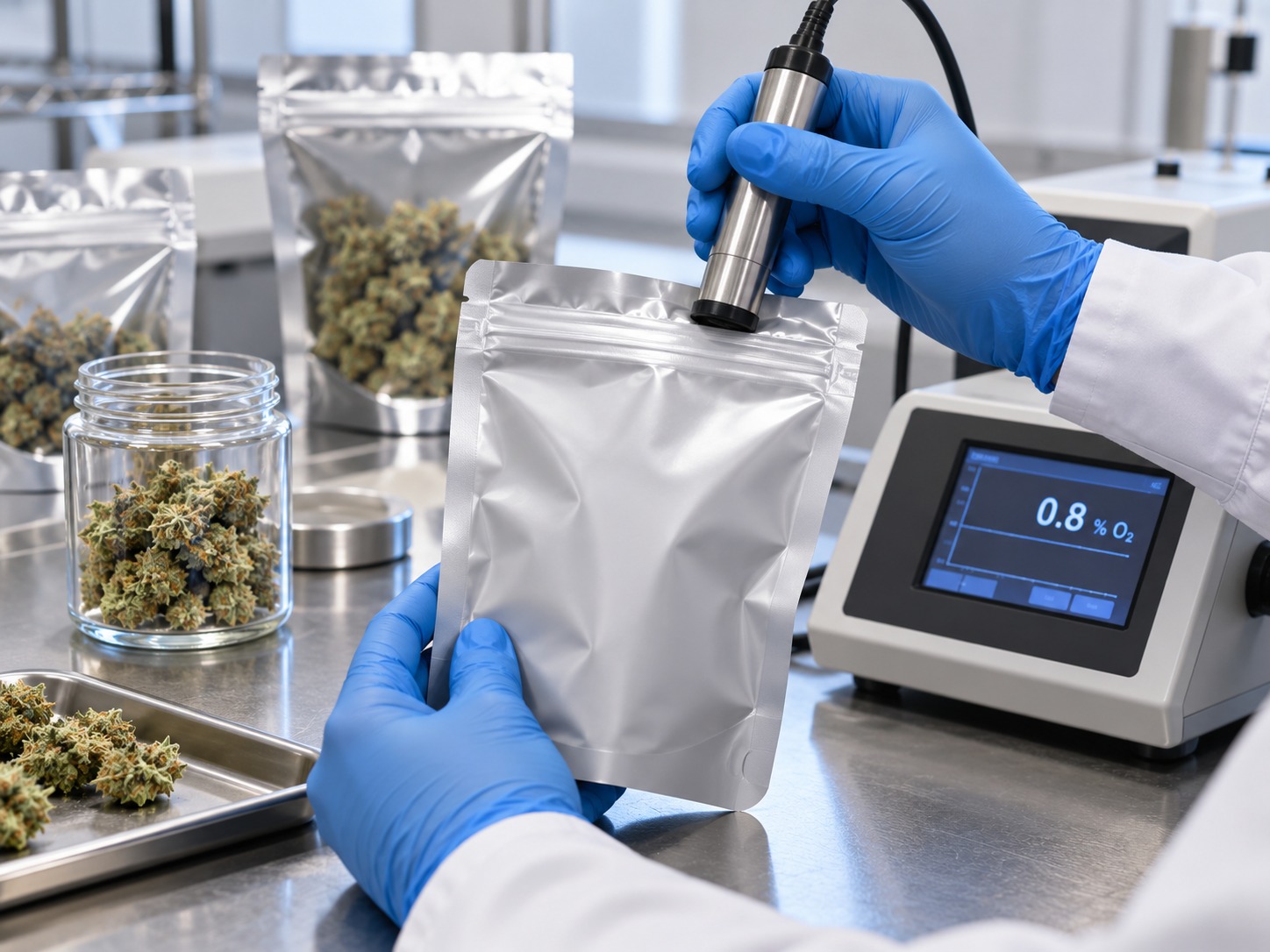
OTR stands for Oxygen Transmission Rate.
For flexible barrier materials, it describes the rate at which oxygen passes through a defined area of material under stated test conditions.
OTR is often expressed in units similar to:
cc/(m²·day)
or an equivalent unit system.
A lower OTR generally means less oxygen passes through that material under the reported test conditions.
But an OTR number without conditions is incomplete
A useful supplier report should identify:
- exact material structure;
- test method;
- temperature;
- relative humidity;
- test orientation where relevant;
- result units;
- sample or lot identification;
- test date or report reference.
The current ASTM D3985-24 describes a coulometric method for measuring oxygen transmission through plastic film, sheeting, laminates, coextrusions and certain coated materials.
ASTM itself notes an important limitation: OTR is an important determinant of barrier protection, but it is not the sole determinant of package performance.
That sentence matters for cannabis packaging.
Material OTR vs. Whole-Package Oxygen Transmission
This distinction is one of the most useful things a cannabis packaging buyer can understand.
| Measurement | What It Tests | Useful For | What It Can Miss |
|---|---|---|---|
| Film OTR | A defined area of flexible material | Comparing laminate structures | Zippers, package geometry, finished seals and closures |
| Whole-package oxygen transmission | Oxygen ingress through a finished package system | Evaluating container wall plus construction | Does not automatically predict product shelf life |
| Headspace oxygen | Oxygen already present inside a closed package | Evaluating filling/flushing process | Does not by itself measure future permeation |
| Leak test | Discrete openings or integrity failures | Finding seal or package defects | Does not quantify normal molecular permeation |
| Filled-product stability test | Actual product change over time | Supporting shelf-life decisions | Cannot identify the oxygen path without additional diagnostics |
ASTM also maintains ASTM F1307-20, which covers measuring oxygen transmission into dry packages using a coulometric sensor.
This moves the question from:
“How good is this piece of film?”
to:
“How much oxygen enters this finished package?”
For a cannabis brand making a long shelf-life or high-barrier claim, that difference can be extremely important.
The Five Ways Oxygen Reaches a Packaged Product
1. Oxygen starts inside the package
Unless the packaging process removes or displaces it, ordinary air remains in the package after filling.
A large headspace can therefore contain substantially more starting oxygen than a tightly filled package.
2. Oxygen permeates through the package material
This is what material OTR data primarily helps quantify.
The rate depends on the exact material and test conditions.
3. Oxygen enters through seals or closures
Potential paths include:
- heat-seal channels;
- zipper interfaces;
- lid liners;
- cap threads;
- snap-fit closures;
- lidding seals.
4. Oxygen enters through defects
Examples include:
- pinholes;
- punctures;
- cracked folds;
- delamination;
- damaged zipper tracks;
- poorly sealed gussets.
5. Consumers repeatedly open the package
A package can perform very well while factory sealed and then exchange most of its internal atmosphere every time it is opened.
For multi-use flower, edible and pre-roll packages, first-open barrier performance and in-use barrier performance should be treated separately.
Why Temperature and Humidity Must Be Reported
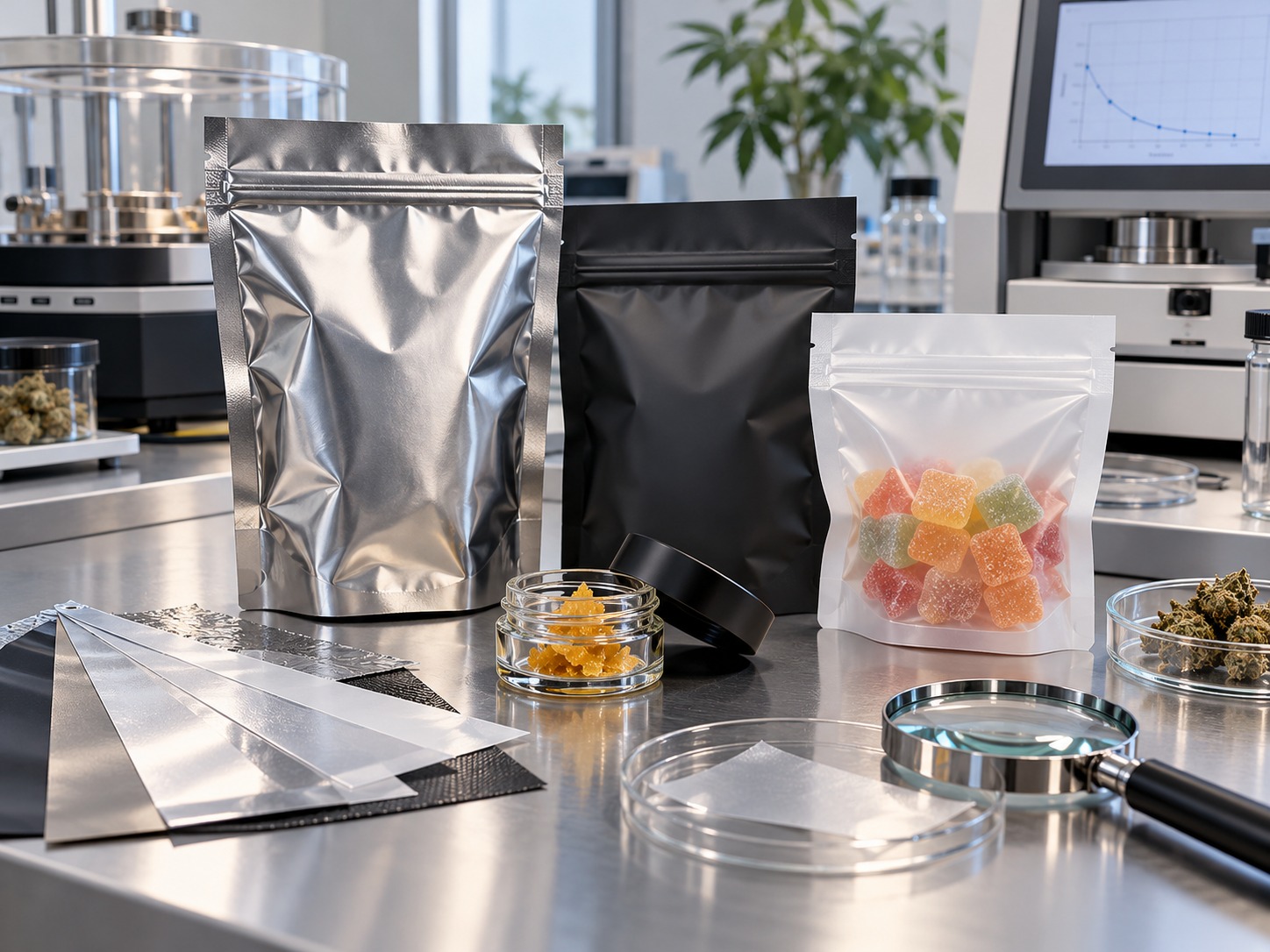
OTR is not a universal constant that can be copied from one test condition into every warehouse or retail environment.
Some packaging materials are more sensitive to environmental conditions than others.
ASTM F1927-20 specifically addresses oxygen transmission through barrier materials at controlled relative humidity and notes that humidity can materially affect oxygen transmission for some structures.
This is why two supplier data sheets should not be compared blindly if one was tested under one temperature/humidity condition and the other under another.
When comparing OTR data, match:
- test temperature;
- relative humidity;
- unit system;
- material thickness and construction;
- test method.
If a supplier sends only “OTR < 1” with no units, temperature, humidity, test method or material structure, you do not yet have a useful oxygen-barrier specification.
Do Not Ignore Oxygen Already Inside the Package
Imagine two cannabis flower pouches made from exactly the same film.
Pouch A contains a compact fill with little unused internal volume.
Pouch B is oversized and contains a large air space above the flower.
Their film OTR is identical.
The amount of oxygen present immediately after packaging may not be.
Headspace changes the starting condition
Relevant variables include:
- fill weight;
- product bulk density;
- pouch dimensions;
- jar volume;
- insert volume;
- whether air is displaced during closing;
- whether inert-gas flushing is used.
Why this matters during package comparison
If one package starts with much more oxygen inside, a shelf-life comparison may make the material look worse even when the real difference came from pack-out geometry.
For controlled trials, record:
- package size;
- fill weight;
- approximate headspace geometry;
- closing method;
- gas flush settings if used.
Do not change all of these variables at the same time.
A Simple OTR Calculation for Packaging Buyers
A film OTR can be used for a rough material-permeation estimate when the film area and test conditions are known.
For a simple flexible package:
Estimated Oxygen Through Film per Day ≈ OTR × Exposed Film Area
Illustrative example only
Suppose a material has a reported OTR of:
0.5 cc/(m²·day)
under the supplier's stated conditions.
If the relevant exposed film area of the finished pouch were approximately:
0.03 m²
the simple material-only estimate would be:
0.5 × 0.03 = 0.015 cc oxygen/day
Over 180 days:
0.015 × 180 = 2.7 cc
But this is not a shelf-life calculation.
It does not automatically include:
- initial oxygen in headspace;
- zipper or seal ingress;
- pinholes;
- package flexing;
- changing temperature and humidity;
- consumer opening;
- product oxygen consumption;
- actual degradation kinetics.
This calculation is useful for understanding why package area matters and why the same film can behave differently in a 1g pouch and a much larger bulk pouch.
How Flexible-Pouch Structures Affect Oxygen Barrier
Flexible cannabis bags are often multilayer laminates because one polymer rarely delivers every property needed for printing, stiffness, puncture resistance, sealing and barrier performance.
Common functional layers can provide:
- print surface;
- mechanical strength;
- oxygen barrier;
- light barrier;
- heat-sealability;
- puncture resistance.
Metallized structures
Metallized layers are frequently used when brands need stronger light and gas barrier than a simple transparent PE bag can provide.
420 Packaging's current THC Pre Roll Mylar Bags, for example, list an MOPP + VMPET + PE material structure and describe protection against light, moisture and oxygen.
That product description is useful for selecting a candidate structure.
It should not replace the OTR report for the exact production material if oxygen performance is a critical purchasing requirement.
Transparent windows change the system
If a high-barrier pouch adds a clear product window, the window structure may become a different oxygen path.
Ask whether:
- the window uses the same barrier construction;
- OTR data covers the complete laminate including the window;
- the window changes light protection;
- the window seam creates another integrity risk.
Thickness alone is not enough
A thicker low-barrier polymer is not automatically better than a thinner engineered laminate.
Compare measured performance, not appearance.
Jars, Tubes and Rigid Containers Need a Different Test Strategy
With a rigid container, buyers often focus on the wall material.
But the closure may control the real package performance.
For screw-cap jars, evaluate:
- container material;
- cap material;
- liner;
- thread geometry;
- rim condition;
- application torque where relevant;
- reclosure performance.
For hinged or snap-fit containers, evaluate:
- closure deformation;
- hinge condition;
- mating surfaces;
- dimensional variation;
- repeated opening.
Glass does not automatically make the entire package gas-tight
The glass wall itself may provide an excellent gas barrier, but a completed jar still includes a closure interface.
This is why whole-package testing can answer questions that wall-material data alone cannot.
High-Barrier Film Cannot Rescue a Bad Seal
Gas permeation through an intact laminate is usually a very different process from oxygen moving through a physical channel in a bad seal.
If a cannabis pouch has:
- flower particles in the heat-seal land;
- a wrinkle across the seal;
- a puncture;
- a damaged zipper;
- an incomplete side seam.
oxygen may bypass the intended barrier structure.
This is why OTR and package integrity must be managed separately.
| Problem | Primary Tool | OTR Alone Enough? |
|---|---|---|
| Compare two film laminates | Material OTR | Usually useful for comparison |
| Find a heat-seal channel | Seal / leak integrity evaluation | No |
| Compare complete containers | Whole-package oxygen transmission | Film OTR alone is insufficient |
| Verify filled-package shelf life | Product stability study | No |
| Measure starting oxygen | Headspace oxygen measurement | No |
420 Packaging's Cannabis Flower Pouch Seal Test covers fill contamination, heat-seal setup, zipper cycles and production seal QA separately.
Keep that keyword intent separate from oxygen barrier:
seal integrity asks whether an unintended opening exists; OTR asks how oxygen transmits through the intended barrier system.
Nitrogen Flushing: What It Solves and What It Does Not
Nitrogen flushing can reduce the amount of oxygen remaining in the package immediately after sealing.
That can be useful when the starting headspace oxygen matters.
But nitrogen flushing does not automatically improve the package material.
A nitrogen-flushed package can still gain oxygen later through:
- film permeation;
- closure leakage;
- seal defects;
- pinholes;
- repeated consumer opening.
Therefore, a useful nitrogen-flush validation separates two questions:
- How low is the residual oxygen immediately after packaging?
- How quickly does oxygen return during storage?
If initial oxygen is excellent but rises rapidly, investigate the package.
If initial oxygen is already high, investigate the flushing and sealing process first.
Oxygen Absorbers: Useful Tool, Not a Shortcut
An oxygen absorber can remove oxygen from a sealed package after closing, but it becomes another controlled component of the packaging system.
Before introducing one, evaluate:
- product suitability;
- absorber capacity;
- headspace;
- package OTR;
- consumer visibility;
- puncture risk;
- storage conditions;
- applicable regulatory and food-contact requirements for the intended market.
A high-permeability package can allow new oxygen to enter faster than an absorber strategy was designed to manage.
An absorber should therefore not be used to disguise an unsuitable package.
Similarly, cannabis humidity packets solve a different problem. See Cannabis Humidity Packs in Flower Packaging for moisture-management considerations.
How to Run a Cannabis Packaging Oxygen-Barrier Study
A practical packaging study should move from material data to the finished product.
Step 1: Define the product and shelf-life question
Record:
- product type;
- fill weight;
- initial product condition;
- target storage period;
- distribution temperatures;
- consumer opening pattern;
- quality attributes you intend to monitor.
Step 2: Lock the packaging construction
Record the exact:
- film or container material;
- layer structure where available;
- thickness;
- zipper or closure;
- seal process;
- window;
- liner;
- secondary package.
Step 3: Collect barrier data
For flexible structures, request OTR using a recognized method such as ASTM D3985 where applicable.
If humidity sensitivity matters, make sure the reported conditions represent the comparison you are trying to make.
Step 4: Measure or control initial headspace
Keep filling and closing conditions consistent.
If gas flushing is part of production, use the planned production process rather than manually squeezing the test package.
Step 5: Include an appropriate control
Useful controls may include:
- a known higher-barrier package;
- a current production package;
- a package stored under a low-oxygen condition;
- another material candidate.
Step 6: Store packages under defined conditions
Record actual:
- temperature;
- relative humidity;
- light condition;
- orientation.
Do not label a test “room temperature” if the actual room ranges widely and no temperature is recorded.
Step 7: Test at planned intervals
Depending on the project, track:
- headspace oxygen;
- package integrity;
- aroma;
- appearance;
- water activity or moisture-related metrics when relevant;
- laboratory cannabinoid or other chemical data when the shelf-life claim requires it.
Step 8: Add an in-use group
For resealable flower, edible or pre-roll packaging, open and close a separate group on a controlled schedule.
A package that performs for six months unopened may behave very differently after daily opening.
Step 9: Investigate outliers before averaging them away
If nine packages behave normally and one shows a rapid oxygen increase, inspect that package for:
- seal channels;
- pinholes;
- closure damage;
- material damage;
- measurement error.
One leaking package can reveal a process problem that an average hides.
Step 10: Approve the complete system
Lock the:
- material structure;
- supplier;
- package size;
- closure;
- sealing conditions;
- fill range;
- headspace process;
- storage claim.
A material change should trigger review when oxygen barrier is a critical product requirement.
Oxygen Barrier vs. the Other Cannabis Packaging Barriers
| Barrier | Primary Question | Typical Metric / Test | Do Not Confuse It With |
|---|---|---|---|
| Oxygen barrier | How quickly can oxygen enter? | OTR / package oxygen transmission | Odor containment |
| Moisture barrier | How quickly can water vapor pass? | WVTR | Humidity packet performance |
| Odor barrier | Can aromatic compounds escape? | Finished-package odor challenge | OTR |
| Light barrier | What light wavelengths reach the product? | Spectral transmission / light exposure study | Visual darkness alone |
| Seal integrity | Is there an unintended physical leak path? | Leak / seal evaluation | Material permeation |
For the adjacent topics, use:
Cannabis Packaging Odor Barrier Test
Cannabis Packaging Light Barrier Test
Cannabis Flower Pouch Seal Test
Keeping these topics separate allows each QA program to answer one clear technical question.
Diagnose Oxygen Failures by Pattern
| Observed Pattern | Investigate First |
|---|---|
| High oxygen immediately after packing | Headspace, gas flush, filling method and closing process |
| Low initial oxygen but rapid increase in every pouch | Package barrier, zipper/closure design and seal system |
| Only random units increase rapidly | Pinholes, seal channels, handling damage and production variation |
| One material performs worse only at high humidity | Humidity sensitivity of the barrier structure |
| Unopened package performs well but opened package degrades quickly | Consumer reclosure and repeated atmosphere exchange |
| Small pouch performs better than large pouch using same film | Total surface area, headspace and closure geometry |
| Material OTR looks excellent but finished package performs poorly | Whole-package construction and closures |
| Odor escapes but oxygen result is good | Do not assume the tests conflict; evaluate odor barrier separately |
If a package loses barrier because of one damaged seal or puncture, classify it as an integrity failure first. Material permeation and defective-package leakage are different failure modes and should be tracked separately.
What to Check by Cannabis Product Type
| Product | Oxygen-Barrier Focus | Other Variables to Control |
|---|---|---|
| Flower | Film/jar barrier, headspace, repeated opening | Water activity, humidity, light, temperature |
| Pre-rolls | Pouch/tube barrier and closure | Crush protection, paper condition, odor |
| Gummies | Film barrier and seal integrity | Heat, moisture, oil transfer and texture |
| Chocolate edibles | Barrier plus package integrity | Temperature and fat-related quality changes |
| Concentrates | Primary jar/closure system | Liner compatibility, temperature, light |
| Tinctures | Bottle and closure system | Leakage, dropper fit, light exposure |
Different cannabis products fail for different reasons. Do not build one universal “high-barrier” specification and apply it blindly across every SKU.
420 Packaging Options to Evaluate
THC Pre Roll Mylar Bags
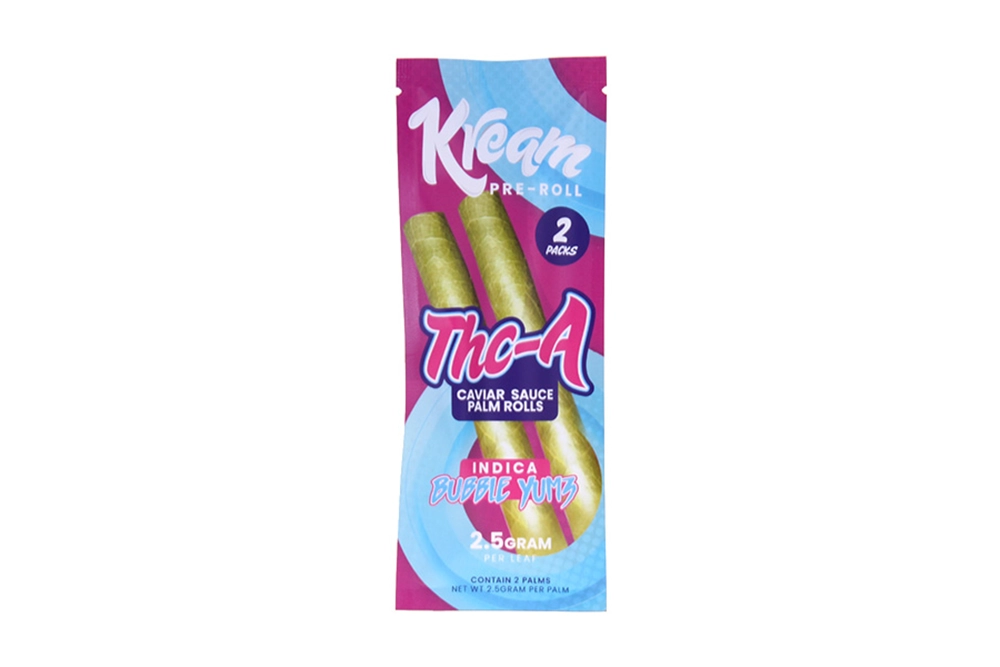
The current product page lists an MOPP + VMPET + PE material structure, zipper-top closure and customizable printing. The page describes the construction as providing barriers against light, moisture and oxygen.
This makes it a useful candidate for a pre-roll or cannabis packaging oxygen-barrier comparison.
For a specification-driven project, request:
- OTR for the exact production laminate;
- test temperature and humidity;
- finished pouch dimensions;
- zipper specification;
- top-seal requirements;
- production-intent samples.
Weed Bags Smell Proof Packaging

This current flexible-packaging option also lists an MOPP + VMPET + PE structure and resealable zipper.
It is positioned primarily around odor containment and resealability, which makes it useful for demonstrating an important buying principle:
odor-barrier claims and oxygen-barrier data should be verified separately.
If oxygen performance matters to the SKU, request OTR and finished-package testing rather than inferring oxygen protection only from a “smell-proof” description.
Hemp Zipper CBD Edible Bags / Gummies Bags

The current product specification lists customizable structures including combinations such as PET, OPP or MOPP with VMPET and CPP/PE, along with stand-up, flat-bottom, gusset, vacuum and pillow-pouch formats.
Because the construction can be customized, do not assume every version has identical OTR.
For edible packaging, qualify the actual production laminate and finished package used for the product rather than a generic family name.
When Should You Use Material OTR vs. Whole-Package Testing?
| Buying Situation | Recommended Evidence |
|---|---|
| Early comparison of two pouch laminates | Comparable material OTR reports |
| Final approval of long-shelf-life pouch | Material OTR + seal qualification + filled-product study |
| Rigid jar with complex lid | Whole-package evaluation plus closure checks |
| Nitrogen-flushed package | Residual headspace oxygen + oxygen increase over time |
| Resealable consumer pack | Factory-sealed and repeated-open groups |
| New supplier using “equivalent” film | Compare full structure and barrier data before approval |
| New transparent window added | Requalify complete material/package barrier |
| Supplier changes zipper or sealant layer | Review package integrity and oxygen performance |
What to Ask a Cannabis Packaging Supplier
If oxygen protection matters, add these questions to the RFQ:
- What is the complete material structure?
- What is the total thickness?
- What layer provides the primary oxygen barrier?
- What OTR has been measured?
- What test method was used?
- What temperature and relative humidity were used?
- Are the results from the exact structure being quoted?
- Does the report apply to printed and laminated production material?
- Does adding a clear window change the construction?
- What zipper and sealant layers are used?
- What heat-seal window is recommended?
- Can production-intent samples be supplied?
- Can the supplier support whole-package testing if needed?
- What material substitutions require written approval?
- How are barrier-material lots identified for traceability?
Avoid vague specifications
Weak:
“Premium high-barrier Mylar pouch.”
Better:
“Approved laminate structure per specification revision X; supplier to provide OTR report with method, units, temperature and RH; no barrier-layer substitution without written approval.”
This gives purchasing and quality teams something measurable.
Changes That Should Trigger Oxygen-Barrier Review
Requalification should be considered after meaningful changes to:
- film supplier;
- laminate structure;
- film thickness;
- metallized layer;
- sealant layer;
- zipper;
- package size;
- transparent window;
- closure or liner;
- filling volume;
- gas-flush process;
- heat-seal settings;
- product formulation;
- target shelf life.
A change can look visually identical and still alter barrier performance.
Cannabis Packaging Oxygen-Barrier Approval Checklist
| Item | Approval Question |
|---|---|
| Product | Is the actual SKU and fill range defined? |
| Target shelf life | What storage period is the package expected to support? |
| Material | Is the complete laminate or rigid-container construction recorded? |
| OTR | Is there quantitative data for the exact relevant structure? |
| Test conditions | Are temperature, humidity, units and method stated? |
| Package area | Has the effect of finished package size been considered? |
| Headspace | Is fill level and starting internal atmosphere controlled? |
| Seal / closure | Has the finished package been checked for unintended leak paths? |
| Whole package | Is whole-package oxygen transmission needed for this risk level? |
| Storage | Are actual test temperature, RH and light conditions recorded? |
| Product testing | Are product-specific quality markers tracked over the intended period? |
| In-use test | Has repeated opening been evaluated for multi-use packs? |
| Change control | Are barrier-layer and closure substitutions controlled? |
| Documentation | Can the packaging lot be linked to approved barrier data? |
ASTM F1927-20 — Oxygen Transmission at Controlled Relative Humidity
ASTM F1307-20 — Oxygen Transmission Rate Through Dry Packages Using a Coulometric Sensor
The Influence of Drying and Storage Conditions on Cannabis sativa Inflorescences
Photodegradation of CBD and Δ9-THC in Cannabis Plant Material
Send the product type, fill weight, target package size, expected shelf life, storage conditions, resealability needs and barrier goals with your RFQ. For projects where oxygen protection is important, request the exact laminate structure and applicable OTR data before approving the bulk run instead of relying only on broad terms such as “Mylar,” “airtight” or “high barrier.”
Frequently Asked Questions
1. What does OTR mean in cannabis packaging?
OTR means Oxygen Transmission Rate. It describes how quickly oxygen passes through a packaging material under defined test conditions. Lower OTR generally indicates stronger oxygen-barrier performance, but the test conditions and exact material structure must be known before comparing results.
2. What is a good OTR for cannabis packaging?
There is no single OTR number that is correct for every cannabis product. The required barrier depends on product sensitivity, package area, headspace, expected shelf life, storage conditions, closure design and acceptable product change over time. Establish the requirement from product stability needs rather than copying a number from another brand.
3. Does Mylar packaging block oxygen?
Some multilayer pouches commonly marketed as Mylar can provide strong oxygen-barrier performance, especially when metallized or foil barrier layers are included. However, “Mylar” alone does not define a measurable OTR. Request the actual laminate structure and test data.
4. Is an oxygen barrier the same as smell-proof packaging?
No. Oxygen transmission and odor containment involve different molecules and different tests. A package can have useful OTR data without proving odor containment, and a smell-proof claim does not automatically provide a quantitative oxygen-barrier specification.
5. Is low OTR enough to prove cannabis shelf life?
No. OTR is one packaging input. Shelf life also depends on product chemistry, starting condition, light, temperature, moisture, headspace, seals and other variables. Finished-product stability testing is needed to support a shelf-life claim.
6. Why can a pouch with excellent film OTR still fail?
The oxygen may be entering through a heat-seal channel, zipper, pinhole, damaged fold or another package defect rather than permeating through the intact film. Material OTR and package integrity need to be evaluated separately.
7. Does nitrogen flushing replace high-barrier packaging?
No. Nitrogen flushing can reduce the oxygen present immediately after packaging, but oxygen can re-enter over time through permeation or leakage. A low starting oxygen level and a low oxygen-ingress rate solve different parts of the problem.
8. Does package size affect oxygen ingress?
Yes. For the same film and test conditions, a larger exposed surface area creates more area through which oxygen can permeate. Package size can also change headspace volume, so two pouch sizes made from the same laminate should not automatically be assumed to produce identical shelf-life performance.
9. Should OTR be tested at different humidity levels?
That depends on the material and actual storage conditions. Humidity can affect oxygen transmission through some barrier structures. If this is relevant, use comparable data at defined temperature and relative humidity rather than comparing numbers obtained under different conditions.
10. When should a cannabis package be requalified for oxygen barrier?
Review the package after meaningful changes to the film structure, supplier, thickness, barrier layer, zipper, sealant, package size, closure, window, liner, fill amount or gas-flushing process. If oxygen protection supports a shelf-life claim, the finished-product stability assessment may also need to be updated.