
Last updated: November 11, 2026
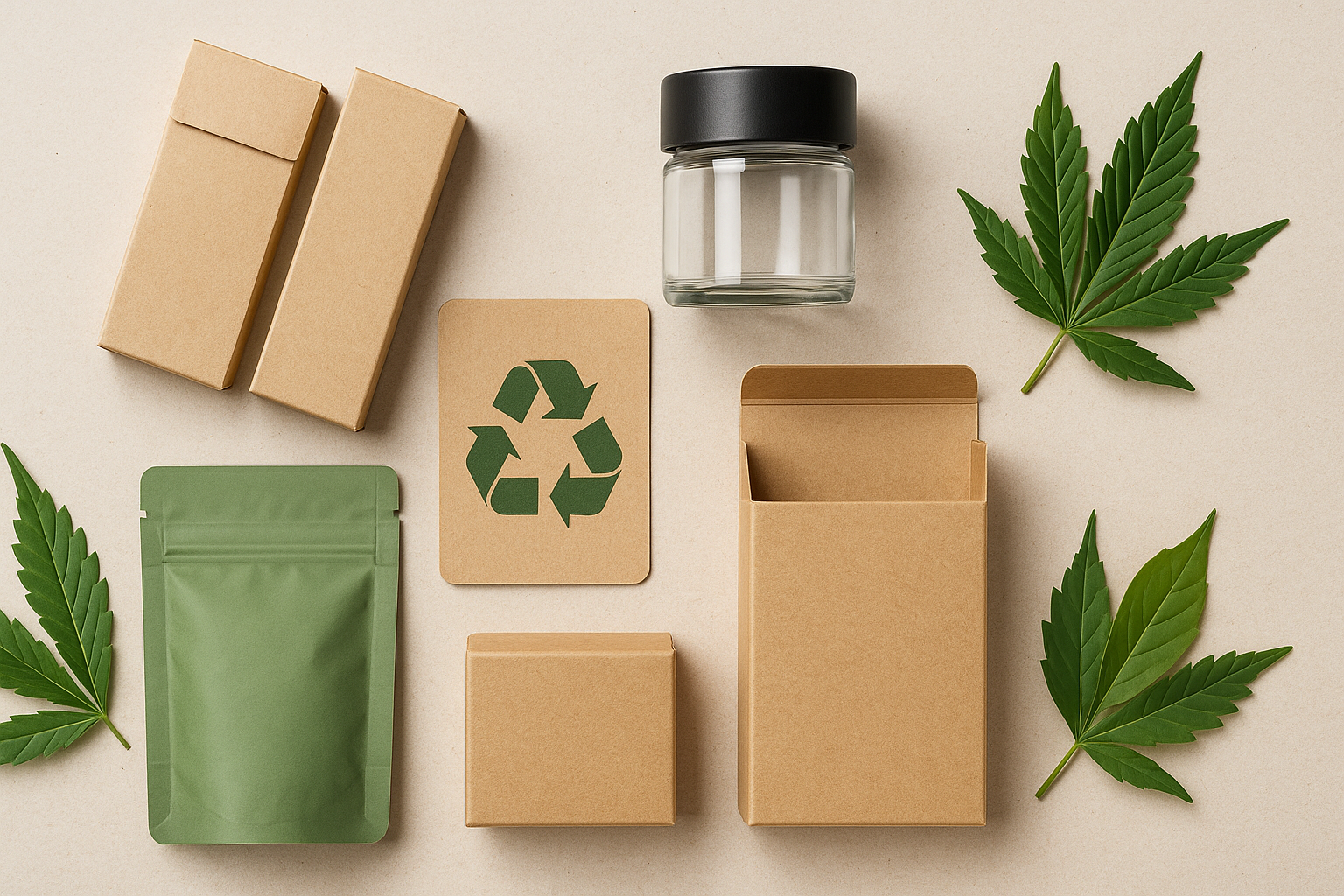
California SB 54 can affect cannabis brands that sell or distribute products using single-use packaging in California, but the packaging manufacturer is not automatically the legal “producer.” California uses a producer-identification hierarchy tied to the company manufacturing the packaged good, brand or trademark ownership or licensing, and ultimately the party first selling or distributing the product into California when no earlier producer can be identified. The law covers more than plastic: covered-material categories include paper and fiber, plastic, glass, metal, ceramic, wood and other organics. However, SB 54’s source-reduction targets specifically focus on plastic covered material. Producers generally must participate in the approved Producer Responsibility Organization, pursue an independent-producer pathway, or qualify for an exemption. Cannabis packaging teams should therefore map the exact material and weight of every pouch, carton, tube, jar, insert, window, label and closure used in California SKUs before redesigning or ordering large 2027 packaging runs.
California’s permanent SB 54 regulations became effective May 1, 2026. Circular Action Alliance submitted its revised California Program Plan to CalRecycle on October 13, 2026, and implementation is scheduled to begin on or before January 1, 2027. CalRecycle also published updated source-reduction guidance and an updated baseline report on November 2, 2026. Because the program is actively moving into implementation, cannabis brands should use current CalRecycle and CAA guidance rather than older summaries written before the final regulations were adopted.
California cannabis brands already have a long packaging checklist.
Child resistance.
Tamper evidence.
Required warnings.
Label space.
Odor control.
Barrier performance.
Retail presentation.
Now there is another question:
Who is responsible for the package after the consumer is finished with it?
That is the basic idea behind Extended Producer Responsibility, or EPR.
California’s SB 54 shifts more of the financial and operational responsibility for single-use packaging toward producers.
For cannabis companies, that changes packaging procurement in a practical way.
A heavy multi-material pre-roll gift box, a laminated flower pouch and a simple kraft paper child-resistant carton are no longer just three branding choices.
They also represent different:
- material categories;
- material weights;
- plastic quantities;
- recyclability considerations;
- source-reduction opportunities;
- future EPR cost exposures.
The useful question is no longer:
“Which package looks most sustainable?”
It is:
“What materials are actually in this package, how much of each material enters California, and who is responsible for reporting and funding that material under SB 54?”
What Is California SB 54?
SB 54 is California’s Plastic Pollution Prevention and Packaging Producer Responsibility Act.
It establishes an extended producer responsibility system for single-use packaging and plastic single-use food service ware.
Under an EPR system, companies identified as producers take greater responsibility for funding and improving the collection, processing and recycling of packaging after use.
California’s permanent implementation regulations were approved and became effective on May 1, 2026.
CalRecycle — SB 54 Packaging Producer Responsibility Program
CalRecycle — SB 54 Permanent Regulations
SB 54 is not just a plastic-bag law
One of the easiest mistakes is reading the word “Plastic” in the law’s title and assuming paperboard packaging is irrelevant.
CalRecycle’s Covered Material Category list includes six broad material classes:
- glass;
- ceramic;
- metal;
- paper and fiber;
- plastic;
- wood and other organics.
CalRecycle — SB 54 Covered Material Categories
This matters to 420 Packaging customers because cannabis packaging frequently combines:
- paper cartons;
- plastic pouches;
- plastic jars;
- glass jars;
- metal tins;
- foam inserts;
- clear windows;
- labels;
- laminates.
Do not start an SB 54 project by counting only plastic bags.
Why Cannabis Brands Should Care in 2026–2027
SB 54 is no longer only a future policy discussion.
Several implementation milestones have already occurred:
| Date | SB 54 Milestone | Why Cannabis Packaging Teams Should Care |
|---|---|---|
| May 1, 2026 | Permanent regulations became effective | Use final rules rather than old draft-regulation summaries |
| August 4, 2026 | Updated source-reduction reporting guidance published | Material and packaging data collection becomes increasingly important |
| October 13, 2026 | CAA submitted revised California Program Plan | PRO implementation framework moved closer to launch |
| November 2, 2026 | Updated source-reduction baseline published | California updated the benchmark used for plastic-reduction planning |
| On or before January 1, 2027 | Program implementation scheduled to begin | 2027 packaging plans should already account for EPR |
| January 1, 2027 | First statewide plastic source-reduction target: 10% | Plastic reduction is an immediate design issue, not only a 2032 goal |
CAA’s current California program page states that implementation is expected on or before January 1, 2027.
Circular Action Alliance — California SB 54 Program
If you are developing packaging now for a cannabis launch, rebrand or 2027 repeat order in California, collect material data before approving the dieline. Trying to reconstruct the weight and material composition of millions of finished packages later is much harder.
SB 54 vs. SB 343: Do Not Confuse Them
California now has several packaging laws that are frequently mixed together.
SB 343 and SB 54 are closely related, but they answer different questions.
| Law | Main Question | Packaging Team Concern |
|---|---|---|
| SB 343 | Can this package accurately communicate recyclability? | Recycling symbol, “recyclable,” disposal claims |
| SB 54 | Who is responsible for covered packaging and how will the system reduce and manage it? | Producer status, reporting, PRO participation, fees, source reduction |
A package could therefore face both issues.
Example:
A cannabis brand sells a laminated pre-roll carton in California.
SB 343 may affect whether the brand can print a recycling claim.
SB 54 may separately affect whether the packaging is covered material and what producer obligations apply.
Do not combine the two analyses into one “California recycling certificate.”
Read: Can Cannabis Packaging Say “Recyclable” in California? SB 343 Guide
What Cannabis Packaging Is Covered?
CalRecycle describes covered material as including single-use packaging and plastic single-use food service ware, subject to exclusions and exemptions in the law and regulations.
For a typical cannabis business, potentially relevant packaging can include:
- flower pouches;
- pre-roll cartons;
- pre-roll tubes;
- vape cartridge cartons;
- concentrate jar boxes;
- edible cartons;
- gummy pouches;
- tincture cartons;
- labels;
- plastic or paper inserts;
- clear windows;
- secondary retail packaging.
Whether a specific component is covered, excluded or exempt depends on the actual facts and current regulations.
CalRecycle also now maintains guidance on exemptions and exclusions.
CalRecycle — SB 54 Exemptions and Exclusions
Do not assume cannabis packaging has a blanket exemption
Cannabis regulation may require certain package functions, but that does not automatically mean every cannabis package is excluded from SB 54.
CalRecycle provides a process for certain food and agricultural packaging where regulatory conflicts make alternatives unavailable.
That is a specific exclusion process, not a general permission to ignore the law.
Who Is the “Producer” for Cannabis Packaging?
This is one of the most important parts of SB 54.
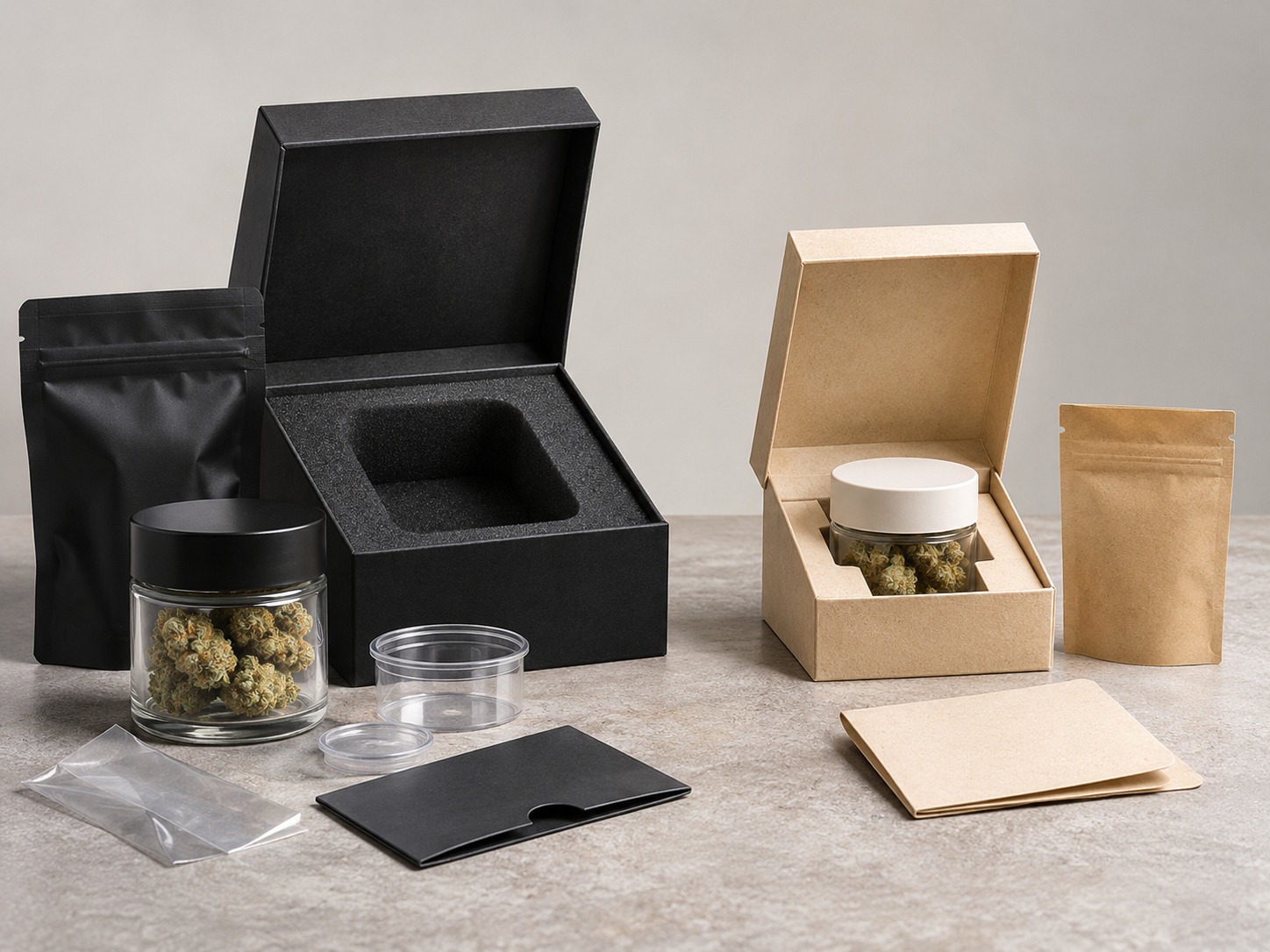
The company that physically manufactures an empty cannabis box is not necessarily the entity that California treats as the producer.
California’s rules use a hierarchy.
In simplified terms, depending on the facts, producer responsibility may move through parties such as:
- a California entity that manufactures the packaged good and owns or has the qualifying right to the relevant brand;
- the California brand or trademark owner;
- an eligible exclusive licensee;
- if none of those apply, the party that first sells, offers for sale or distributes the packaged product in or into California.
The detailed definition is more complex than this summary and should be checked against the final regulation for the company’s actual structure.
CalRecycle — Producer Guidance
Why this matters for cannabis
Cannabis companies often operate through:
- brand owners;
- licensed manufacturers;
- white-label producers;
- co-packers;
- distributors;
- multi-state brand licensing arrangements.
That makes the producer question especially important.
Do not assume that:
“The brand name is on the pouch, so the brand is always the producer.”
Or:
“The packaging supplier made the pouch, so the supplier pays the EPR fee.”
Neither shortcut is reliable without checking the producer hierarchy.
Is the Packaging Factory the Producer?
Often, no.
California’s final regulations clarify an important point:
empty packaging is not covered material merely because it has been manufactured and sold as empty packaging.
It becomes relevant as covered packaging when it is used with a good.
That means an empty custom box manufacturer is not automatically the SB 54 producer simply because it printed and shipped the boxes.
This distinction is extremely useful for cannabis brands sourcing custom packaging internationally.
The packaging supplier still has an important role
Your supplier should be able to provide:
- material structure;
- component list;
- finished weight;
- plastic content;
- paper/fiber content;
- insert material;
- window material;
- lamination type;
- closure materials.
The supplier provides the data.
The responsible producer uses that data for its SB 54 compliance process.
What Is the Producer Responsibility Organization?
California selected Circular Action Alliance, or CAA, as the first Producer Responsibility Organization.
CalRecycle currently states that producers must generally:
- apply to participate in the PRO plan;
- submit an application to operate as an independent producer;
- or qualify for an applicable exemption.
Circular Action Alliance — Producer Registration
What the PRO does
The PRO is responsible for implementing the approved plan across participating producers.
Its responsibilities include funding and coordinating portions of California’s packaging recovery system and working toward statewide targets.
The PRO model means cannabis brands should not interpret the source-reduction targets as:
“Every company must independently reduce every plastic package by exactly 10% in 2027.”
CalRecycle states that the statewide source-reduction targets are collective PRO targets.
Individual producers contribute through participation, reporting and approved reduction strategies.
What Are the 2027 and 2032 Targets?
SB 54 establishes major statewide packaging goals.
Plastic source reduction
| Deadline | Statewide Source-Reduction Target | Minimum Reuse / Refill Contribution |
|---|---|---|
| January 1, 2027 | 10% | At least 2% |
| January 1, 2030 | 20% | At least 4% |
| January 1, 2032 | 25% | At least 10% through reuse, refill or elimination |
CalRecycle measures source reduction against a 2023 baseline and evaluates plastic covered material by weight and number.
CalRecycle — SB 54 Source Reduction Guidance
2032 system goals
CAA currently summarizes the statewide 2032 goals as:
- 100% of covered packaging recyclable or compostable;
- 25% source reduction for plastic packaging;
- 65% recycling rate for single-use plastic packaging.
These goals are another reason packaging design should become part of compliance planning rather than remain only a marketing decision.
Does SB 54 Apply to Paper Cannabis Boxes?
Potentially, yes.
This is one of the most important distinctions between SB 54 and a simple “plastic reduction” policy.
Paper and fiber are included among CalRecycle’s covered material classes.
So replacing a plastic tube with a paperboard pre-roll box does not necessarily mean:
“SB 54 no longer applies.”
What it may do is change:
- the covered-material category;
- the plastic weight;
- recyclability characteristics;
- future eco-modulated fee exposure;
- source-reduction contribution.
That can still be strategically useful
A paper-based package may support:
- plastic reduction;
- lighter material structures;
- simplified components;
- better recycling outcomes in some configurations.
But the correct conclusion is:
“We changed the material profile.”
Not:
“We escaped EPR.”
How Plastic Source Reduction Affects Cannabis Packaging
Cannabis packaging has several common plastic-reduction opportunities.
1. Replace unnecessary plastic inserts
A pre-roll gift box may use:
- EVA foam;
- plastic thermoformed trays;
- paperboard dividers.
If paperboard can protect the product adequately, the insert is one place to evaluate plastic reduction.
2. Reduce oversize pouch dimensions
A larger pouch means more film per unit.
If the same fill weight can safely use a smaller package without damaging:
- heat seals;
- child-resistant zipper operation;
- headspace;
- labeling;
right-sizing can reduce plastic mass per package.
3. Remove unnecessary plastic windows
A paperboard vape or pre-roll carton may include a clear window.
If the window provides little merchandising value, removing it can reduce material complexity.
4. Review lamination
Paper cartons may use plastic film lamination for:
- matte appearance;
- soft-touch feel;
- gloss;
- scuff protection.
Depending on performance requirements, a different finish may reduce plastic use.
Do not remove a protective finish without running rub, moisture and distribution tests.
5. Reduce secondary packaging
If a compliant primary package already provides:
- child resistance;
- tamper evidence;
- light protection;
- barrier;
- required label space.
ask whether an additional oversized outer package is actually necessary.
Why Packaging Weight Now Matters More
Packaging engineers have always considered weight for freight and material cost.
Under EPR, material weight also becomes a data and fee variable.
A useful packaging specification should therefore record the weight of individual components.
Example component breakdown
| Component | Material | Suggested Data to Record |
|---|---|---|
| Outer carton | Paperboard | Finished weight per unit |
| Window | PET | Plastic type and weight |
| Insert | Paperboard / EVA / PET | Material and weight |
| Primary pouch | Multilayer film | Full laminate structure and total weight |
| Zipper | Plastic | Included in pouch weight or reported separately |
| Label | Paper / film | Face stock and approximate weight |
Do not wait until reporting season to discover that no one knows whether a “premium pre-roll box” contains:
3 grams of plastic or 13 grams of plastic.
Build a Cannabis Packaging Component Map
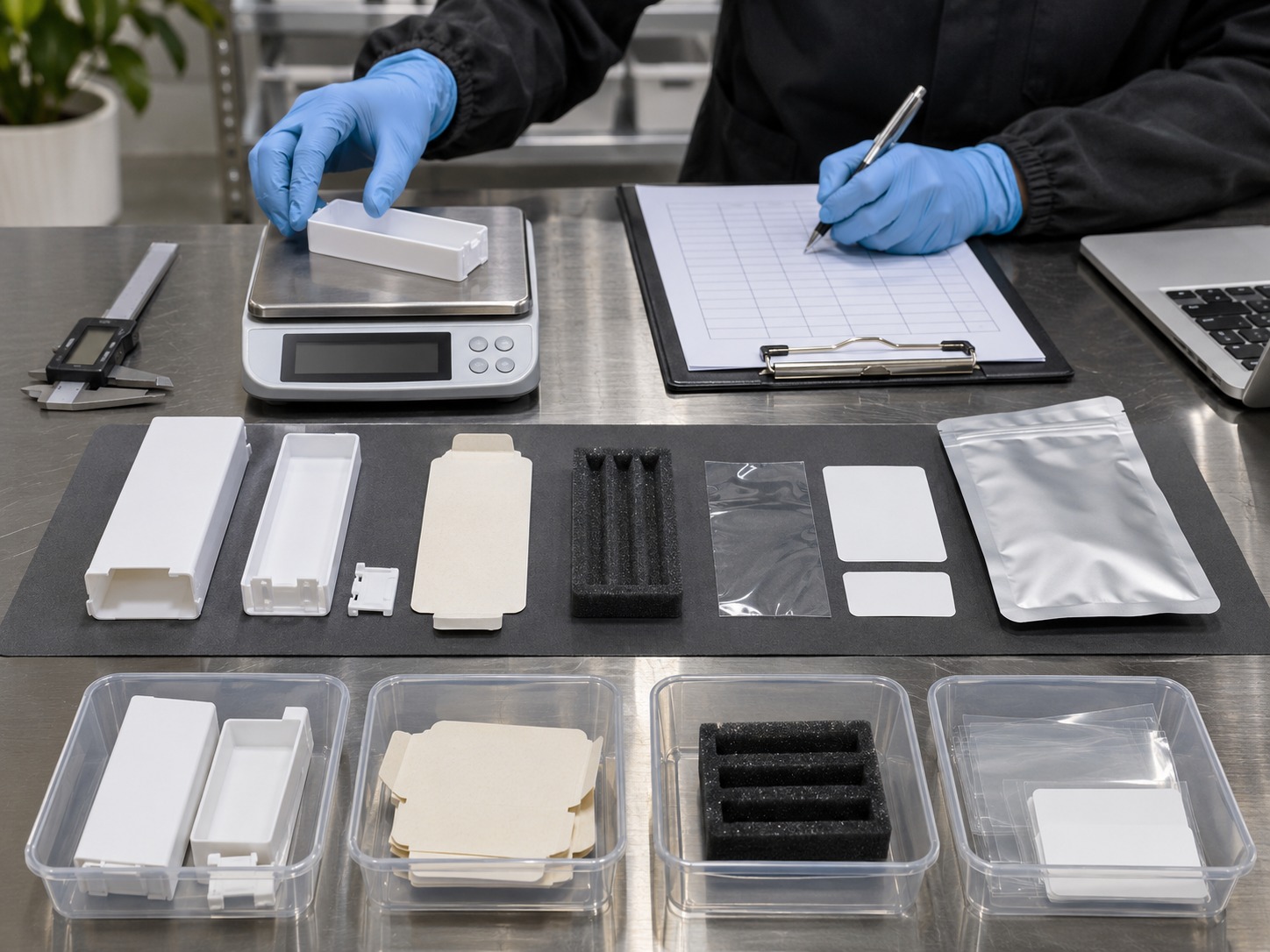
Before redesigning, take one finished package apart.
Literally.
Lay every component on a table.
Example: premium five-pack pre-roll box
- outer rigid paper shell;
- printed wrap;
- plastic film lamination;
- two magnets;
- EVA foam insert;
- tamper-evident sticker;
- individual pre-roll tubes.
The marketing department may call this:
“paper packaging.”
The EPR material map tells a different story.
It is a multi-material packaging system.
Ask four questions for every component
- Is it necessary?
- Can it be lighter?
- Can it use less plastic?
- Can it be simplified without compromising compliance or protection?
This process often reveals better source-reduction opportunities than simply changing the visible outer paper.
Flexible Cannabis Pouches
Flexible pouches are lightweight, which can be an EPR advantage from a material-mass perspective.
But high-barrier cannabis pouches are frequently multilayer laminates.
That can make material classification more complex.
Request the complete structure
Do not record:
“Mylar.”
Record the actual laminate supplied for the SKU.
Depending on the product, the structure may combine layers chosen for:
- printing;
- oxygen barrier;
- moisture barrier;
- light barrier;
- sealing;
- puncture resistance.
Do not lightweight below functional requirements
A thinner film that causes:
- punctures;
- seal failures;
- odor loss;
- product returns;
- shorter shelf life.
is not an effective reduction strategy.
Use production-intent testing before changing film gauge.
Cannabis Flower Pouch Seal Test: Production QA Guide
Pre-Roll Boxes and Tubes
Pre-roll packaging presents especially clear redesign opportunities because brands can choose among:
- plastic tubes;
- glass tubes;
- metal tubes;
- paperboard cartons;
- rigid gift boxes;
- flexible pouches.
Do not compare only the primary material
A simple plastic tube might use one lightweight component.
A “plastic-free-looking” luxury paper box may contain:
- lamination;
- magnets;
- EVA foam;
- multiple paper layers.
SB 54 encourages a more complete material accounting approach.
That makes total package design more important than a single front-of-pack sustainability cue.
Edible Packaging
Edible packaging can be harder to reduce because the package may need to provide:
- food-contact suitability;
- child resistance;
- tamper evidence;
- moisture control;
- oil or grease protection;
- serving separation;
- heat resistance.
A paper-only redesign should not compromise any of these functions.
If the product already uses a direct-contact pouch, brands can evaluate whether the outer carton can be:
- smaller;
- lighter;
- unlaminated;
- made with simpler inserts.
But test the complete package.
Cannabis Gummy Packaging Heat Test: Summer QA Guide
Premium Rigid Cannabis Boxes
Luxury packaging deserves particular attention because a premium structure can contain far more material than the product function requires.
Examples include:
- thick greyboard;
- laminated art paper;
- foam inserts;
- magnets;
- metal components;
- ribbons;
- multiple inner trays.
That does not mean premium packaging must disappear.
It means premium design needs a stronger material-efficiency argument.
Ask whether premium value comes from weight or design
A box can feel premium because of:
- excellent print;
- precise fit;
- embossing;
- smart opening mechanics;
- high-quality paper;
- good insert engineering.
It does not always need maximum material thickness.
For premium cannabis launches, compare one “maximum luxury” structure with one reduced-material version during sampling. Brands are often surprised how much board, foam and plastic can be removed while preserving the intended shelf impression.
How SB 54 Fees Can Influence Packaging Design
Under EPR, packaging cost is no longer limited to:
unit price + printing + freight.
Producer fees become part of the broader packaging economics.
CAA publishes California program and fee information for participating producers.
CAA — California EPR Program and Fee Resources
Do not build a five-year packaging plan around one current fee rate
Fee structures can evolve as:
- program costs change;
- material categories change;
- recycling performance changes;
- eco-modulation develops;
- producer data improves.
A better procurement strategy is to reduce structural exposure:
- know your material weights;
- remove unnecessary components;
- improve recyclability where practical;
- reduce plastic mass;
- control packaging substitutions.
Those improvements remain useful even if individual fee rates change.
What About Small Cannabis Brands?
California regulations include a small-producer exemption pathway.
CalRecycle currently states that qualifying producers with gross annual sales below $1 million may apply for exemption from most reporting and fee requirements.
However, CalRecycle also notes that small producers still need to plan toward the 2032 recyclability or compostability requirements.
CalRecycle — Small Producer Exemption Guidance
Do not assume “small brand” equals exempt
The exemption requires qualification and application.
A company should confirm:
- whether it is actually the producer;
- whether it meets the threshold;
- what registration is required;
- which obligations remain.
Do not simply exclude the company from packaging data collection.
Even a small brand benefits from knowing package weights before it grows beyond an exemption threshold.
12 Ways to Reduce Packaging Before 2027
| Design Action | Potential Benefit | What Must Be Revalidated |
|---|---|---|
| Reduce pouch dimensions | Less film per unit | Fill, headspace, seals, CR zipper |
| Reduce film gauge | Lower plastic weight | Puncture, seal and barrier performance |
| Replace EVA with paperboard insert | Less plastic | Crush protection and fit |
| Remove unnecessary window | Less plastic and fewer materials | Retail presentation |
| Replace film lamination where feasible | Reduce plastic in paper cartons | Rub, moisture and print protection |
| Right-size outer carton | Less paperboard and freight volume | Label space and product fit |
| Reduce insert wall thickness | Material reduction | Product retention |
| Eliminate redundant secondary box | Large material saving | Compliance and retail protection |
| Reduce rigid-box board thickness | Lower overall mass | Stiffness and premium feel |
| Use paper CR structure where appropriate | Potential plastic reduction | Child-resistant documentation |
| Reduce void space | Smaller package and shipper | Product movement and crush protection |
| Standardize packaging across SKUs | Better data and purchasing efficiency | Fit, labeling and compliance differences |
Reduction is not the same as weakening
Packaging that breaks and gets replaced can undermine both sustainability and cost goals.
Always validate the finished system.
Useful related tests include:
Pre-Roll Packaging Crush Protection
Cannabis Packaging Case Pack Guide
A Practical SB 54 Packaging Audit Workflow
Step 1: List California SKUs
Start with every cannabis SKU sold or distributed in California.
Step 2: Determine producer status
Use the current CalRecycle producer guidance rather than guessing based on who buys the packaging.
Step 3: Photograph the complete package
Capture:
- front;
- back;
- open package;
- all inserts;
- primary container;
- closure;
- secondary carton.
Step 4: Disassemble one production unit
Create a separate component row for everything that can reasonably be identified.
Step 5: Record material type
Do not use vague descriptions such as:
- eco paper;
- Mylar;
- plastic insert;
- metal.
Request the actual material information from the supplier.
Step 6: Record component weight
Where practical, weigh components separately using a suitable scale.
Step 7: Map each component to the applicable covered-material category
Use current CalRecycle CMC information.
Step 8: Identify plastic source-reduction opportunities
Prioritize components with:
- high plastic mass;
- large annual volumes;
- weak functional justification.
Step 9: Prototype redesigned packaging
Do not change production packaging directly from a spreadsheet.
Make samples.
Step 10: Revalidate compliance and performance
Check:
- child resistance;
- tamper evidence;
- label area;
- seal performance;
- barrier;
- crush protection;
- retail appearance.
Step 11: Update reporting data
Make sure the compliance database reflects the redesigned package rather than the previous version.
Step 12: Lock change control
If the supplier substitutes:
- film;
- lamination;
- insert;
- window;
- board;
- closure.
the packaging-material record may need to change too.
What to Request From Your Packaging Supplier
SB 54 makes accurate supplier specifications much more valuable.
For every packaging SKU, request:
- finished package dimensions;
- finished package weight;
- individual component list;
- paperboard or fiber type;
- plastic resin or film structure;
- lamination material;
- window material;
- insert material;
- closure material;
- metal or magnet components;
- recycled-content information where applicable;
- production-intent sample;
- supplier item number or revision;
- notification before material substitution.
Ask for data before placing the large order
A supplier is much more likely to provide useful information during:
- RFQ;
- sampling;
- technical approval.
than months later when a compliance deadline arrives.
Add packaging-data requirements to the purchase specification.
420 Packaging Formats to Evaluate
Child-Resistant Kraft Paper Pre-Roll Packaging Box
420 Packaging’s current push-and-slide kraft pre-roll box uses a paperboard outer sleeve and inner sliding tray with a locking-tab structure. The product page describes the CR mechanism as operating without added plastic parts.
For brands evaluating plastic source reduction, this type of structure can be useful as a comparison against:
- plastic CR tubes;
- paper boxes with plastic locks;
- rigid gift boxes with foam inserts.
Before using it in an SB 54 program, document the actual production version, including:
- paperboard;
- printing;
- surface finish;
- divider;
- labels;
- adhesives;
- finished unit weight.
A paper-based design can reduce plastic without making the package exempt from California packaging EPR.
Flip-Top Book-Shape Pre-Roll Packaging Box
420 Packaging’s current premium book-shape pre-roll box illustrates the opposite end of the design spectrum. The product page lists rigid greyboard, wrapped paper, hidden magnets and insert options including EVA foam or paperboard.
That makes it useful for an SB 54 redesign exercise.
Instead of asking only:
“Is the outer box paper?”
compare alternative configurations:
| Component | Premium Option | Reduction Question |
|---|---|---|
| Insert | EVA foam | Can paperboard protect the cones? |
| Surface | Film lamination / soft touch | Can another finish meet the rub requirement? |
| Closure | Hidden magnets | Are magnets essential to the intended experience? |
| Board | Rigid greyboard | Can board weight be reduced without losing stiffness? |
The best answer may still be the premium structure.
The point is to make that decision with an actual material map rather than assuming every feature is necessary.
Custom Pre-Roll Packaging
420 Packaging’s broader pre-roll category includes paper cartons, drawer structures, multipacks and other formats for 84 mm, 98 mm, 109 mm and custom pre-roll configurations.
For an SB 54-focused RFQ, ask for two or three structurally different samples instead of simply reproducing the previous package.
Compare:
- total package weight;
- plastic weight;
- material count;
- CR function;
- insert weight;
- shipping volume;
- unit cost.
Example: Redesigning a 5-Pack Pre-Roll Box
Consider a fictional packaging system with:
- rigid wrapped box;
- magnetic closure;
- EVA foam insert;
- plastic film lamination;
- five individual plastic tubes.
The first mistake would be to replace the outer paper with kraft and declare the project finished.
A better redesign review would ask:
Can the individual tubes be eliminated?
If the outer package can meet required protection and compliance, this could remove substantial material.
Can EVA become a die-cut paperboard insert?
Test whether cone crush protection remains acceptable.
Does the package need magnets?
If the CR mechanism or consumer experience does not depend on them, evaluate a structural closure.
Can the box be smaller?
Reduce empty space while preserving easy product removal.
Can the finish change?
Compare laminated and non-film-coated prototypes for abrasion resistance.
One redesign project can therefore affect several SB 54 variables at the same time.
Do Not Forget Shipping Packaging
Retail packaging receives most of the design attention.
But your packaging audit may also need to consider applicable secondary and distribution packaging under the current SB 54 framework.
That makes case-pack efficiency valuable.
If a master carton changes from:
48 retail packs to 72 retail packs
without increasing damage, fewer cartons may be required per thousand retail units.
Similarly, a retail pack with less empty space can improve:
- case count;
- pallet density;
- freight efficiency.
Use the actual finished product and distribution route before changing case counts.
Cannabis Packaging Case Pack Guide: Master Cartons, Case Count & Shipping QA
Common SB 54 Mistakes Cannabis Brands Should Avoid
| Mistake | Why It Fails | Better Approach |
|---|---|---|
| “We use paper boxes, so SB 54 does not apply.” | Paper and fiber are covered-material classes | Map the full package and determine obligations |
| “Our packaging supplier is the producer.” | Producer status follows California’s legal hierarchy | Use CalRecycle producer guidance |
| “SB 54 means every package must lose 10% plastic in 2027.” | Source-reduction targets operate through the PRO statewide plan | Participate, report accurately and identify feasible reductions |
| “SB 343 and SB 54 are the same thing.” | One focuses on recycling claims; the other on producer responsibility | Run separate claim and EPR reviews |
| “We can calculate material weight later.” | Old packaging components may no longer be available to weigh | Record data at sampling and purchase approval |
| “Thinner always means better.” | Package failures create waste and product loss | Validate performance after lightweighting |
| “Small businesses do not need to think about SB 54.” | Exemptions have eligibility and application rules | Confirm producer and exemption status |
California SB 54 Cannabis Packaging Checklist
| Review Item | Question |
|---|---|
| California sales | Is this SKU sold or distributed in California? |
| Producer identity | Which entity is the producer under the current hierarchy? |
| PRO status | Is the producer registered/participating through the appropriate pathway? |
| Exemption | Does an exemption or exclusion actually apply? |
| Package BOM | Are all retail packaging components recorded? |
| Material category | Is each component mapped to the relevant material type/form? |
| Unit weight | Is finished component weight available? |
| Plastic mass | How much plastic is used per package? |
| Annual volume | How many units enter California? |
| CR function | Could material reduction change child resistance? |
| Tamper evidence | Could redesign remove or weaken the TE feature? |
| Barrier | Could lightweighting affect odor, OTR, moisture or light protection? |
| Insert | Can plastic foam or tray material be reduced? |
| Window | Is a plastic window functionally necessary? |
| Lamination | Is film lamination required for performance? |
| Right-sizing | Can package dimensions be reduced? |
| Case pack | Can more units ship safely per case? |
| Supplier data | Does the packaging supplier provide usable material specifications? |
| Change control | Will material substitutions trigger compliance review? |
| SB 343 review | Are recyclability claims separately substantiated? |
| 2027 review | Has the brand checked the latest CalRecycle and CAA implementation guidance? |
CalRecycle — Plastic Pollution Prevention and Packaging Producer Responsibility Act
CalRecycle — SB 54 Permanent Regulations
CalRecycle — Producer Guidance
CalRecycle — Covered Material Category List
CalRecycle — SB 54 Source Reduction Guidance
CalRecycle — Exemptions and Exclusions
Do not wait until reporting starts to understand your packaging materials. Send the product type, target California volume, package style, child-resistant requirement, fill size and current packaging structure with your RFQ. 420 Packaging can compare paperboard, rigid-box, insert and flexible-packaging options and provide production specifications that help your team build a more useful packaging material record. Final SB 54 producer status, reporting, fee and compliance decisions should be confirmed using current CalRecycle and CAA requirements.
Frequently Asked Questions
1. Does California SB 54 apply to cannabis packaging?
It can. SB 54 covers single-use packaging across sectors, subject to the law’s exemptions and exclusions. Cannabis brands should evaluate the actual package and identify the responsible producer rather than assuming cannabis packaging is automatically excluded.
2. Is SB 54 only about plastic cannabis packaging?
No. CalRecycle’s covered-material classes include paper and fiber, glass, metal, plastic, ceramic, wood and other organics. However, the statutory source-reduction targets specifically focus on plastic covered material.
3. Is my cannabis packaging supplier the SB 54 producer?
Not automatically. California uses a legal hierarchy involving the manufacturer of the packaged good, relevant brand or trademark ownership or licensing and, in some cases, the first seller or distributor into California. The final regulations also clarify that a business is not a producer merely because it manufactures or sells empty packaging.
4. What is the difference between SB 54 and SB 343?
SB 343 primarily affects recyclability representations such as recycling symbols and “recyclable” claims. SB 54 establishes an extended producer responsibility program covering packaging, reporting, producer participation, funding and waste-reduction targets. A cannabis package can be affected by both laws.
5. What happens on January 1, 2027?
California’s SB 54 program is scheduled for implementation on or before January 1, 2027, and that date is also the first statewide plastic source-reduction milestone: 10%, with at least 2% coming from reuse or refill strategies under the statutory framework.
6. Does every cannabis producer have to reduce its own plastic packaging by 10% in 2027?
No. CalRecycle explains that the source-reduction targets are statewide targets implemented through the Producer Responsibility Organization plan. Individual producers contribute through participation, reporting and approved reduction activities rather than each being assigned the same standalone 10% target.
7. Do paper pre-roll boxes avoid SB 54 fees?
Do not assume so. Paper and fiber are covered-material categories, although the exact fee treatment depends on the applicable category and current program fee schedule. A paper design may reduce plastic exposure without removing all EPR obligations.
8. What packaging data should cannabis brands collect?
At minimum, collect the package SKU, component list, material type, finished component weight, plastic content where relevant, package dimensions, supplier item number, annual California volume and revision history. More detailed CAA or CalRecycle reporting requirements may apply.
9. Can I replace a plastic insert with paperboard to reduce SB 54 exposure?
Potentially. Paperboard inserts can reduce plastic in some pre-roll, vape or edible boxes, but the redesigned package still needs to protect the product and preserve required child-resistant, tamper-evident and other functions.
10. Should I remove lamination from cannabis paper boxes?
Only after testing. Film lamination can contribute plastic, but it may also protect printing from abrasion, moisture and handling. Compare production-intent samples using alternative coatings or finishes before changing the specification.
11. Are small cannabis companies exempt from SB 54?
California currently provides a small-producer exemption pathway for qualifying producers with gross annual sales below $1 million, but eligibility is not automatic and an application process applies. Some long-term packaging requirements can still remain relevant.
12. Does a “recyclable” package automatically reduce SB 54 fees?
Not automatically. Recyclability is one packaging characteristic, while fee structures can account for multiple program factors. Check the current CAA California fee schedule rather than assuming a specific claim or material automatically produces a particular fee.
13. Should cannabis brands join Circular Action Alliance?
CalRecycle states that producers generally must participate in the approved PRO plan, pursue the independent-producer pathway or qualify for an exemption. Companies should first confirm that they are the legal producer under California’s definition and then follow the appropriate compliance pathway.
14. What packaging changes should trigger an SB 54 data update?
Changes to package size, film structure, board, lamination, insert, window, closure, label, supplier or component weight should trigger review because they can change the material profile and reporting data associated with the SKU.