
Last updated: October 16, 2026
Cannabis packaging should be placed on hold when it arrives and released only after the receiving team confirms that the shipment is the correct SKU, revision, quantity and approved construction. Incoming inspection should cover shipping-carton condition, supplier lot identity, artwork revision, dimensions, materials, print and finish, inserts, labels, tamper features, closure function and any child-resistant documentation required for the exact configuration. Do not inspect only the top carton or one perfect unit. Pull samples from multiple shipping cartons and positions, compare them with the approved specification and golden sample, record defects by severity, and keep failed lots physically or electronically quarantined until disposition is approved. Incoming inspection does not replace supplier process control, pre-production approval or compliance review—it prevents an already-delivered packaging problem from being multiplied during filling and distribution.
A packaging shipment arrives Friday afternoon.
The production line is scheduled for Monday.
The cartons look clean, the supplier's packing list matches the purchase order, and someone opens the first box and says:
“Looks good.”
That is exactly when an expensive packaging problem can enter production.
The wrong warning panel may be buried halfway down the pallet. A pouch zipper may be inconsistent across one manufacturing lot. A concentrate-box insert may have changed. A vape carton may match the correct artwork visually but carry an older dieline. A child-resistant sleeve may work on the five units at the top of the first case and bind on units made later in the run.
Once cannabis product is filled, labeled and packed into defective packaging, the cost of the problem changes dramatically.
You are no longer sorting empty packaging.
You may now be sorting packaged inventory, reconciling batch records, removing product, replacing labels, investigating compliance impact and delaying finished-goods release.
Incoming packaging inspection exists to stop that escalation.
What Incoming Packaging Inspection Must Prove
Incoming inspection should answer five questions before packaging becomes available to production.
| Question | What You Are Confirming | Typical Evidence |
|---|---|---|
| Did we receive the right packaging? | SKU, artwork, size, colorway and revision | PO, supplier label, approved artwork, golden sample |
| Did we receive the right amount? | Case count, unit count and any agreed overage/shortage | Packing list, case labels, count or weight verification |
| Was it damaged in transit? | Cases and packaging survived freight and handling | Receiving photos, pallet inspection, carton mapping |
| Does the lot meet specification? | Dimensions, print, finish, materials and function | Inspection measurements and sample results |
| Can production safely use it? | No unresolved release-critical defect or document gap | QA release, deviation approval or rejection record |
The important phrase is lot-level decision.
A receiving inspector is not trying to prove that the three packages in their hand look attractive. The goal is to collect enough evidence to decide whether the delivered lot can enter production.
Incoming Inspection vs. Sample Approval vs. Pre-Shipment Inspection

These three controls happen at different stages and should not be collapsed into one.
| Control | When It Happens | Main Question | Typical Result |
|---|---|---|---|
| Pre-production sample approval | Before mass production | Is this the correct package to manufacture? | Approved golden sample and specification |
| Pre-shipment inspection | After production, before supplier ships | Does the completed production lot appear acceptable before freight? | Supplier/third-party release or hold |
| Incoming inspection | After your facility receives the shipment | Did the correct lot arrive intact and does it still meet requirements? | Receive-and-release, quarantine, deviation or reject |
420 Packaging already has a separate Cannabis Packaging Sample Checklist for pre-production approval.
This guide begins later, after production packaging physically reaches your receiving dock.
That distinction prevents keyword and operational confusion:
- sample approval creates the reference;
- incoming inspection checks the delivered lot against that reference.
Step 1: Quarantine the Shipment Before Use
The simplest incoming-control failure is also one of the most common: packaging gets consumed before inspection is finished.
A pallet arrives and is staged near production. Operators assume it is released inventory and begin pulling cases.
Once that happens, a lot can become difficult to contain.
Use a clear status system
Typical statuses include:
- HOLD: received but not inspected or awaiting documents;
- RELEASED: approved for production use;
- REJECTED: not approved for use;
- DEVIATION: conditionally approved under a documented exception.
The control can be physical, electronic or both.
The important requirement is that operators cannot accidentally confuse uninspected packaging with released packaging.
The receiving team's job is to receive freight. QA's job is to release packaging. Do not let a clean bill of lading or matching packing list automatically change packaging status to “approved for use.”
Step 2: Verify SKU, Revision and Lot Identity
Start with identity before measuring anything.
A perfectly manufactured package with the wrong revision is still the wrong package.
Check the purchase order against the supplier's case label
Confirm where applicable:
- supplier;
- customer SKU;
- supplier item number;
- package description;
- artwork revision;
- dieline revision;
- color or strain variant;
- quantity per case;
- total cases;
- supplier lot or manufacturing lot;
- production date;
- PO number.
Do not identify artwork by color alone
Two strain cartons can look almost identical but contain different:
- potency panels;
- warning statements;
- barcode zones;
- product names;
- net quantities;
- market-specific artwork.
Use a controlled revision number or approved file reference.
Mixed lots require deliberate handling
If one delivery contains two manufacturing lots, do not automatically treat the entire shipment as one homogeneous inspection lot.
Different lots may have different:
- paper;
- film;
- ink;
- adhesive;
- machine setup;
- operator;
- production date.
Keep lot identity visible so a later defect can be traced.
Step 3: Inspect Shipping Cartons Before Opening Them

The outer shipper can reveal what happened before the packaging reached you.
Before cutting tape, record visible freight condition.
| Observation | Possible Risk to Retail Packaging | Next Action |
|---|---|---|
| Crushed corner | Retail cartons at the case corner may be compressed | Sample heavily from the damaged corner |
| Wet or stained corrugated | Paperboard, labels or pouches may have moisture exposure | Quarantine affected cases and inspect internal layers |
| Torn case wall | Dust, contamination or unit loss | Inspect exposed packaging and count |
| Collapsed pallet layer | Compression across multiple cases | Map affected pallet positions |
| Retaped carton | Case may have been opened or repacked | Verify quantity and lot identity |
| Loose internal movement | Wrong case count or failed case pack | Inspect pack-out arrangement before unloading units |
If shipping damage is the recurring problem rather than the retail package itself, use the site's Cannabis Packaging Case Pack Guide to review master-carton count, orientation, void space and palletization.
Step 4: Build a Representative Sample
Do not inspect ten consecutive packages from the same open case and call that a shipment sample.
That tells you very little about variation across the lot.
Spread samples across the shipment
When practical, include units from:
- multiple shipping cartons;
- top, middle and lower pallet levels;
- front and rear of the pallet;
- different supplier lot codes;
- different positions inside the case.
Why location matters
A production or logistics defect may be localized.
For example:
- one stack receives more compression;
- one manufacturing lot uses a different film roll;
- one carton position experiences abrasion;
- one section of a print run drifts in color;
- one pallet is exposed to moisture.
Record where each abnormal sample came from
Instead of writing:
“Five damaged cartons found.”
write something like:
“Five cartons with corner crush; all from pallet 2, lower outside layer, shipping cases 18–20.”
That information can turn a vague supplier complaint into a traceable investigation.
Step 5: Check Dimensions and Product Fit
Incoming inspection should focus on the dimensions that can stop production or alter package function.
Do not measure every possible dimension
Identify critical dimensions during sample approval.
Examples include:
- internal carton width for a vape device;
- insert cavity diameter for a jar;
- sleeve width for a sliding child-resistant tray;
- pouch width at the filling opening;
- window-to-insert alignment;
- label-panel width;
- closure engagement geometry.
Use the actual product or a controlled fit gauge
A caliper tells you the measured dimension.
The actual product tells you whether the full tolerance stack still works.
For high-risk fits, inspect both.
Sample more than one product extreme
If your cartridge, jar, cap or hardware also has manufacturing tolerance, a package tested only with one unusually small component can create a false pass.
The existing Cannabis Packaging Sample Checklist explains how to build the original fit reference before mass production. Incoming QC should then verify that the received packaging still behaves like the approved sample.
Step 6: Inspect Print, Finish and Construction
Visual inspection should be structured rather than based on a general impression.
| Inspection Area | Look For | Why It Matters |
|---|---|---|
| Artwork | Wrong revision, missing copy, wrong variant | Can create compliance or inventory errors |
| Color | Noticeable drift from approved master | Brand consistency and SKU identification |
| Print registration | Text, foil, UV or cuts misaligned | Legibility and premium appearance |
| Lamination / coating | Bubbles, lift, wrinkles, scuffs | Appearance and durability |
| Foil / embossing | Missing areas, fill-in, offset | Brand presentation and readability |
| Die cutting | Rough edges, incomplete cuts, damaged locks | Assembly and opening function |
| Glue | Open seams, glue squeeze-out, contamination | Package integrity |
| Windows | Scratches, haze, dust, misalignment | Product presentation |
Use the approved master, not memory
Humans are poor at remembering exact colors and subtle finish differences over weeks or months.
Place the received unit beside:
- the golden sample;
- approved Pantone or color reference where applicable;
- approved production photographs;
- current artwork revision.
For a full color-control workflow, use Cannabis Packaging Color Consistency: Pantone, CMYK, Delta E & Batch QA.
Step 7: Test Closures, Inserts and Functional Features
A package can look correct and still fail in production.
Open, close, load and handle it.
Paper cartons
Check:
- tuck flaps enter without tearing;
- glue seams stay closed;
- cartons erect squarely;
- inserts sit in the correct orientation;
- product does not require excessive force to load.
Sliding or child-resistant boxes
Check:
- tray does not bind;
- locking features align;
- the intended opening motion is repeatable;
- paper does not tear during normal operation;
- assembled dimensions match the approved structure.
Pouches
Check:
- zipper opens consistently;
- zipper tracks are aligned;
- pouch mouth is usable for your filler;
- gusset opens;
- seal land is undamaged;
- film has no puncture or delamination.
Rigid jar boxes
Check:
- insert is present and correctly positioned;
- jar cavity fits;
- rigid walls remain square;
- hinges and magnetic or mechanical closures operate correctly;
- surface finishes are not damaged during opening.
If packaging will move directly into a filling operation, connect receiving inspection to the Cannabis Packaging Line Efficiency Guide. A lot that technically fits the drawing but repeatedly jams, misfeeds or requires rework may still create a production problem.
Step 8: Inspect Labels, Codes and Variable-Data Areas
Incoming packaging may arrive:
- preprinted;
- with pressure-sensitive labels;
- with blank variable-data zones;
- with batch labels supplied separately.
Each configuration needs a different receiving check.
Preprinted information
Confirm the artwork contains the correct approved static fields.
Blank variable-data areas
Verify that the usable area is still large enough for:
- batch or lot number;
- UID;
- packaged date;
- expiration or best-by information where applicable;
- potency or test information where required;
- barcode or QR code.
Pre-applied labels
Look for:
- lifting corners;
- wrinkles;
- incorrect position;
- labels bridging a fold or seam;
- adhesive contamination;
- wrong revision.
Machine-readable codes
Scan representative samples in their finished geometry.
The Cannabis Packaging QR Code Prepress Guide covers code size, quiet zones, finished-package scanning and batch-to-destination checks in detail.
Step 9: Verify Child-Resistant and Tamper-Evident Documentation
Do not use visual similarity as proof that a child-resistant claim still applies.
If the purchased configuration relies on child-resistant documentation, verify that the received package remains the configuration you approved.
Check relevant identifiers such as:
- size;
- material;
- closure;
- locking mechanism;
- insert or structural feature when relevant;
- supplier or manufacturing source;
- document/report reference.
California's Department of Cannabis Control, for example, requires final-form cannabis goods to meet packaging requirements including tamper evidence and child resistance, with additional requirements depending on the product. Requirements differ by jurisdiction, so the market-specific compliance review remains the licensee's responsibility. California Department of Cannabis Control: Final-Form Packaging Requirements.
Inspect tamper features before production
Depending on the package, check:
- peel seal position;
- tear-strip integrity;
- perforation condition;
- security-label zone;
- heat-seal area;
- breakaway feature.
A damaged tamper feature should not first be discovered after product is filled.
Classify Critical, Major and Minor Defects
Not every defect deserves the same disposition.
Your defect definitions should be written before inspection begins.
| Example Classification | Typical Packaging Example | Why It Matters |
|---|---|---|
| Critical | Wrong regulated artwork, unsupported safety configuration, contamination, package cannot provide required function | Could create safety, compliance or serious product-integrity risk |
| Major | Package will not close reliably, insert does not fit, barcode repeatedly fails, severe print defect on retail face | Likely to make product unusable, unsaleable or require significant rework |
| Minor | Small cosmetic mark outside defined critical area | Does not normally prevent intended use but exceeds cosmetic expectation |
These are examples, not universal classifications.
Your product, market, packaging specification and quality agreement determine the final defect list.
If a condition was defined as major during supplier approval, it should not quietly become minor because production is waiting. Use a documented deviation process with named approval when the business accepts an exception.
How AQL Fits Into Incoming Packaging Inspection
Acceptance sampling helps organizations inspect a defined sample instead of opening every package in a large lot.
ANSI/ASQ Z1.4 is a commonly used attribute-sampling standard. ASQ describes it as an acceptance sampling system that uses defined lot sizes, inspection levels, sample sizes and acceptance/rejection criteria. ASQ: ANSI/ASQ Z1.4 Sampling Procedures.
But AQL does not tell you what your defects should be.
You still need to define:
- inspection lot;
- critical, major and minor defects;
- inspection level;
- AQL values where used;
- sample-selection method;
- switching or other rules if applicable;
- what happens after rejection.
Do not copy another product's AQL automatically
420 Packaging's current Custom 510 Vape Cartridge Box product page, for example, lists AQL 2.5/4.0 visual inspection as a product-specific quality specification.
That does not establish a universal receiving plan for every pouch, jar, tube or cannabis carton. Your purchase specification should define what applies to your actual order.
Accept, Hold or Reject: Make a Lot-Level Decision
Incoming inspection should end with a controlled disposition.
| Status | Use When | Production May Use Packaging? |
|---|---|---|
| Released | Inspection and document requirements pass | Yes |
| Hold | Inspection incomplete, document missing or investigation pending | No |
| Deviation / conditional release | Known nonconformity is formally evaluated and accepted | Only under documented conditions |
| Rejected | Lot fails acceptance or cannot support intended use | No |
Partial release requires control
If only certain cases or supplier lots are acceptable, identify them physically and electronically.
Do not release “most of the pallet” without a traceable separation.
Retain inspection evidence
A practical record can include:
- PO;
- supplier;
- supplier lot;
- date received;
- quantity received;
- cases sampled;
- sample size;
- measurements;
- defect counts;
- photos;
- document references;
- disposition;
- inspector;
- approver.
What to Do When the Packaging Lot Fails
Do not immediately send the entire shipment back.
First contain and define the failure.
1. Stop use
Prevent additional packaging from entering production.
2. Identify affected lots and cases
Determine whether the defect is:
- entire shipment;
- one supplier lot;
- one pallet;
- one group of cases;
- random across the order.
3. Preserve evidence
Keep:
- failed samples;
- case labels;
- photos;
- measurements;
- approved golden sample;
- receiving-condition photos.
4. Decide whether sorting can reliably separate good from bad
Sorting works only if the defect can be detected consistently.
For example, obvious missing inserts may be sortable.
A hidden functional defect that requires repeated cycling may be much more expensive to screen.
5. Request supplier investigation
A useful supplier corrective-action request includes:
- clear defect definition;
- quantity inspected;
- quantity failed;
- lot numbers;
- photos;
- measurement data;
- expected specification;
- required containment;
- requested response date.
Inspection Priorities by Packaging Format
| Packaging Format | Highest-Value Incoming Checks |
|---|---|
| Child-resistant paper box | Lock geometry, tray fit, die cutting, fold damage, artwork revision |
| Flower / edible pouch | Zipper, film damage, pouch opening, seal land, print, dimensions |
| Vape cartridge carton | Insert fit, window, tuck flaps, tamper feature, barcode/label panels |
| Concentrate rigid box | Insert cavity, rigid-box squareness, finish scuffing, hinge/closure |
| Jar / bottle | Closure fit, threads, chips/cracks, dimensions, liner compatibility |
| Pressure-sensitive labels | Revision, roll direction, count, die-cut edge, adhesive/face stock, code area |
| Pre-roll tubes | Cap fit, closure operation, tube deformation, print/label area |
420 Packaging Formats to Build Into Your Receiving Plan
Child-Resistant Kraft Paper Pre-Roll Packaging Box
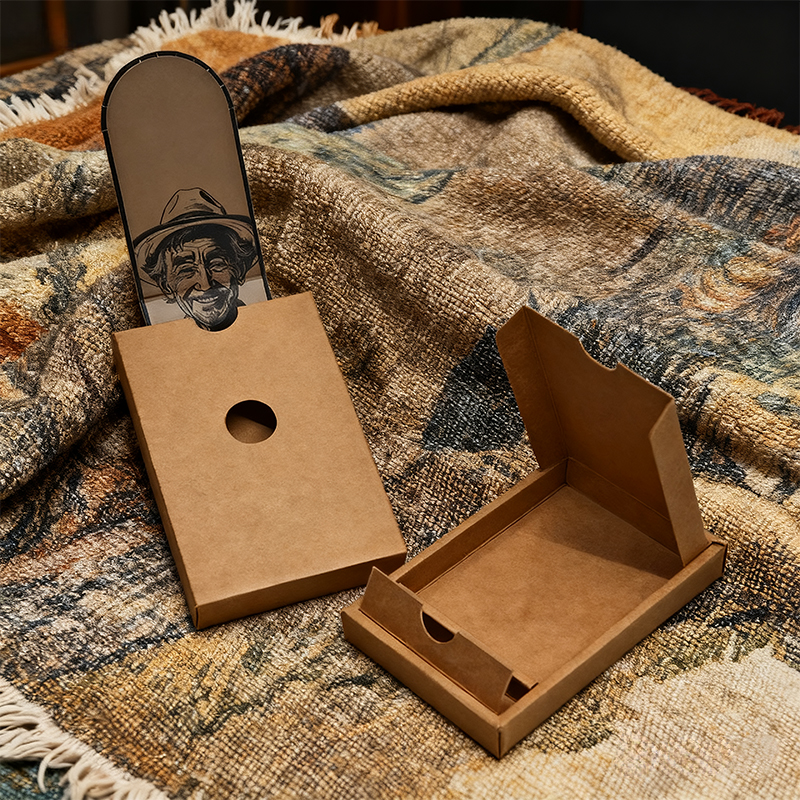
The current product uses an outer sleeve, sliding inner tray and locking tab. The official specification lists kraft paperboard, customizable pre-roll capacity, CMYK/Pantone printing, optional surface finishes and flat-packed assembly.
Incoming inspection should therefore prioritize:
- correct flat structure and fold lines;
- locking-tab integrity;
- tray-to-sleeve fit;
- divider quantity and orientation where ordered;
- print revision;
- assembly consistency across different cases.
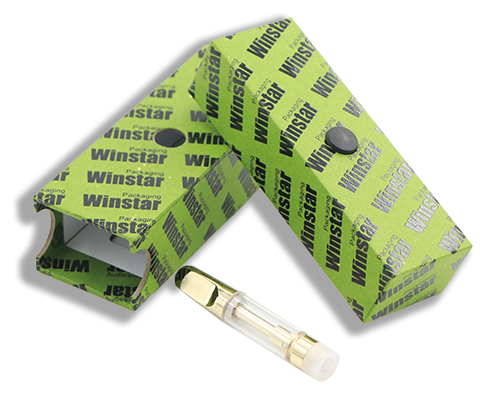
Custom 510 Vape Cartridge Box with Window & Tamper-Evident Peel Seal

The current product page lists an example external size of 100 × 55 × 25 mm, 300–400 gsm SBS/C1S or kraft board, paperboard/molded-pulp/EVA insert options, an optional clear PET window, peel-corner tamper evidence and a 1,000-unit MOQ.
For receiving QA, prioritize:
- carton and insert revision;
- window cleanliness and alignment;
- peel-corner integrity;
- cartridge fit;
- tuck-flap function;
- barcode and variable-data panel availability;
- visual inspection plan agreed in the purchase specification.
5g Concentrate Violet Glass Packaging Box
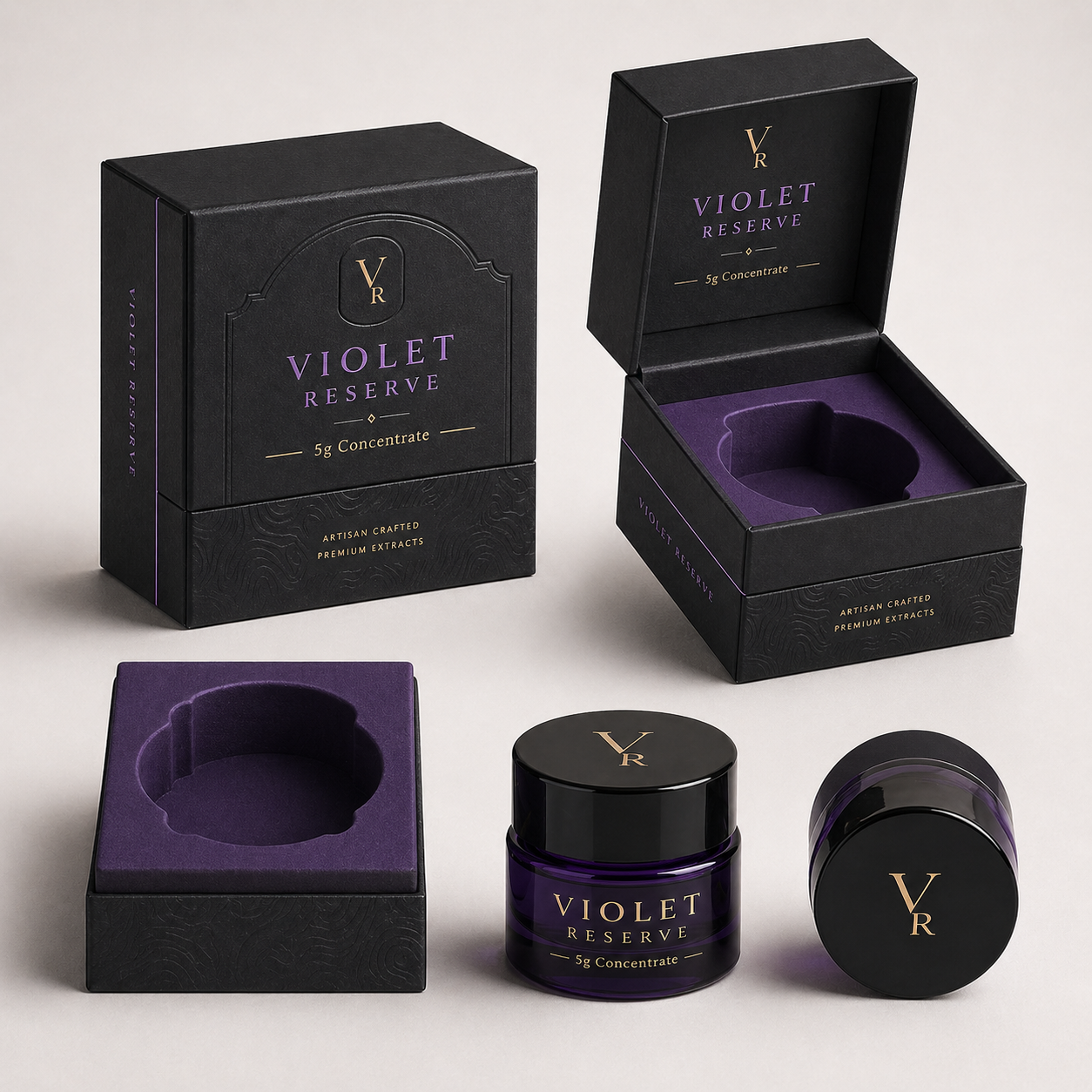
This current rigid-paperboard format is customized to a 5g violet glass jar and supports paper, foam, EVA or molded inserts. The official page lists matte lamination, soft-touch, textured paper, spot UV, emboss/deboss and foil options, with dimensions customized around jar and insert geometry.
Incoming inspection should focus on:
- rigid-box squareness;
- insert material and cavity fit;
- surface scuffing;
- foil/emboss alignment where ordered;
- hinge or closure condition;
- jar clearance;
- shipping compression damage.
Cannabis Packaging Incoming Inspection Checklist
| Inspection Item | Receiving Question |
|---|---|
| Status | Is the lot quarantined until inspection is complete? |
| PO | Does supplier, SKU and quantity match the purchase order? |
| Revision | Is the artwork/dieline revision the currently approved version? |
| Supplier lot | Can every inspected unit be traced to a manufacturing lot? |
| Shipping condition | Are pallets and cases dry, intact and free from serious compression? |
| Sampling | Were units taken from multiple cases and shipment positions? |
| Dimensions | Do critical measurements meet the approved specification? |
| Fit | Does the actual product or approved gauge fit correctly? |
| Artwork | Are all static graphics and required panels correct? |
| Does color, registration and finish match the approved reference? | |
| Construction | Are cuts, folds, glue seams, windows and inserts correctly produced? |
| Function | Do closures, locks, trays, zippers or caps operate reliably? |
| Tamper evidence | Is the relevant feature present and undamaged? |
| CR documentation | Does supporting documentation apply to the received configuration? |
| Labels / codes | Are label areas correct and required codes usable? |
| Defect counts | Were critical, major and minor defects recorded separately? |
| Disposition | Is the lot formally released, held, conditionally released or rejected? |
| Retention | Were receiving records and representative samples retained? |
Three Receiving Mistakes That Create Expensive Rework
1. “The supplier already inspected it.”
Supplier QC and pre-shipment inspection are valuable controls, but they do not show whether the correct shipment arrived at your facility without freight damage or lot mixing.
2. “We have used this package before.”
Repeat orders can change through material lots, tooling wear, production setup, artwork revision or supplier process changes.
A repeat order may justify a different inspection strategy based on supplier history, but it should not become invisible inventory.
3. “Production needs it right now.”
Urgency does not make unidentified packaging safer to use.
If an expedited release is necessary, define the reduced inspection, risks, responsible approver and any additional in-process checks in writing.
ASQ — Attribute and Variable Sampling Plans
ASQ — ANSI/ASQ Z1.4 & Z1.9 Sampling Standards
California Department of Cannabis Control — Final-Form Packaging Requirements
Send your product dimensions, package format, target market, annual volume, artwork revision system, functional requirements and receiving-QA expectations before production. A clear specification makes it easier to connect the approved sample, manufacturing lot, case labels, functional checks and future reorders into one controlled packaging program.
View Cannabis Packaging Options
Frequently Asked Questions
1. What is incoming inspection for cannabis packaging?
Incoming inspection is the quality-control process performed after packaging is received but before it is released to production. It verifies shipment identity, quantity, dimensions, appearance, function, documents and shipping condition against the approved specification.
2. Should cannabis packaging be quarantined when it arrives?
A controlled hold status is a useful way to prevent uninspected packaging from entering production. The lot can be released after the required receiving checks and documents are complete.
3. Is incoming inspection the same as pre-shipment inspection?
No. Pre-shipment inspection occurs before the supplier ships the lot. Incoming inspection occurs after your facility receives it and can catch freight damage, mixed shipments, identity errors and conditions that were not present before transportation.
4. How many cannabis packages should I inspect when a shipment arrives?
The sample size should come from the inspection plan agreed for the order, taking into account lot size, risk, supplier history and the sampling standard used. Do not automatically use one fixed sample quantity for every packaging lot.
5. What should be considered a critical packaging defect?
A critical defect is normally one that creates an unacceptable safety, compliance or essential-function risk, such as the wrong regulated artwork or failure of a required package function. Exact classifications should be defined for the product and market before inspection.
6. What does AQL mean in packaging inspection?
AQL is used within acceptance-sampling systems to help determine sample plans and lot acceptance criteria. It does not define your defects for you. The buyer still needs a written critical, major and minor defect list and a specified sampling method.
7. Should every received packaging unit be inspected?
Not necessarily. Many programs use statistically defined sampling, while higher-risk conditions may justify additional or 100% inspection. The inspection strategy should reflect package risk, supplier performance and the ability to detect the relevant defect.
8. What should I do if only part of the packaging shipment is defective?
First quarantine the affected shipment and identify whether the problem is limited to certain supplier lots, pallets or cases. If acceptable and defective units can be reliably separated, a documented sorting plan may be possible; otherwise the affected lot may require rejection or supplier disposition.
9. Do I need to recheck child-resistant documentation on every delivery?
You should maintain a control that verifies the received packaging still matches the configuration supported by the applicable documentation. The level of document review on each delivery can depend on your quality system, but unapproved changes to size, material, closure or manufacturing configuration should trigger review.
10. What records should be kept from incoming packaging inspection?
Useful records include the purchase order, supplier and lot identity, received quantity, shipping condition, sample locations, measurements, defect counts, photographs, supporting documents, inspection result, disposition and approver. Retaining representative samples can also help with later complaints and repeat-order comparisons.